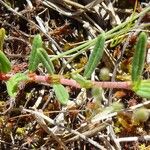
Helianthemum apenninum
White rock-rose · White rockrose · Apennine rockrose · Rock-rose · Apennine Rock-rose
Description
Source: leafsnapHelianthemum apenninum, commonly known as the Italian rockrose, is a small evergreen shrub from the Cistaceae family. Native to Italy and other parts of southern Europe, it thrives in rocky or stony habitats, such as hillsides, cliffs, and rocky outcrops. This plant typically reaches a height of up to 30 cm and has a spread of about 60 cm. Its narrow leaves are green-grey and covered with fine hairs. Bright yellow flowers with five petals bloom from late spring through summer. Helianthemum apenninum is a hardy plant that thrives in well-drained soil and full sun. It can tolerate drought conditions but does not fare well in wet or waterlogged soils. The plant has several medicinal properties, including the treatment of respiratory problems like coughs, bronchitis, and asthma. Traditionally, its leaves have been used for their antiseptic properties in treating wounds. Overall, Helianthemum apenninum is an attractive ornamental shrub suitable for rock gardens and other dry areas. Once established, it requires minimal maintenance.
Care Guide
💧 Water Every 7 days
The white rock-rose is well-suited to arid environments, showcasing remarkable drought tolerance. It only needs watering every 2-3 weeks, allowing the soil to dry out between waterings. When planted outdoors in well-draining soil, the white rock-rose effectively prevents root rot, reflecting its adaptation to its naturally dry habitat.
How should I water my White rock-rose plant?
Your White rock-rose is not fussy about how you water it, so you can use any common watering tool. Whether it's a watering can, hose, or even a cup, they all work fine. The important thing is to water the soil directly, making sure to moisten all areas evenly so the entire root system gets the water it needs. Using filtered water is helpful because tap water may have harmful particles. Additionally, it's best to use water that is at or slightly above room temperature, as extremely hot or cold water can be a shock to the White rock-rose. However, this plant generally responds well to any type of water you give it.
What should I do if I give too much or too little water to my White rock-rose plant?
Outdoor plants, especially newly planted ones or seedlings, are more susceptible to lack of watering. It's important to consistently water them for a few months while they are still small or recently planted. Once the roots are established, White rock-rose can rely on rainwater in most cases. When White rock-rose is in pots, overwatering becomes more common. If you accidentally overwater your plant, take immediate action to address the issue. Stop watering it right away to minimize the impact of overwatering. Then, check the roots by removing the plant from its pot. If there is no root rot, you can put the plant back in its container. However, if there are signs of root rot, trim the affected roots and possibly apply a fungicide to prevent further damage. Repot the White rock-rose in well-draining soil. In the case of underwatered White rock-rose, simply increase the frequency of watering. Underwatering is usually easy to fix. When the plant lacks water, its leaves will appear droopy, dry out, and fall off. Once it receives sufficient water, the leaves will regain their fullness quickly. It's important to adjust your watering schedule promptly when you notice that the plant is underwatered.
How often do I need to water my White rock-rose?
If the plants in your area receive enough rainfall, they can grow naturally without additional watering. However, if your area doesn't get much rain, make sure to water your plants every 2 weeks in the spring and fall. In the summer, you'll need to water them more frequently, but in winter when growth is slower, you can water them sparingly or not at all. Young or newly planted White rock-roses need more frequent watering to help them establish and grow into more drought-tolerant plants. For potted plants, there are two main ways to determine how often to water your White rock-rose. One way is to set a schedule and water once a week or once every other week. However, this method may not be suitable because it doesn't take into account the specific growing conditions for your plant. Another approach is to check the soil moisture. It's usually best to wait until the top two to four inches of soil, about ⅓ to ½ depth of the pots, have dried out completely before watering again. Keep in mind that during the summer, your plant will likely need more water than the set schedule suggests.
How often should I water my White rock-rose plant?
When watering your White rock-rose, you may be surprised to learn that it doesn't always require a large amount of water. Instead, if only a few inches of soil have dried since the last watering, you can support healthy growth by giving it about five to ten ounces of water. You can also determine the water volume based on soil moisture. Take note of how many inches of soil have dried out between waterings. To ensure your White rock-rose receives adequate moisture, water enough to moisten all the dry soil layers since the last watering. If more than half of the soil is dry, consider giving more water than usual. In such cases, continue watering until you see excess water draining from the pot's drainage holes. If your White rock-rose is planted in an outdoor area with plenty of rainfall, it may not need additional watering. When the plant is young or establishing itself, provide 1-2 inches of rain per week. As it grows and matures, it can rely solely on rainfall. However, during hot weather with no rainfall for 2-3 weeks, it may be necessary to give your White rock-rose a thorough watering to prevent stress.
How can I know if I'm watering my White rock-rose plant enough?
The White rock-rose commonly faces an issue of overwatering, which can be identified through yellowing leaves and leaf drop. Overwatering can also lead to the plant's structure shrinking and root rot. On the contrary, an underwatered White rock-rose will wilt and may have brown or brittle leaves. Regardless of whether you observe signs of overwatering or underwatering, it is important to intervene and revive the health of your White rock-rose.
☀️ Light Full sun
White rock-rose grows best with abundant sunlight, producing luxuriant foliage and vivid flowers. Native to areas exposed to direct sun, it has adapted to and requires substantial sunlight throughout its development. Too little or too much sunlight can damage it or hinder its growth.
What are the sunlight requirements for White Rock-Rose?
White Rock-Rose (Helianthemum apenninum) needs above 6 hours of sunlight to thrive. It's essential to observe the movement of sunlight in your garden to ensure that you're providing your plants with the ideal balance of light and shade, which will lead to their growth and happiness. White Rock-Rose originates from regions that receive a significant amount of unfiltered solar light, making it crucial for the plant to receive considerable levels of sunlight throughout its growth stages. Insufficient or excessive sunlight can adversely affect its growth process.
How can artificial lighting benefit indoor White Rock-Rose plants?
For indoor White Rock-Rose plants where natural sunlight is limited, particularly during winter or in less sunny spaces, artificial lighting becomes a necessity. It promotes faster, healthier growth by compensating for the lack of natural light. LED lights are recommended due to their ability to provide specific wavelengths needed by plants. Full sun plants require 30-50W/sq ft, partial sun plants need 20-30W/sq ft, and full shade plants should have 10-20W/sq ft of artificial light. The light source should be placed 12-36 inches above the plant, and it's best to mimic natural daylight hours, with most plants needing 8-12 hours of light per day.
What are some common symptoms of insufficient light in White Rock-Rose plants?
White Rock-Rose plants may show various symptoms when experiencing light deficiency, including smaller new leaves, leggy or sparse growth, faster leaf drop, slowed or ceased new growth, and paler new leaves. Light deficiency can lead to a lack of chlorophyll and essential nutrients, indicated by symptoms such as chlorosis, where leaves lose their green color and turn yellow. Excessive sunlight can lead to sunscald, leaf curling, wilting, and leaf scorching, which are damaging to the plant.
How can I address light-related issues in White Rock-Rose plants?
To combat insufficient sunlight, gradually move your plants to a sunnier location each week until they receive at least 6 hours of direct sunlight daily. For indoor plants, a south-facing window with open curtains during the day is optimal. If moving the plant isn't feasible, consider using artificial light, keeping a desk or ceiling lamp on for at least 8 hours daily or investing in professional plant grow lights. For outdoor plants, avoid sudden changes in light intensity to prevent sunburn. Reducing obstructions such as pruning trees can help outdoor plants receive better sunlight. Transplanting smaller plants during their dormant period to a location with ample sunlight and good drainage is also beneficial. While parts of the plant affected by insufficient light may not recover, new growth should be healthy following these adjustments.
🌡️ Temperature 5–32.2°C
White rock-rose naturally occurs in habitats with moderate temperature ranges, ideally between 41 and 89.6 °F (5 to 32 ℃). In warmer periods provide shading to prevent overheating; in colder periods provide frost protection to keep temperatures within this range.
What is the ideal temperature range for White rock-rose?
White rock-rose thrives in moderate temperature environments, ideally between 41 to 89.6 °F (5 to 32 °C). To ensure the plant remains healthy, shading may be necessary during warmer seasons to prevent overheating, whereas in colder seasons, adequate frost protection should be provided to maintain this temperature range. Although White rock-rose has strong cold resistance, in extreme cases where winter temperatures are expected to drop below -25°C, it is important to protect the plant against the cold by wrapping its trunk and branches with non-woven fabric or cloth. Additionally, watering the plant abundantly before the first freeze in autumn to ensure the soil remains moist can help prevent drought and water scarcity during winter and early spring.
How does White rock-rose react to low temperatures?
White rock-rose is notably cold-tolerant and fares best when temperatures are maintained above 5°C. During winters, it should preferably be kept above -20°C. Experiencing temperatures below -25°C might not immediately show visible changes; however, come springtime, the branches may dry out and become brittle, with no new shoots emerging. To mitigate this, any dead branches that have failed to produce new leaves by spring should be pruned away.
How should White rock-rose be cared for in high temperatures?
During the summer, it is crucial to keep the White rock-rose below 32°C to avoid heat stress. Temperatures exceeding 35°C can cause the leaves to lighten in color, and tips may become dry and withered, making the plant more prone to sunburn. Care should be taken to trim away the sunburned and dried-up parts. It's also beneficial to move the plant to a spot that is shaded during the midday and afternoon sun, or to use a shade cloth to protect it. Ensuring the plant is watered in the morning and evening will help keep the soil moist and support its health through the heat.
💨 Humidity
🪴 Soil 6-7
🌱 Fertilizer
Timing is essential for feeding White rock-rose. Start fertilizing in early spring and repeat monthly until early summer. Fertilizer encourages attractive blooms and provides energy during both dormant periods and active growth.
Why should I put fertilizer on my White rock-rose plant?
No matter which type of White rock-rose you own, regular fertilization is key for its overall health. Providing the proper nutrients will promote vigorous growth and increase resilience to tough conditions, as well as enhance the plant's ability to fight diseases and pests. The attractive foliage of your White rock-rose can be preserved by following a consistent fertilization schedule specific to your plant. This will result in leaves with a rich color and lush appearance.
When should I fertilize my White rock-rose plant?
To keep your White rock-rose healthy, start by fertilizing it in late winter or early spring. This will give the plant the nutrients it needs to grow well once the weather warms up. If you live in a warm climate, it can also be helpful to give your White rock-rose another round of fertilizer in early fall. This will provide extra nutrients for the following growing season and help the plant withstand the winter without any damage to its foliage. By fertilizing earlier, you also give the new branches enough time to grow and withstand the cold temperatures.
When is it not a good idea to fertilize my White rock-rose plant?
There are certain times of the year when you should avoid fertilizing your White rock-rose. Firstly, during the early and mid-winter months when the plant is dormant and does not require any feeding. Additionally, it is not recommended to fertilize the plant during late spring and summer. This is because the weather is typically hotter and dryer during this period, increasing the chances of a negative response to fertilization. To prevent any issues, it is best to stick to a fertilization schedule that only includes feeding in early spring and early fall.
Which fertilizer should I use for my White rock-rose?
White rock-rose plants primarily require nitrogen as their main nutrient, but this does not mean that phosphorus and potassium are unimportant. In fact, a balanced amount of all three nutrients is necessary for optimal growth. A fertilizer with a ratio of 10-10-10, providing an equal amount of each nutrient, can be effective. However, a more specific ratio, such as 10-6-4 with a slightly higher nitrogen content, often leads to better results. When choosing a fertilizer, you can opt for either granular or liquid-based options.
How can I make my White rock-rose grow better?
To fertilize your White rock-rose, you have two options: granular fertilizer or liquid fertilizer. If you choose granular fertilizer, simply sprinkle it on the soil at the right time. The slow-release properties of granular fertilizer will gradually provide nutrients to the soil. It is recommended to lightly water your White rock-rose before applying the fertilizer. On the other hand, using liquid fertilizer is less common but still possible. To do this, mix the fertilizer with water and pour the mixture onto the soil around the base of your White rock-rose. Consider performing a soil test beforehand to determine if any pH adjustments are needed.
🪴 Pot & Repot
✂️ Pruning
The white rock-rose is a compact evergreen shrub adorned with delicate white flowers. To maintain its health and encourage growth, lightly prune the plant in winter to remove any weak wood. After it blooms, trim away the spent flowers to encourage reblooming. Be careful not to prune too severely, as the white rock-rose is sensitive. Following these guidelines will help ensure a vibrant display throughout the growing season.
🌿 Propagating
🐛 Diseases & pets
☠️ Toxicity
Characteristics
- Plant Type
- Shrub
- Life Cycle
- Perennial
- Genus
- Helianthemum
- Family
- Cistaceae
- Hardiness Zone
- 5-8
- Mature Height
- 49 cm
- Mature Spread
- 30 cm to 49 cm
- Leaf Color
- Gray, Silver
- Leaf Type
- Evergreen
- Flower Color
- White
- Flower Size
- 3.05 cm
- Bloom Time
- Mid spring, Late spring, Early summer
- Planting Time
- Spring
- Harvest Time
- Summer