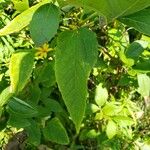
Helianthus divaricatus
Woodland sunflower · Rough Sunfower · Divergent sunflower · Rough sunflower · Spreading Sunflower
Description
Source: leafsnapHelianthus divaricatus, commonly known as the woodland sunflower, is a perennial plant that belongs to the Asteraceae family. Native to North America, this plant thrives in various habitats such as woodlands, meadows, and prairies. It can grow up to 6 feet tall and spread 2 to 3 feet wide. The leaves of Helianthus divaricatus are alternate and lance-shaped with serrated edges. Its bright yellow flowers, featuring a dark central disk, bloom from mid-summer to early fall. These vibrant flowers attract pollinators such as bees and butterflies. This plant prefers well-drained soil and can flourish in both partial shade and full sun. It is adaptable to various soil types, including clay. Once established, it is drought-tolerant but benefits from regular watering during extended dry periods. The woodland sunflower is not only attractive but also versatile. It is often used ornamentally in gardens or naturalized areas due to its appealing flowers and ability to spread rapidly through rhizomes. Additionally, it has medicinal uses; Native Americans traditionally used it to treat ailments such as snakebites, wounds, and fevers. Overall, Helianthus divaricatus is an attractive perennial that enhances any landscape with its beauty while providing ecological benefits for pollinators like bees and butterflies. Its medicinal properties further add to its value, making it an excellent addition to any garden or naturalized area.
🌳 Woodland sunflower isn't merely an attractive feature of forested areas but also an important source of food for wildlife. Although it isn't widely grown for human use, its seeds and leaves serve as vital nourishment for a range of animals. Birds, particularly finches and sparrows, favor its seeds, while deer may graze on its foliage. This connection between the plant and animals underscores a symbiotic relationship and emphasizes the woodland sunflower's potential to support biodiversity.
🎭 Reproductive ability, Desires, Well-being
Care Guide
💧 Water Every 7 days
The Woodland Sunflower flourishes in open woodlands with moderate moisture and well-draining soil. It prefers consistent hydration and needs to be watered weekly during the growing season. This outdoor plant loves full sunlight but requires careful monitoring of soil moisture to support flowering and maintain its vibrant blooms.
How should I water my Woodland sunflower?
To water the Woodland sunflower properly, it is recommended to use filtered water at room temperature or slightly warmer. Tap water may have harmful particles, so filtered water is better for the plant's health. The Woodland sunflower prefers warm environments, so cold water should be avoided to prevent shock. It is also important not to water the plant from above, as this can cause problems with the foliage. Instead, pour the filtered room temperature water directly onto the soil until it is fully saturated. This helps moisten the roots and allows them to spread and absorb the necessary nutrients from the soil.
What should I do if I give my Woodland sunflower too much water or too little water?
Overwatering is a common problem that can harm your Woodland sunflower. When this happens, the stems and leaves may wilt and turn yellow. Overwatering for too long can also lead to diseases like root rot, mold, and mildew, which can be fatal to your plant. Underwatering is less common because the Woodland sunflower can tolerate drought well, but it can still happen. In this case, the leaves may become brittle and brown. It's important to recognize the signs of overwatering early on. Some diseases, like root rot, can't be reversed if you wait too long. If you notice early signs, reduce watering and check the quality of the soil. If the soil drains poorly, replace it with a loose, well-draining potting mix. If you see signs of underwatering, simply water more regularly until the signs disappear.
How frequently do I need to water my Woodland sunflower?
If your Woodland sunflower is in a pot, you can determine if it needs water by checking the soil. Stick your finger into the soil and if the top two to three inches are dry, it's time to water the plant. The same method can be used if you have the Woodland sunflower planted outdoors in the ground. If the top few inches of soil are dry, then it needs watering. Usually, during spring and early fall, watering once a week is sufficient. However, during extremely hot weather, you may need to water it twice or more per week. Despite this, mature and well-established Woodland sunflowers can withstand drought well.
How much water does my Woodland sunflower require?
When watering your Woodland sunflower, make sure to give it plenty of water. Wait until the top two to three inches of soil have dried out, then give the plant a good, deep watering. Make sure to water enough to completely soak the soil, but not so much that water accumulates. You should see excess water draining out of the pot's drainage holes. If you don't see any drainage, you may be underwatering or the soil may not be draining properly. It's important to avoid both overwatering and poorly draining soils. If the plant is outside, it typically needs about 1 inch of rain per week.
How do I make sure my Woodland sunflower gets enough water when it's growing at different stages?
The water needs of the Woodland sunflower can change depending on growth stages. In the first few years and after transplanting, it requires more water to support root development. As the plant matures, it needs less water. Additionally, during the bloom period, the plant uses more moisture, so extra watering might be needed.
☀️ Light Full sun
Woodland sunflower does best when it receives plenty of sunlight. It prefers habitats with abundant light, which improves the plant's health. Reduced light is harmful, undermining its growth and vigour. Although it can survive in lower illumination, flourishing depends on generous sun exposure.
What are the sunlight requirements for the Woodland sunflower?
The Woodland sunflower requires full sun, which means it needs above 6 hours of sunlight daily, to thrive. It can also grow under conditions of partial sun, receiving about 3-6 hours of sunlight. It's crucial to observe your garden to find spots that provide a good balance of light and shade to ensure the plants grow healthy and happy.
How does sunlight affect the growth of Woodland sunflower?
Sunlight plays a crucial role in the growth of the Woodland sunflower, with ample sunshine enhancing the plant's health and vigor. Situated ideally in habitats rich in sunlight, it flourishes and reaches its full growth potential. Although it can survive in less light, its growth may be compromised, indicating that proper solar exposure is key to its thriving.
What can I do if my indoor Woodland sunflower doesn't get enough natural sunlight?
For indoor Woodland sunflowers not receiving sufficient natural sunlight, utilizing artificial lighting is a viable solution. Opt for LED lights as they can be adjusted to provide specific wavelengths needed by the plant. For full sun plants, aim for 30-50W per square foot, partial sun plants require 20-30W per square foot, and full shade plants need 10-20W per square foot. The artificial light should be placed 12-36 inches above the plant to emulate natural sunlight and left on for 8-12 hours per day, depending on the plant species.
What are the symptoms of inadequate lighting in Woodland sunflowers?
Inadequate lighting can lead to various growth issues in Woodland sunflowers, including smaller new leaves, leggy or sparse growth, faster leaf drop, slower or halted new growth, lighter-colored new leaves, chlorosis, sunscald, leaf curling, wilting, and leaf scorching. These signs indicate stress due to insufficient sunlight exposure and can affect the plant's overall health and ability to photosynthesize properly.
How can I address the symptoms of inadequate sunlight in Woodland sunflowers?
To address inadequate sunlight for Woodland sunflowers, gradually increase their exposure to sun. For indoor plants, move them weekly towards a sunnier spot until they receive at least 6 hours of direct sunlight daily, utilizing a south-facing window and keeping curtains open. If moving the plant isn't feasible, consider artificial grow lights for a minimum of 8 hours a day. For outdoor plants, similarly, adjust their location gradually to prevent shock and sunburn. If obstructions like trees block sunlight, pruning them can help. For small plants, transplantation during the dormant period to a sunnier location with good drainage might be necessary. Note, parts of the plant suffering from prior light deficiency may not recover, but new growth should be healthy with improved light conditions.
🌡️ Temperature 0–32.2°C
The native habitats of the woodland sunflower strongly influence its temperature needs. It prefers a temperature span of 32 to 90 ℉ (0 to 32 ℃), with an ideal range of 68 to 77 ℉ (20 to 25 ℃). In summer, providing adequate water is recommended to lessen stress on the plant. In winter, it can tolerate temperatures as low as 14 ℉ (-10 ℃).
What are the essential care tips for Woodland Sunflower (Helianthus divaricatus)?
Woodland Sunflower, known botanically as Helianthus divaricatus, thrives in native growth environments that significantly impact its temperature requirements. It prefers temperatures ranging from 32 to 90°F (0 to 32°C), with an optimal temperature window between 68 and 77°F (20 to 25°C). During the summer, it's crucial to provide an adequate water supply to minimize stress. The plant has strong cold resistance, able to tolerate winter temperatures as low as 14°F (-10°C). In regions where winter temperatures might drop below -35°C, cold protection through covering the plant with soil or straw is advisable. Additionally, before the first freeze of autumn, watering the plant abundantly to keep the soil moist helps to prevent drought and water scarcity during the colder months.
How does Woodland Sunflower respond to low temperatures, and what are the solutions if problems arise?
Woodland Sunflower shows notable cold tolerance and performs best when temperatures remain above 0°C, ideally staying above -30°C during winter. However, exposure to temperatures below -35°C might not visibly affect the plant during winter but could lead to decreased sprouting or a complete lack of sprouting come spring. If parts of the plant fail to sprout in spring due to cold damage, it is recommended to remove these non-sprouting parts to promote healthy growth.
What should be done if Woodland Sunflower experiences high temperatures?
During summer, it is advisable to keep Woodland Sunflower below 32°C. Temperatures above 35°C can cause the leaves to lighten in color, curl, become prone to sunburn, and, in severe cases, cause the entire plant to wilt and dry. To mitigate these issues, trim away the sunburned and dried parts of the plant. Relocate the plant to a shaded area, especially during the midday and afternoon sun, or use a shade cloth. Additionally, water the plant in the morning and evening to maintain soil moisture.
💨 Humidity
🪴 Soil 5-7
🌱 Fertilizer
Usually a single fertilizer application in spring is adequate for Woodland sunflower, although repeated feedings can increase growth. Fertilize about once a month to once every six weeks. Feeding improves the leaves' appearance and function, encouraging consistent color and a healthy texture. It also promotes root development and nutrient uptake, supporting long-term plant health.
🪴 Pot & Repot
To thrive, woodland sunflowers need pots with excellent drainage. This prevents the accumulation of excess water, which can cause root rot.
✂️ Pruning
The Woodland sunflower thrives in wooded areas, especially when it undergoes pruning from early to late spring. Pruning encourages vigorous new growth by removing dead stems and improving airflow, which enhances the plant's shape, health, and bloom quality. To ensure effective pruning, use sharp, sterile tools.
🌿 Propagating
🐛 Diseases & pets
☠️ Toxicity
Characteristics
- Plant Type
- Herb
- Life Cycle
- Perennial
- Genus
- Helianthus
- Family
- Asteraceae
- Hardiness Zone
- 3-8
- Mature Height
- 1.52 m
- Mature Spread
- 30 cm to 91 cm
- Leaf Color
- Green
- Leaf Type
- Deciduous
- Flower Color
- Yellow, Gold
- Flower Size
- 5.08 cm
- Bloom Time
- Mid summer
- Planting Time
- Spring
- Harvest Time
- Mid summer, Late summer