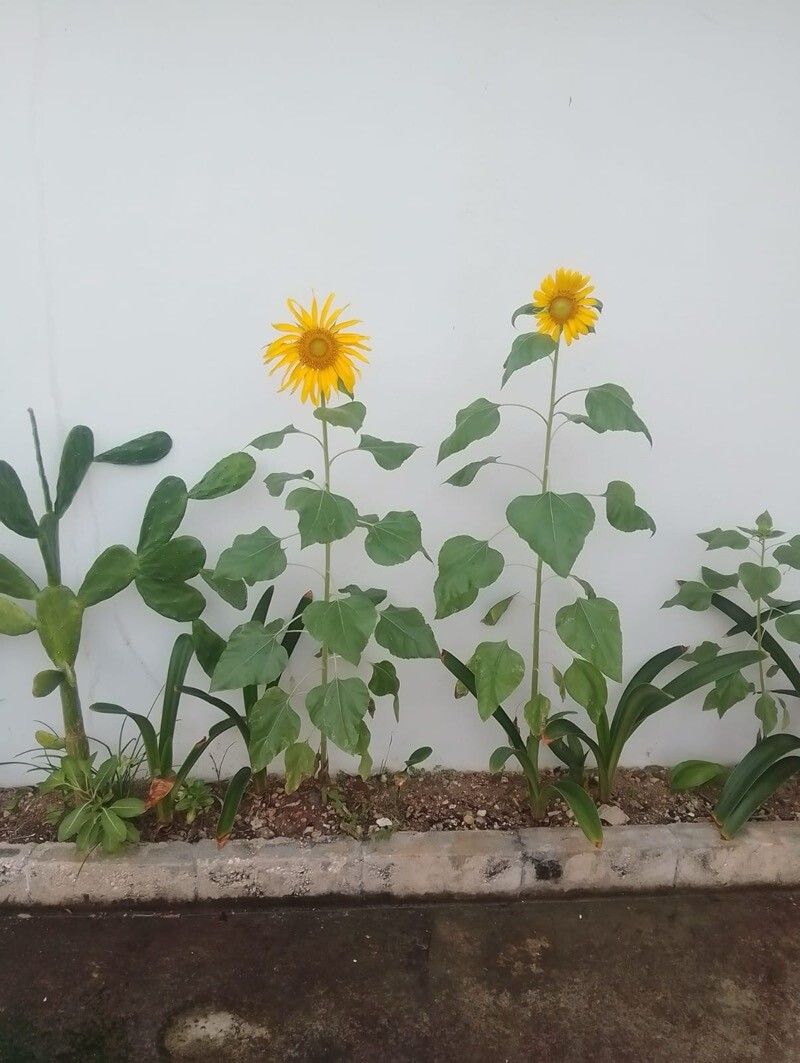
Helianthus porteri, commonly known as Porter's sunflower, is a species native to the southeastern United States. This perennial plant can reach heights of up to 2 meters and features large, yellow flowers that bloom in the summer. The lance-shaped leaves can grow up to 30 cm in length. Helianthus porteri thrives in well-drained soils under full sun and is often found in open fields or along roadsides. It serves as an important food source for birds and other wildlife and is also used ornamentally in gardens.
However, Helianthus porteri is listed as an endangered species due to habitat loss from human activities such as agriculture and urbanization. Conservation efforts are currently underway to protect this vital plant species from further decline.
Porter's sunflower has good resistance to disease and is generally not easily affected by illnesses. However, it can be vulnerable to pests and diseases present in its environment. These infections are generally not severe. Regarding care, this plant requires moderate maintenance. It should be pruned regularly to maintain a neat appearance and support healthy growth. Fertilizing can also help encourage flowering. Porter's sunflower is appropriate for anyone with outdoor space, such as a garden or patio, and does not demand extensive gardening experience. It may need more attention when cultivated indoors.
How to keep Helianthus Porteri.
Light
Porter's sunflower is native to well-lit, open habitats where it excels in full sunlight. Although it can endure semi-shaded spots, it has a preference for complete sunlight for ideal growth. As both an annual and biennial species, it is recognized for its affinity for sun.
Water
Porter's sunflower flourishes in dry, open environments due to its high drought tolerance. To prevent over-saturation, it needs to be watered weekly. This plant prefers full sunlight, and its growth patterns align with the availability of rainwater, showcasing its resilience during periods of low precipitation.
Temperature
Porter's sunflower has the capacity to adjust to various temperature conditions, yet its spread might be restricted by distinct combinations of moisture and heat circumstances. It performs optimally in hot summer climates that are supplemented with suitable amounts of rainfall or irrigation. Extended spells of overcast and rainy conditions, along with enduring high temperatures, can escalate the chances of Porter's sunflower perishing. During the winter, safeguarding it effectively against cold can enhance the plant's chances of survival.
Fertilizer
When the majority of blooms on Porter's sunflower are fully open, it's an indication to resume fertilization. Start the fertilization process again, ideally every three to four weeks depending on the weather, when the blooms are in their prime. However, once you notice that the Porter's sunflower is producing fewer new blooms, cease the fertilization process because it becomes unnecessary when the plant ceases to generate more blooms.
Pruning
Pruning Porter's sunflower in spring, whether early or late, can significantly enhance its growth and flowering. By removing dead or weak stems and thinning out crowded areas, you improve air circulation and sunlight exposure. Regular pruning not only promotes a healthier and more appealing plant but also reduces the risk of disease and encourages more robust blooms.
Botanical profile.
- Plant Type
- Herb
- Life Cycle
- Annual
- Genus
- Helianthus
- Family
- Asteraceae
- Hardiness Zone
- 6-9
- Mature Height
- 30 cm to 91 cm
- Mature Spread
- 20 cm to 40 cm
- Leaf Color
- Green
- Leaf Type
- Deciduous
- Flower Color
- Gold, Yellow
- Flower Size
- 5.08 cm to 7.62 cm
- Bloom Time
- Late summer, Early fall, Mid fall
- Planting Time
- Spring, Summer
- Harvest Time
- Fall
Other names.
Reader questions.
How should I water my Porter's sunflower?
There are several ways to water Porter's sunflower. You can use a garden hose with a spray nozzle, a watering can, or any other common watering tool. Porter's sunflower doesn't have specific preferences when it comes to water source - it can live off of rainwater, tap water, or filtered water. However, it's generally best to avoid watering this plant from overhead as it can harm the leaves and flowers and even cause disease. Instead, using a drip irrigation system is often the most effective way to water Porter's sunflower. These systems distribute water evenly and directly to the soil. If you have a container-grown Porter's sunflower, you can follow a similar approach but adapt the tools. Use a cup, watering can, or tap to water the plant directly at the soil level.
What are the sunlight requirements for Porter's sunflower?
Porter's sunflower thrives in environments with full sun, requiring above 6 hours of sunlight a day for optimal growth. However, it can also tolerate partial sun, benefitting from about 3-6 hours of sunlight. It's essential to watch how sunlight moves through your garden and choose spots that offer a balance of light and shade to ensure the happiness and health of your plants.
What should I do if I give too much or too little water to my Porter's sunflower?
If you notice that your Porter's sunflower is lacking moisture, the remedy is simple: start watering it more regularly. However, overwatering can be a serious issue that can lead to diseases and the death of your sunflower. To prevent this, choose a growing location that gets plenty of sunlight to dry the soil. Additionally, ensure that the location has good drainage to prevent water from pooling and causing waterlogged soil. If you have overwatered a potted Porter's sunflower, it may be necessary to transfer it to a new pot with proper drainage. When repotting, use loose soil and a pot that drains efficiently.
How does artificial lighting support Porter's sunflower growth indoors?
When natural sunlight is insufficient, especially during winter or in less sunny spaces, artificial lighting can be a vital solution for Porter's sunflower's growth. Indoor plants need adequate lighting, with full sun plants requiring 30-50W/sq ft, partial sun plants 20-30W/sq ft, and shade plants 10-20W/sq ft of artificial light. LED lights are recommended due to their ability to provide specific wavelengths needed by plants. The light source should be placed 12-36 inches above the plant to mimic natural sunlight, and most plants need 8-12 hours of light per day.
How frequently do I need to water my Porter's sunflower?
To successfully care for Porter's sunflower, you need to ensure it is watered regularly. In the spring, watering once a week should be sufficient. However, as the season progresses and the weather gets warmer, you may need to increase the frequency to two or three times per week. However, it's important not to overwater the plant as it can be harmful. Regardless of how often you water, the soil should be consistently moist but not saturated. If you are growing Porter's sunflower in a pot, you will need to water it more frequently compared to when it is planted in the ground. Potted plants tend to dry out faster, so watering a few times per week is usually necessary instead of just once per week for plants in the ground.
What symptoms indicate light deficiency in Porter's sunflower?
When Porter's sunflower does not receive enough light, it may exhibit symptoms such as smaller new leaves, leggy or sparse growth, faster leaf drop, slower or stopped growth, and lighter-colored or yellowing leaves (chlorosis). Excessive sunlight can cause sunscald, leaf curling, wilting, and leaf scorching, indicating the plant's struggle with the environmental conditions.
How much water does my Porter's sunflower require?
There are several methods you can use to determine how much water to give to your Porter's sunflower. One approach is to check the soil moisture by feeling it with your hands. If the top six inches of soil feel moist, that is usually a good indication to stop watering. Another method is to use a specific measurement, such as two gallons per week, keeping in mind factors like temperature and how quickly the soil dries out. However, it's important to be cautious with this guideline to avoid overwatering if your plant doesn't need that much water. When growing Porter's sunflower in a container, a different method is needed. In this case, make sure to water enough to moisten all layers of dry soil, which can be tested by inserting a finger into the soil. Another sign is if you see a small amount of excess water draining from the pot's drainage holes.
What solutions can improve Porter's sunflower's exposure to sunlight?
To optimize Porter's sunflower's growth, gradually move plants to sunnier locations, ensuring at least 6 hours of direct sunlight daily. For indoor plants, consider using artificial lights if repositioning is not feasible. For outdoor plants, avoiding sudden changes in light to prevent sunburn is crucial. Additionally, reducing obstructions like pruning trees can help. Transplanting smaller plants to sunnier spots with good drainage during their dormant period can also enhance sunlight exposure. Remember, while parts of the plant that experienced insufficient light may not recover, new growth will be healthy with improved light conditions.
How can I know if I'm giving enough water to my Porter's sunflower?
Avoiding overwatering your Porter's sunflower can be somewhat difficult. On one hand, these plants need to have their soil moistened weekly because of their deep roots. However, overwatering can lead to root rot and browning in Porter's sunflowers. Underwatering is less of a concern because these plants can survive for a while without extra water. But if you wait too long to water your sunflower, it will wilt and its leaves may become dry.
How do I water my Porter's sunflower at different times of the year?
When caring for your Porter's sunflower, it's important to adjust the amount of water you give it based on the season. In the spring, watering once per week should suffice. However, as the summer heat sets in, you may need to increase the frequency to about three times per week. This is especially important if your sunflower is in a container, as the soil can dry out faster. In autumn, you can reduce the water slightly as the temperature cools down and the sun's intensity decreases.
What is the best way to water my Porter's sunflower at different stages of growth?
Porter's sunflower experiences various growth stages throughout the year, each with different water needs. When starting your Porter's sunflower from a seed, ensure consistent soil moisture by watering frequently. Once the seed germinates and the sunflower emerges from the soil, slightly reduce the water amount. Once the plant reaches maturity, water once a week. During flower development, provide slightly more water to support the process.
How is watering Porter's sunflower different inside and outside?
Most Porter's sunflowers are grown outdoors instead of indoors for several reasons. First, these plants tend to grow quite tall, which makes it more suitable for outdoor environments. Additionally, Porter's sunflowers require more daily sunlight than most indoor locations can provide. If you do decide to grow them indoors, you may need to water them more frequently compared to outdoor growing. This is because indoor environments tend to be drier due to HVAC units, and the soil in containers can also dry out quickly.