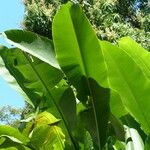
Heliconia caribaea
Wild plantain · Lobsterclaw · Heliconia · Wild Banana · Parrot Beak
Description
Source: leafsnapHeliconia, derived from the Greek word Ἑλικώνιος (helikṓnios), is a genus of flowering plants in the monotypic family Heliconiaceae. Most of the ca 194 known species are native to the tropical Americas, but a few are indigenous to certain islands of the western Pacific and Maluku. Many species of Heliconia are found in the tropical forests of these regions. Most species are listed as either vulnerable or data deficient by the IUCN Red List of threatened species. Several species are widely cultivated as ornamentals, and a few are naturalized in Florida, Gambia, and Thailand. Common names for the genus include lobster-claws, toucan beak, wild plantain, or false bird-of-paradise. The last term refers to their close similarity to the bird-of-paradise flowers (Strelitzia). Collectively, these plants are also simply referred to as "heliconias".
Care Guide
💧 Water
Lobsterclaw plants flourish in tropical rainforests, where they thrive with high humidity and need weekly watering for optimal growth. They tolerate drought moderately well but prefer soil that balances water retention with good drainage. As an evergreen species, lobsterclaw is well-suited for outdoor environments with ample rainfall.
☀️ Light Partial sun
Lobsterclaw originates from habitats like forest understories or rocky sites, where it is naturally shaded. It prefers partial sun but can tolerate full sun or full shade, reflecting its hardy and adaptable nature.
What are the sunlight requirements for a Lobsterclaw plant?
Lobsterclaw, also known as Heliconia caribaea, thrives under specific sunlight conditions. For full sun exposure, the plant requires more than 6 hours of sunlight per day. If it's placed in partial sun, it should receive about 3-6 hours of sunlight daily. It's essential to observe the sunlight's movement through your garden carefully to ensure that you select spots offering a perfect blend of light and shade, promoting the plant's health and happiness.
🌡️ Temperature 20–37.8°C
Lobsterclaw comes from tropical areas where the climate is generally warm and humid. Consequently, it is well adapted to high temperatures and humidity. It does not tolerate sudden temperature shifts and prefers a steady temperature, so avoiding temperature fluctuations indoors is important. It usually cannot withstand cold conditions and needs warmer temperatures to grow. If the surrounding temperature falls too low, the plant may stop growing or even die.
What is Lobsterclaw?
Lobsterclaw, known botanically as Heliconia caribaea, does not have any additional information provided in terms of its essentials, content, or symptoms. This text solely identifies the plant by its common name, Lobsterclaw, and its scientific name, Heliconia caribaea.
💨 Humidity
🪴 Soil 6-7
🌱 Fertilizer
Appropriate fertilization is essential for Lobsterclaw's health and appearance. Apply fertilizer in summer, repeating monthly throughout summer. Nutrients drive growth and preserve the plant's parts. Fertilization improves Lobsterclaw's flower display, helping ensure the best blooms.
🪴 Pot & Repot
✂️ Pruning
Lobsterclaw plants are known for their striking, claw-like flowers. To keep them healthy and vibrant, it is important to prune them regularly, especially in early spring. Key techniques include removing damaged leaves and cutting back old stalks. This not only improves air circulation but also enhances the plant’s aesthetic appeal, resulting in a beautiful display.
🌿 Propagating
🐛 Diseases & pets
☠️ Toxicity
Characteristics
- Plant Type
- Herb
- Life Cycle
- Perennial
- Genus
- Heliconia
- Family
- Heliconiaceae
- Hardiness Zone
- 10-12
- Mature Height
- 3.05 m to 4.57 m
- Mature Spread
- 0.91 m to 1.83 m
- Leaf Color
- Green, Dark Green
- Leaf Type
- Evergreen
- Flower Color
- Red, Orange, Yellow
- Flower Size
- 10.16 cm to 15.24 cm
- Bloom Time
- All year round
- Planting Time
- Spring, Summer
- Harvest Time
- All year round
- Native Area
- Honduras, Cuba, Jamaica