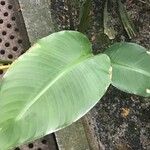
Heliconia latispatha
اسم این گل و میخوام · Expanded Lobsterclaw · False bird-of-paradise · Expanded Lobster Claw · Golden Lobster Claw
Description
Source: leafsnapHeliconia latispatha is a tropical plant native to Central and South America. As a member of the Heliconiaceae family, it is commonly known as the "lobster claw" or "false bird of paradise" due to its distinct flower shape. The plant can grow up to 10 feet tall, featuring large, glossy leaves that can reach up to 3 feet in length. The flowers of Heliconia latispatha are bright red or orange with yellow tips, blooming in clusters on long stems that emerge from the center of the plant. These vibrant flowers attract hummingbirds, which serve as their primary pollinators. Heliconia latispatha thrives in moist soil and partial shade but can also tolerate full sun if provided with adequate water. Its striking appearance makes it a popular choice for ornamental use in tropical gardens. Beyond its ornamental value, Heliconia latispatha has been used for medicinal purposes by indigenous peoples in South America. Its leaves have traditionally been applied as a poultice for wounds, while its roots have been used to treat fever. In summary, Heliconia latispatha is an impressive tropical plant, known for its unique flowers that add color and interest to any garden or landscape setting, while also offering potential medicinal benefits.
Care Guide
💧 Water Every 7 days
The expanded lobsterclaw thrives in high humidity and has a moderate tolerance for drought. While it prefers consistent moisture, it requires weekly watering for optimal growth. Usually grown outdoors, this evergreen plant needs careful watering during the growing season to maintain its vibrant foliage.
How should I water my Expanded lobsterclaw plant?
To properly water the Expanded lobsterclaw plant, it's best to use filtered water at room temperature. Tap water may contain harmful particles, so filtering it is recommended. The water temperature should be close to room temperature or slightly warmer because the Expanded lobsterclaw is accustomed to a warm environment. Cold water can be a shock to its system. It's important to avoid overhead watering, as it can cause issues with the foliage. Instead, gently pour the filtered room temperature water onto the soil until it is completely soaked. This method benefits the plant by moistening the roots and allowing them to spread and collect necessary nutrients from the soil.
What should I do if I give my Expanded lobsterclaw plant too much or too little water?
Overwatering is a more common issue and can be harmful to your Expanded lobsterclaw. It can cause wilting, yellowing, and even diseases like root rot, mold, and mildew, which can be fatal to your plant. Underwatering is less common but can still happen. Signs of underwatering include brittle and brown leaves. It's important to quickly notice and address signs of overwatering to prevent irreversible damage. Reduce watering if you see early signs and check the soil's drainage. Replace it with a well-draining potting mix if it drains poorly. If your plant is not receiving enough water, simply increase the watering frequency until the signs improve.
How frequently should I water my Expanded lobsterclaw?
If your Expanded lobsterclaw plant is in a pot, the most precise way to determine if it needs water is by checking the soil with your finger. If the top two to three inches of soil feel dry, it's time to water it. If you have the plant growing outdoors in the ground, you can use the same method to test the soil. When the top few inches of soil are dry, it's time to add water. This method typically requires watering once a week during the spring and early fall. However, in extremely hot weather, you may need to water twice a week or more. It's worth noting that mature and well-established Expanded lobsterclaw plants can tolerate drought well.
How much water does my lobsterclaw plant need to grow well?
To effectively water your Expanded lobsterclaw, don't hold back on the amount of water you give. Make sure the top two to three inches of soil are dry before watering, and then give the plant a good, full soak. Add enough water to saturate the entire soil, allowing excess water to flow out through the drainage holes at the bottom of the pot. If you don't see any water coming out, it's likely that you haven't watered enough. However, be careful not to let water accumulate in the soil, as that can harm the plant. On the other hand, if water isn't draining from the pot, it could mean that the soil doesn't drain well, which is not good for the plant's health. Avoid this by ensuring the soil has good drainage. If the plant is outdoors, approximately 1 inch of rain per week should be enough.
How do I water my Expanded lobsterclaw as it grows?
The water needs of the Expanded lobsterclaw vary depending on its growth stages. In the first few years or when it is newly transplanted, it requires more water due to the energy it puts into developing new roots. These roots need extra moisture to support future growth. However, after a few seasons, the plant will require less water. Another stage that may require increased watering is during the bloom period, as flower development utilizes a significant amount of moisture.
☀️ Light Full sun
Expanded lobsterclaw performs best when given abundant sunlight, which is vital for its healthy growth and vitality. It can also tolerate moderate light. Too much or too little sun may cause problems such as leaf scorching or a failure to bloom. The light tolerance is shaped by the conditions of its native habitat.
What are the sunlight requirements for Expanded Lobsterclaw?
Expanded Lobsterclaw (Heliconia latispatha) thrives in full sun, requiring more than 6 hours of sunlight daily for optimal growth and vitality. However, it can also tolerate partial sun, meaning it can grow with about 3-6 hours of sunlight. Exposure to the right amount of sunlight is crucial as it influences the plant's health, affecting processes like leaf scorching or failure to flower if the plant receives too much or too little sun. Observing how sunlight moves through your garden can help in choosing spots that offer a perfect balance of light and shade, ensuring the plant's happiness.
What are the essential care tips for Expanded Lobsterclaw regarding sunlight?
Expanded Lobsterclaw benefits significantly from ample sunlight, reflecting its native habitat conditions which contribute to its light adaptability. In scenarios where natural sunlight is insufficient, especially during winter or in spaces with less sun, using artificial lighting can be beneficial. Options like LED lights are recommended because they can be customized to provide specific wavelengths needed by plants. Full sun plants require 30-50W/sq ft, partial sun plants 20-30W/sq ft, and full shade plants 10-20W/sq ft of artificial light. Positioning the light source 12-36 inches above the plant and ensuring it receives 8-12 hours of light per day mimics natural conditions and promotes healthier growth.
What are the symptoms of inadequate lighting in Expanded Lobsterclaw?
Inadequate lighting can cause several noticeable symptoms in Expanded Lobsterclaw, including the growth of smaller leaves compared to mature ones, leggy or sparse growth due to elongated spaces between leaves or stems, faster leaf drop as the plant conserves resources, slower or halted growth, and the development of lighter-colored or yellow leaves (chlorosis) indicating a lack of chlorophyll. Excessive sunlight, on the other hand, may lead to conditions such as sunscald, where leaves or stems are damaged, leaf curling as a defense mechanism to minimize water loss, wilting due to increased transpiration, and leaf scorching, where leaves show brown, dry patches. Addressing these symptoms involves adjusting the plant's exposure to sunlight, either directly or through artificial lighting.
How should one address symptoms of poor lighting in Expanded Lobsterclaw?
To address symptoms of poor lighting in Expanded Lobsterclaw, gradually increasing exposure to sunlight is recommended. For indoor plants, moving them to a sunnier location each week until achieving at least 6 hours of direct sunlight daily can help. Using a south-facing window and keeping curtains open during the day maximizes sunlight exposure. If a plant is large or not easily movable, supplementing with artificial light for at least 8 hours daily can provide necessary support. For outdoor plants, adjusting their location gradually to acclimate them to more sunlight without causing sunburn is crucial. If sunlight is blocked, consider pruning nearby foliage or transplanting smaller plants to sunnier spots. Remember, while new growth can thrive with improved lighting, parts of the plant that have already been adversely affected might not recover.
🌡️ Temperature 20–37.8°C
Expanded lobsterclaw is native to habitats where temperatures commonly run from 68 to 100°F (20 to 38°C). It prefers that warmth throughout the year; in cooler seasons adjustments may be necessary to keep it healthy. Avoid exposing the plant to temperatures below 68°F (20°C).
What is the ideal temperature range for Expanded lobsterclaw?
Expanded lobsterclaw thrives in environments where temperatures typically range from 68 to 100°F (20 to 38°C). This plant is extremely heat-loving and does not tolerate cold well. During cooler seasons, it's important to make adjustments to maintain the plant's health and avoid exposing it to temperatures below 68°F (20°C). In regions experiencing colder months, it is advisable to bring the Expanded lobsterclaw indoors, positioning it near a bright window but at a distance from heaters, to ensure temperatures remain above 20°C. This warm environment is essential for its growth, especially during winter.
How should I care for Expanded lobsterclaw in low temperatures?
Expanded lobsterclaw prefers warm temperatures and does not tolerate cold well, thriving best when the temperature remains above 20°C and kept above 10°C during winter. Exposure to temperatures below 5°C can result in lighter leaf colors, which may turn brown or black and exhibit wilting or drooping after frost damage. To care for it during low temperatures, trim off any frost-damaged parts and immediately move the plant to a warm indoor environment. Placing it near a south-facing window ensures ample sunlight, but take care to avoid locations near heaters or air conditioning vents to prevent air dryness.
What measures should be taken if Expanded lobsterclaw is exposed to high temperatures?
During the summer, it's crucial to ensure that the temperature around Expanded lobsterclaw stays below 38°C to prevent heat stress. Should temperatures exceed 43°C, the plant may show signs of distress such as lighter leaf colors and increased susceptibility to sunburn. In such cases, trim away the sunburned and dried parts and relocate the plant to a shaded area, particularly away from the intense midday and afternoon sun. Additionally, watering the plant in the morning and evening will help keep the soil moist and support the plant's health under high temperatures.
💨 Humidity high (>60%)
This plant needs special care because it loves high humidity levels of 60-80% or more. The best way to achieve this is by placing a humidifier near the plant. Daily misting is also essential! Make sure the room has good ventilation.
🪴 Soil 5-6
🌱 Fertilizer
Proper fertilization is essential for the health and appearance of Expanded lobsterclaw. Fertilize Expanded lobsterclaw in summer, applying it once each month throughout the season. Nutrients supply energy for growth and help maintain the plant's parts. Fertilization improves Expanded lobsterclaw's flower display, ensuring the best blooms.
Why should I put fertilizer on my Expanded lobsterclaw?
Fertilizer and soil nutrients are like fuel for your Expanded lobsterclaw. They are essential for its healthy growth. Plants, in general, use nutrients from the soil to develop new plant material and maintain their current components. Specifically for the Expanded lobsterclaw, fertilization is necessary to enhance the quality of its flowers. Since the flowers are the main attraction of this plant, most gardeners strive to ensure they look their best. Fertilization is a reliable method to help your Expanded lobsterclaw produce its most beautiful blooms.
When should I fertilize my Expanded lobsterclaw?
The Expanded lobsterclaw plant goes through two main phases each year. The first phase is the dormant phase, which occurs during winter and involves minimal new growth. The second phase is the active growth phase, which occurs during spring and fall. It is during this phase that your Expanded lobsterclaw will require the most fertilization. To ensure optimal growth, it is recommended to start fertilizing in the spring and continue feeding once a month throughout spring and most of the summer. As fall approaches, you can gradually decrease the rate of fertilization.
When is the best time to not put fertilizer on my Expanded lobsterclaw?
If you are looking to encourage the growth of expanded lobsterclaws but also want to avoid root burn, it's important to know when to provide extra nutrients to your plant. In the spring and summer when your plant is actively growing, it needs the additional fertilizers. However, in the fall and winter when your plant goes into a dormant stage, it's best to stop fertilizing altogether.
What kind of fertilizer does my lobst
To ensure optimal growth for your Expanded lobsterclaw, it is recommended to use a fertilizer that provides a balanced mix of the three main plant nutrients, with slightly higher amounts of phosphorus. Another option is to enhance the soil by incorporating organic materials like compost, worm castings, and manure. There is a wide variety of fertilizers available, and most of them will be suitable for your Expanded lobsterclaw. However, the top choices for this plant are typically liquid or powdered fertilizers. Whichever type you choose, make sure to dilute it and apply it while watering your Expanded lobsterclaw.
How can I make my Expanded lobsterclaw plant grow better?
To successfully fertilize your Expanded lobsterclaw, first find a suitable fertilizer and learn the ideal fertilization schedule. Once you have done that, you can move on to applying the fertilizer. The most reliable way to feed your plant is by mixing liquid fertilizer with water before applying it to the soil. Each fertilizer may have specific directions on how to feed your plants, so it's best to follow the manufacturer's guidance. These instructions will likely include information on how to dilute the fertilizer properly to avoid overfertilization. Mixing the fertilizer with water is a straightforward process, after which you simply pour the mixture into the soil where your Expanded lobsterclaw is located.
🪴 Pot & Repot 2-3 years
The expanded lobsterclaw plant produces striking blooms and needs to be repotted every 2 to 3 years in the spring. Use a large pot with good drainage for repotting. Afterward, maintain high humidity and provide filtered light to help the plant recover and stay healthy, ensuring its flowers remain vibrant.
✂️ Pruning
The expanded lobsterclaw plant features vibrant bracts and elongated leaves. For optimal health, it's important to prune the plant from late winter to early spring, concentrating on removing dead foliage and spent stems. Regular pruning not only improves the plant's appearance but also boosts its vigor. Be sure to use clean, sharp tools, and avoid excessive cutting to minimize stress on the plant.
🌿 Propagating
🐛 Diseases & pets
☠️ Toxicity
Characteristics
- Plant Type
- Herb
- Life Cycle
- Perennial
- Genus
- Heliconia
- Family
- Heliconiaceae
- Hardiness Zone
- 11
- Mature Height
- 3.96 m
- Mature Spread
- 91 cm
- Leaf Color
- Green, Gray
- Leaf Type
- Evergreen
- Flower Color
- Yellow, Red, Pink, Green, Orange
- Flower Size
- 15.24 cm to 20.32 cm
- Bloom Time
- All year round
- Planting Time
- Summer, Autumn
- Harvest Time
- All year round
- Native Area
- Colombia, Belize, Honduras, Mexico, Guatemala, Venezuela, Peru, Nicaragua, Ecuador, Costa Rica, Panama