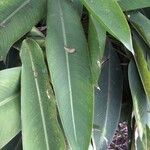
Heliconia psittacorum
Parakeetflower · Parrot's-flower · Parrot's-plantain · Parrot flower · Parakeet heliconia
Description
Source: leafsnapHeliconia psittacorum, commonly referred to as parrot's beak or parakeet flower, is a tropical plant native to South America. It belongs to the Heliconiaceae family and is renowned for its vibrant, colorful flowers that resemble a parrot's beak. The plant can reach heights of up to 6 feet and features long, narrow leaves arranged in a spiral pattern around the stem. The flowers of Heliconia psittacorum are typically red or orange with yellow tips and bloom in clusters on long stalks. These nectar-rich blooms attract hummingbirds and other pollinators. The plant thrives in warm temperatures ranging from 60-90°F (15-32°C) and requires high humidity levels. Due to its striking appearance, Heliconia psittacorum is often used as an ornamental plant in tropical gardens. It can also be grown indoors as a houseplant if provided with sufficient light, warmth, and humidity. In summary, Heliconia psittacorum is an attractive tropical plant that brings color and vibrancy to any garden or indoor space it inhabits.
💡 The botanical name of Heliconia psittacorum highlights its parrot-like flowers. The specific epithet "psittacorum" comes from the Latin word "psittacus," meaning parrot or parrot's beak.
🌳 The bright hues of the parrot's beak are not just pleasing to the eye but also function as bioindicators of specific metals in the soil. When the plant grows in locations with particular metal levels, the vividness of its color can reveal the presence and concentration of those metals, making it a natural tool for ecological and environmental monitoring.
🎭 Young people, pride and substantial returns
Care Guide
💧 Water Every 7 days
The Parrot's Beak plant thrives in environments with high humidity and regular rainfall. It prefers consistently moist soil but can tolerate short dry periods. For optimal growth, water it weekly. Being an evergreen, it requires stable moisture throughout the year, especially indoors, to maintain its lush foliage.
How should I moisten my Parrot's beak?
To properly water the Parrot's beak plant, it's important to follow a few guidelines. Firstly, use filtered water at room temperature. This is because tap water may have harmful particles. Additionally, the water should not be cold as the Parrot's beak is accustomed to a warm environment. Avoid overhead watering to prevent foliage complications. Instead, apply filtered room temperature water directly to the soil until it is completely soaked. This helps moisten the roots and aids in their growth and nutrient absorption.
What should I do if I give my Parrot too much or too little water on its beak?
Both overwatering and underwatering can harm your Parrot's beak, but overwatering is a more common issue. When your Parrot's beak is overwatered, the stems and leaves may droop and turn yellow. Overwatering for a long time can also lead to diseases like root rot, mold, and mildew, which can be fatal for your plant. Underwatering is less likely to happen because the Parrot's beak is drought-tolerant. However, it's still a possibility, and if it occurs, the leaves may become brittle and brown. It's important to notice the signs of overwatering promptly. Some diseases caused by overwatering, like root rot, may not be fixable if you wait too long. If you see early signs of overwatering, reduce your watering schedule immediately. Check the soil drainage and replace it with a well-draining potting mix if necessary. If you notice signs of underwatering, simply water more regularly until the signs go away.
How frequently do I need to water my Parrot's beak?
If your Parrot's beak plant is in a pot, you can use the following method to determine if it needs water. Simply stick your finger into the soil and check if the top two to three inches are dry. If they are, it's time to water the plant. For Parrot's beak plants grown outdoors in the ground, you can use a similar approach. If the top few inches of soil feel dry, it's time to water. In general, during spring and early fall, watering once a week is usually sufficient. However, during extremely hot weather, you may need to water twice or even more frequently per week. It's worth mentioning that mature and well-established Parrot's beak plants show impressive resistance to drought.
How much water does my Parrot's beak require?
When watering your Parrot's beak, don't hold back on the amount of water you give. Make sure the first two to three inches of soil are dry before watering, and then thoroughly soak the soil. Add enough water so that it flows out through the drainage holes at the bottom of the pot. If you don't see excess water draining, you may have underwatered the plant. Avoid letting water accumulate in the soil, as this can harm the plant. If water isn't draining well through the pot, it could indicate poorly draining soil, which is not good for the plant's health. If the plant is outside, 1 inch of rain per week should be enough.
How should I give water to my Parrot's beak as it grows?
The water needs of the Parrot's beak can vary depending on its growth stages. When the Parrot's beak is young or has been newly transplanted, it requires more water to support root growth. These new roots are essential for future growth and perform best when they have slightly more moisture. As the plant matures, it will require less water. Additionally, during the bloom period, the Parrot's beak may need extra water to support flower development.
☀️ Light Partial sun
Parrot's beak does best with moderate to ample sunlight, though not an overwhelming amount. These light conditions occur in its native habitat and support healthy growth. However, both too much and too little light can be harmful, diminishing its vigor and vibrancy. Importantly, changes in the sunlight it receives can affect the plant differently at different stages of growth.
What are the sunlight requirements for the Parrot's Beak plant?
The Parrot's Beak plant requires a moderate to abundant amount of sunlight, thriving best in conditions that mimic its native habitat. This includes partial sun, defined as about 3-6 hours of sunlight a day, and full sun, which is above 6 hours of sunlight daily. It's important to observe how sunlight moves through your garden to find the perfect spots that offer a balance of light and shade, ensuring the plant's health and happiness. However, both too much and too little sunlight can be harmful, impacting the plant's vitality and vibrance. Indoor plants can benefit from artificial lighting, especially in less sunny spaces or during winter, with specific recommendations for wattage per square foot based on the plant's sunlight needs.
How does sunlight affect the growth of Parrot's Beak?
Sunlight plays a crucial role in the growth and health of the Parrot's Beak plant. Insufficient light can lead to a range of symptoms indicating light deficiency, such as smaller new leaves, leggy or sparse growth, faster leaf drop, slower or no new growth, lighter-colored new leaves, and conditions such as chlorosis, sunscald, leaf curling, wilting, and leaf scorching. On the other hand, too much sunlight can cause damage, including symptoms like chlorosis and sunscald. It's vital to adjust the plant's exposure to sunlight gradually and consider using artificial light sources when natural sunlight is not sufficient to promote healthy growth.
What solutions can help improve the Parrot's Beak plant's health regarding sunlight exposure?
To optimize the Parrot's Beak plant's health regarding sunlight, you should gradually adjust its exposure to sunlight by moving it to sunnier spots each week, whether it's located indoors or outdoors. This helps the plant adapt without the risk of sunburn. For indoor plants that are large or not easily movable, using a desk or ceiling lamp for at least 8 hours daily, or investing in professional plant grow lights, can provide the necessary light. Outdoors, it's crucial to avoid sudden changes in light intensity. If the plant is in the ground, reducing obstructions such as pruning nearby trees or transplanting the plant to a sunnier location with good drainage, can help. It's important to note that parts of the plant affected by insufficient light may not recover, but new growth following increased light exposure should be healthy.
🌡️ Temperature 20–41.1°C
Parrot's beak comes from tropical areas, where the climate is typically warm and humid. Consequently, it is well suited to high heat and moisture. It dislikes sudden temperature changes and prefers a consistent thermal environment, so avoiding indoor temperature swings is important. It generally cannot tolerate cold and needs higher temperatures to grow. If the surrounding temperature falls too low, the plant may stop growing or even die.
What is the botanical name of Parrot's Beak?
The botanical name of Parrot's Beak is Heliconia psittacorum.
💨 Humidity
🪴 Soil 5-6
🌱 Fertilizer
Proper fertilization is essential for the health and appearance of Parrot's beak. Fertilize Parrot's beak in summer, repeating the treatment monthly throughout the season. The nutrients support growth and maintain the plant's components. Fertilization improves Parrot's beak's flower display, ensuring the best blooms.
Why should I put fertilizer on my Parrot's beak?
Fertilization is essential for the growth of Parrot's beak and other plants because it provides necessary nutrients for both above and below ground growth. Although Parrot's beak has relatively low fertilization needs and can survive without it, annual fertilization is highly beneficial. It not only helps keep the plant alive but also enhances flower production and longevity. Therefore, individuals looking to maintain the best appearance for their Parrot's beak should ensure regular annual fertilization.
When should I give my Parrot's beak fertilizer?
The best time to fertilize a Parrot's beak is during late winter to early spring. This is when the beak enters a phase of active growth after being dormant. Fertilizing at this time promotes healthy growth and sets the plant up for a successful season. Fertilizing can also be done in the fall, but it is not recommended during summer or winter.
When is it best to not give my Parrot's beak any fertilizer?
To avoid overfertilization and its complications, it is best to only fertilize your Parrot's beak during late winter and early spring. This plant has low fertilization needs, so one feeding per year is sufficient. It is important not to continue fertilizing throughout spring, summer, and fall. However, if you missed fertilizing in spring, it is acceptable to feed the plant in fall. Additionally, there is no need to fertilize during the winter when the Parrot's beak is in a dormant phase and not producing new growth.
What kind of food does my Parrot's beak need to stay healthy?
To nourish your Parrot's beak plant, a general-purpose fertilizer with balanced amounts of essential plant nutrients will work well. However, certain nutrient blends can provide even greater benefits. For example, many gardeners believe that higher levels of phosphorus promote stronger roots and better flowers. Since Parrot's beak is a flowering plant, using a phosphorus-rich fertilizer may be the best approach. This can be in the form of granules or liquid, as long as it provides sufficient nutrients. In addition to manufactured fertilizers, organic options like compost and manure can greatly enhance the soil for your Parrot's beak, helping it thrive.
How can I make my Parrot's beak healthier?
To fertilize a Parrot's beak, the most common method is to use granular or pellet fertilizer applied to the soil around the plant. It is important to fertilize when the plant is transitioning from its dormant phase to active growth, typically in early spring when shoots start emerging from the soil. If you prefer liquid fertilizer, dilute it with water before applying. In both cases, it is advisable to moisten the soil before, during, and after applying fertilizer.
🪴 Pot & Repot 2-3 years
Repot the parrot's beak every 2 to 3 years in the spring to accommodate its clumping habit. Choose a well-draining container and ensure high humidity to aid in the plant's recovery. Keep the soil consistently moist but not waterlogged to encourage vibrant growth.
✂️ Pruning
The Parrot's Beak plant is known for its vibrant flowers and lush leaves, which can thrive with appropriate pruning. The best time to prune is from early spring to late winter, as this allows you to remove any damaged stems and improve growth and air circulation. Regular pruning not only enhances the plant's health but also boosts its visual appeal, making the Parrot's Beak a stunning addition to any garden.
🌿 Propagating
🐛 Diseases & pets
☠️ Toxicity
Heliconia is mildly toxic to cats.
Characteristics
- Plant Type
- Herb
- Life Cycle
- Perennial, Annual
- Genus
- Heliconia
- Family
- Heliconiaceae
- Hardiness Zone
- 9-12
- Mature Height
- 0.76 m to 1.52 m
- Mature Spread
- 61 cm to 91 cm
- Leaf Color
- Green
- Leaf Type
- Evergreen
- Flower Color
- Red, Orange, Yellow
- Flower Size
- 4.57 cm
- Bloom Time
- All year round
- Planting Time
- Spring
- Harvest Time
- All year round
- Native Area
- Colombia, Honduras, Mexico, Bolivia, Venezuela, Guyana, Brazil, Costa Rica