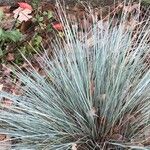
Helictotrichon sempervirens
Blue oat grass · Blue oatgrass · Evergreen oatgrass · Evergreen Oat-grass
Description
Source: leafsnapHelictotrichon sempervirens, commonly known as blue oat grass, is a perennial ornamental grass that belongs to the Poaceae family. Native to the Mediterranean region, it thrives in various habitats, including rocky slopes, meadows, and open woodlands. This plant features a clumping growth habit with narrow, blue-green leaves that can reach up to 2 feet in length. The leaves are stiff and have a rough texture, making them resistant to wind and rain damage. In late spring or early summer, blue oat grass produces tall stems adorned with spike-like panicles of flowers. These flowers start off green and gradually turn golden brown as they mature. Blue oat grass is an excellent choice for adding texture and color contrast to garden borders or rock gardens. It prefers full sun but can tolerate some shade in hot climates. This grass thrives in well-drained soil with moderate moisture levels. Once established, blue oat grass is low maintenance, requiring minimal care. However, it benefits from occasional watering during prolonged dry spells and annual pruning of dead foliage in early spring before new growth appears. Overall, Helictotrichon sempervirens is an attractive ornamental grass that enhances any landscape design with its visual appeal and requires minimal maintenance.
Care Guide
💧 Water Every 7 days
Evergreen oat-grass flourishes in well-drained soils with moderate moisture and is native to temperate regions. For optimal health, it should be watered twice a week, although it is also drought-tolerant. As an ornamental grass, evergreen oat-grass is resilient in various climate zones and can adapt its water needs according to seasonal temperature changes.
☀️ Light Full sun
Evergreen oat-grass is a sun-loving, perennial herbaceous plant that originates from open habitats and is commonly found in meadows and grasslands. It favors full sun but can also tolerate partial sun.
🌡️ Temperature 5–35°C
Evergreen oat-grass can tolerate a wide range of temperatures, but its distribution may still be restricted by various combinations of moisture and heat. It performs best in warm summer climates with sufficient rainfall or watering. Extended spells of cloudy, rainy weather, as well as prolonged high temperatures, increase the chance of Evergreen oat-grass dying. In winter, adequate protection from cold can raise the plant's survival rate.
💨 Humidity
🪴 Soil 6-7
🌱 Fertilizer
Evergreen oat-grass needs extra nutrients to encourage healthy new growth. In spring, adding compost around the plant's base will supply the nutrition it requires. Fertilizing supports vigorous growth and helps the plant fend off diseases and pests.
🪴 Pot & Repot Every 12 months
✂️ Pruning
Evergreen oat-grass is known for its blue-green leaves and gracefully arching stems. To promote healthy growth and encourage a lush, dense appearance, prune the plant annually in early spring to remove any dead material. Consistent pruning not only enhances the plant's aesthetic appeal but also helps minimize pests and diseases, leading to vigorous growth.
🌿 Propagating
🐛 Diseases & pets
☠️ Toxicity
Non-toxic, but not advised for consumption in both animals and humans.
Characteristics
- Plant Type
- Grass
- Life Cycle
- Perennial
- Genus
- Helictotrichon
- Family
- Poaceae
- Hardiness Zone
- 4-9
- Mature Height
- 61 cm to 91 cm
- Mature Spread
- 61 cm to 76 cm
- Leaf Color
- Blue, Green, Gray, Silver
- Leaf Type
- Evergreen
- Flower Color
- Brown, Yellow, Green
- Flower Size
- 0.51 cm to 0.76 cm
- Bloom Time
- Early summer, Mid summer
- Planting Time
- Spring, Summer, Autumn, Winter
- Harvest Time
- Mid summer, Late summer
- Native Area
- Croatia, Italy, France