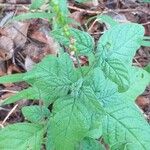
Heliotropium angiospermum
Scorpion's-Tail · Eye Bright · Bright-eye bush · Dog's-tail · Wild clary
Description
Source: leafsnapHeliotropium angiospermum, commonly known as the Scorpion Tail or White Heliotrope, is a flowering plant in the Boraginaceae family. Native to both North and South America, this plant thrives in various habitats, including deserts, grasslands, and disturbed areas. Growing up to 60 cm tall, Heliotropium angiospermum features narrow leaves arranged alternately along its stem. Its small, white flowers emit a sweet fragrance that attracts pollinators such as bees and butterflies. Indigenous people have utilized Heliotropium angiospermum for medicinal purposes for centuries. It has been employed to treat a range of ailments including fever, coughs, colds, headaches, and stomach problems, among others. The plant is also notable for its drought tolerance, making it an ideal choice for xeriscaping gardens or landscapes requiring low maintenance. Overall, Heliotropium angiospermum is a versatile plant. It is valuable for its medicinal properties and is an attractive addition to any garden or landscape design, thanks to its sweet fragrance and drought tolerance.
Care Guide
💧 Water Every 7 days
The Scorpion's-tail plant thrives in environments that are similar to the tropics, where there is moderate humidity and occasional rain. It should be watered every 1 to 2 weeks, allowing the soil to dry out slightly between waterings. The plant is sensitive to overwatering, especially during its growing season. It is often grown outdoors, which helps to prevent root rot.
How should I water my Scorpion's-tail plant?
To water Scorpion's-tail, you have a few options. You can use a garden hose with a spray nozzle, a watering can, or any other common watering tool. Scorpion's-tail is not very particular about the type of water it receives. It can thrive on rainwater, tap water, or filtered water. However, it's best to avoid watering this plant from above because it can harm the leaves and flowers and may cause diseases. Instead, consider setting up a drip irrigation system, which evenly and directly applies water to the soil. If you have a container-grown Scorpion's-tail, you can use a cup, watering can, or your tap to water it directly into the soil.
What should I do if I give my Scorpion's-tail plant too much water or too little water?
To prevent underwatering your Scorpion's-tail and the potential problems it can cause, it is important to water the plant regularly when you notice it lacks moisture. On the other hand, overwatering can lead to serious issues, such as diseases and death of the plant. To avoid overwatering, it is recommended to choose a suitable location for the plant, with ample sunlight to help dry the soil and proper drainage to allow excess water to drain away. If you have overwatered a potted Scorpion's-tail, it may be necessary to repot it in a new pot with better drainage and loose soil.
How often do I need to water my Scorpion's-tail plant?
To keep your Scorpion's-tail healthy, you need to water it regularly. In spring, water it once a week, but as the weather gets warmer, you may need to water it two to three times a week. However, be careful not to water it too much, as that can harm the plant. Regardless of how often you water, make sure the soil is consistently moist but not soaked. If your Scorpion's-tail is in a pot, you'll need to water it more frequently because pot soil dries out faster. Typically, watering a potted Scorpion's-tail a few times a week is necessary, compared to just once a week for a plant in the ground.
How much water does my Scorpion's-tail plant need?
When deciding how much water to give your Scorpion's-tail plant, there are a few options. Some gardeners prefer to gauge the moisture level of the soil by feeling it with their hands. In this method, you would aim to water until the top six inches of soil feel moist. Another approach is to use a specific measurement. As a general guideline, you can give your Scorpion's-tail plant around two gallons of water per week, adjusting for factors like temperature and soil dryness. However, it's important to note that sticking strictly to this measurement may result in overwatering if your plant actually requires less water. When growing your Scorpion's-tail in a container, a different strategy is needed. You should aim to water until all the layers of soil within the pot have dried out, which can be tested by sticking your finger into the soil. Additionally, you can check for a slight trickle of excess water coming out of the drainage holes of the pot.
How do I know if I am giving enough water to my Scorpion's-tail plant?
Watering your Scorpion's-tail can be a bit challenging. These plants have deep roots, so it's important to keep the soil moist by watering weekly. However, be cautious as Scorpion's-tail is prone to root rot and browning if overwatered. Underwatering is less of a concern since these plants can survive without additional watering. But if you go too long without watering, the plant may wilt and develop dry leaves.
☀️ Light Full sun
Scorpion's-tail clearly prefers abundant sunlight. It prospers in places where the sun is dominant, benefiting from its warmth and light throughout its development. It can, nevertheless, tolerate some shade. Its native habitat indicates a significant need for light exposure. Excessive shading or insufficient sun can impede its healthy growth.
What are the sunlight requirements for Scorpion's-tail?
Scorpion's-tail requires abundant solar exposure to thrive, preferring areas with dominant sun presence for radiant warmth and light throughout its growth. While it significantly benefits from full sun exposure for over 6 hours daily, it can also endure partial sun, approximately 3-6 hours of sunlight. However, ensure to monitor your garden's sunlight movement to find spots that offer a perfect balance of light and shade, ensuring optimal growth and health of your plants.
How does artificial lighting support indoor plants?
For indoor plants, especially in places with limited natural sunlight, artificial lighting is crucial for promoting optimal growth. It is particularly useful during winter or in less sunny indoor spaces. LED lights are recommended because they can be adjusted to provide specific light wavelengths needed by plants. The requirement for artificial light varies: full sun plants need 30-50W/sq ft, partial sun plants 20-30W/sq ft, and full shade plants 10-20W/sq ft. The artificial light source should be placed 12-36 inches above the plant, imitating natural sunlight's distance, and it should be kept on for 8-12 hours a day, mimicking natural daylight duration for the best results.
What are the symptoms of light deficiency in Scorpion's-tail when grown indoors?
When Scorpion's-tail is grown indoors with insufficient light, it might exhibit several symptoms indicating light deficiency. These include smaller new leaves, leggy or sparse growth as the plant stretches out towards the light source, faster leaf drop as it conserves resources, slower or halted new growth as it enters survival mode, pale or lighter-colored new leaves indicating a lack of chlorophyll, and chlorosis, where leaves lose their green color and turn yellow due to breakdown of chlorophyll from insufficient light.
What are the symptoms and solutions for Scorpion's-tail exposed to excessive sunlight?
Excessive sunlight can cause symptoms such as sunscald, leaf curling, wilting, leaf scorching, and chlorosis in Scorpion's-tail. To mitigate these, indoor plants should be gradually moved to sunnier locations to receive at least 6 hours of direct sunlight, or use artificial lighting where necessary. For outdoor plants, ensure gradual adaptation to sunlight to avoid sunburn and consider pruning or transplanting to minimize sunlight obstructions. It's important to remember that parts of the plant affected by insufficient sunlight may not recover, but new growth post-adjustment will be healthy.
🌡️ Temperature 15–37.8°C
Scorpion's-tail originates from a native habitat with temperate conditions, with ideal temperatures between 68 and 100 °F (20 and 38 °C). The plant prefers warm conditions but may need some seasonal adjustments to grow optimally.
What is the ideal temperature range for Scorpion's-tail?
Scorpion's-tail, also known by its botanical name Heliotropium angiospermum, thrives in temperate climates with the ideal temperature range being between 68 to 100 °F (20 to 38 °C). The plant prefers warm temperatures for optimal growth but is also somewhat cold-tolerant, not requiring special measures if temperatures stay above 0°C. However, protective actions should be taken if temperatures are expected to drop below 0°C to ensure the plant's health.
How does Scorpion's-tail react to low temperatures?
Scorpion's-tail possesses a moderate tolerance to low temperatures and performs best when kept above 20°C. During the winter months, it is important to maintain temperatures above 0°C. Exposure to temperatures below -10°C may cause the leaves to droop; while they may recover in mild cases, severe cold can lead to wilting and leaf loss. To protect the plant from frost damage, it's advisable to trim off affected parts and use protective coverings like non-woven fabric or cloth and construct a wind barrier for future cold events.
What should be done if Scorpion's-tail experiences high temperatures?
Scorpion's-tail should ideally be kept below 38°C during the summer. Temperatures exceeding 43°C risk lightening the color of the leaves, causing leaf tips to dry and wither, leaves to curl, and increasing susceptibility to sunburn. To mitigate these effects, remove sunburned and dried sections of the plant. Moving the plant to shaded areas during intense midday and afternoon sun or employing shade cloth can prevent further damage. Additionally, maintaining soil moisture with morning and evening waterings can help the plant endure high temperatures.
💨 Humidity
🪴 Soil 6-8
🌱 Fertilizer
When Scorpion's-tail has opened most of its flowers to full size, resume fertilizing. At the time when blooms are at their peak, apply fertilizer every three to four weeks, weather permitting. Then, once Scorpion's-tail begins producing fewer new blooms, stop fertilizing; there is no need to feed the plant when it can no longer produce more blooms.
🪴 Pot & Repot Every 12 months
✂️ Pruning
The Scorpion's-tail plant features unique, tail-like flowers and thrives with regular pruning from early to late spring. This process involves removing any dead or damaged parts and occasionally thinning the plant to improve air circulation, which boosts both flowering and overall vigor. Be sure to use clean, sharp tools to prevent disease.
🌿 Propagating
🐛 Diseases & pets
☠️ Toxicity
Characteristics
- Plant Type
- Herb
- Life Cycle
- Annual, Perennial
- Genus
- Heliotropium
- Family
- Boraginaceae
- Hardiness Zone
- 8-11
- Mature Height
- 91 cm
- Mature Spread
- 40 cm
- Leaf Color
- Purple, Lavender
- Leaf Type
- Semi-evergreen
- Flower Color
- White
- Flower Size
- 0.25 cm to 0.51 cm
- Bloom Time
- All year round
- Planting Time
- Spring, Summer, Autumn
- Harvest Time
- All year round
- Native Area
- Belize, Honduras, Mexico, Guatemala, Peru, Jamaica, Colombia, Bahamas, Cuba, Bolivia, Venezuela, El Salvador, Nicaragua, Ecuador, Costa Rica