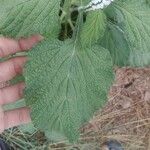
Heliotropium indicum
نعناع وحشی · Turnsole · Indian heliotrope · Eye Bright · Scorpion weed
Description
Source: leafsnapHeliotropium indicum, commonly known as Indian heliotrope, Indian turnsole is an annual, hirsute plant that is a common weed in waste places and settled areas. It is native to Asia. It is widely used in native medicine in Tamil Nadu, India. It grows wildly on roadsides and has a curved arrangement of small flowers and velvety broad green leaves
🎭 Exorcism and healing of prophetic dreams
Care Guide
💧 Water
Turnsole thrives in tropical-like environments, which offer consistent moisture and high humidity. It needs soil that is kept evenly moist, typically requiring weekly watering to maintain this balance. As an outdoor plant, regular watering supports its vibrant blooming cycle during the growing season.
How should I water my Turnsole plant?
Turnsole can be watered using various tools such as a garden hose with a spray nozzle or a watering can. It is not particular about the type of water it receives, whether it's rainwater, tap water, or filtered water. However, it's best to avoid watering this plant from overhead as it can harm the leaves and flowers and potentially lead to disease. A drip irrigation system is often a good approach for watering Turnsole, as it provides even and direct watering to the soil. When watering a Turnsole in a container, you can use a cup, watering can, or tap to water it directly into the soil.
What should I do if I give my Turnsole plant too much or too little water?
To help with underwatering Turnsole, simply start watering the plant more consistently when you notice it lacks moisture. Underwatering is relatively easy to fix. On the other hand, overwatering can be a serious problem if not caught early. Overwatered Turnsole can develop diseases that lead to its decline and death. To prevent this, it is important to choose a suitable location for your plant. Find a place with ample sunlight to dry the soil and ensure good drainage to prevent water from pooling and causing waterlogged soil. If you have overwatered Turnsole in a pot, it may be necessary to switch to a new pot. The previous pot may not have had good soil drainage or sufficient drainage holes. When repotting the overwatered Turnsole, use loose soil and a pot that drains well to promote healthier growth.
How frequently should I water my Turnsole plant?
To properly care for Turnsole, it is important to water it regularly throughout the growing season. During spring, watering once a week is sufficient. However, as the season progresses and temperatures rise, watering two to three times per week may be necessary. It is crucial not to exceed this watering rate as it can harm the plant. Regardless of the watering frequency, it is essential to maintain the soil moisture at a moderate level, avoiding excessive wetness. If growing Turnsole in a pot, it is advisable to water more frequently than when it is planted directly in the ground. Potted plants tend to dry out faster, so watering a few times per week is usually required.
How much water does my Turnsole plant need?
Determining how much water to give to your Turnsole can be done in a few different ways. One method is to feel the soil and water until the top six inches feels moist. Another option is to use a set measurement, such as two gallons per week, depending on the climate and soil dryness. However, be cautious of overwatering if your plant needs less water. When growing Turnsole in a container, you should water enough to moisten all dry soil layers. You can test for moisture by sticking your finger in the soil or observing a slight trickle of excess water from the drainage holes.
How can I know if I'm giving my Turnsole plant enough water?
Avoiding overwatering your Turnsole can be challenging. On one hand, these plants have deep roots that need weekly soil moistening. However, Turnsole is highly prone to root rot and browning if overwatered. Underwatering is less of a concern as these plants can survive for a while without additional watering. Nevertheless, if you go too long without watering, the Turnsole will begin to wilt and display dry leaves.
☀️ Light Full sun
Turnsole does best in places where the sun rules the sky for most of the day. It soaks up substantial solar energy, which is essential for optimal plant health. Excessive exposure can cause these plants to wilt and suffer; insufficient exposure might limit its flowering potential. Its native habitat, heavily sunlit environments, supplies this intense irradiance.
What are the sunlight requirements for Turnsole plants?
Turnsole plants require specific amounts of sunlight to thrive, categorized under 'Full sun' and 'Partial sun'. For a plant to fall under the 'Full sun' category, it needs above 6 hours of sunlight daily. Plants considered to be in the 'Partial sun' category require about 3-6 hours of sunlight each day. Observing how sunlight moves through your garden and selecting spots that offer an ideal balance of light and shade are crucial for the health and happiness of your plants.
What are the essential growing conditions for Turnsole?
Turnsole thrives in environments dominated by sunlight for most of the day, absorbing significant amounts of solar energy essential for their health. These plants originate from heavily sunlit areas and require such intense irradiance for optimal growth. However, overexposure can lead to wilting and damage, whereas under-exposure may prevent the plant from flowering. For indoor Turnsole plants, adequate artificial lighting is key during periods of insufficient natural sunlight, such as winter or in less sunny locations. LED lights are recommended to provide the wavelengths needed by the plants, with a requirement of 30-50W/sq ft for full sun plants, 20-30W/sq ft for partial sun plants, and 10-20W/sq ft for full shade plants. The artificial light source should be placed 12-36 inches above the plant, mimicking the natural sunlight as closely as possible, with most plants needing 8-12 hours of light per day.
What are the symptoms of insufficient light in Turnsole plants?
Turnsole plants typically exhibit several symptoms when they receive inadequate light, including smaller new leaves, leggy or sparse growth, faster leaf drop, slower or no new growth, lighter-colored new leaves, chlorosis, sunscald, leaf curling, wilting, and leaf scorching. These symptoms help indicate when the plant is not getting enough sunlight, leading to a reduction in chlorophyll and essential nutrients, and can cause damage to the plant's tissue, reducing its health and capacity for photosynthesis.
How can I address sunlight issues with my Turnsole plants?
To address sunlight issues for Turnsole plants, consider gradually moving your plants to sunnier locations to ensure they receive at least 6 hours of direct sunlight daily, especially if they are indoors. Utilize south-facing windows and keep curtains open during the day for maximum exposure. For outdoor plants, it's crucial to avoid sudden changes in light intensity to prevent sunburn, opting for gradual relocation instead. If dealing with obstructions like trees, consider pruning them to allow more sunlight through. When transplanting smaller plants for better sunlight exposure, do so during their dormant period in late winter or early spring, ensuring to carefully move the soil ball and roots together to a spot with ample sunlight and good drainage. Remember, parts of the plant damaged by insufficient sunlight may not recover, but new growth will be healthy upon improving light exposure.
🌡️ Temperature 20–35°C
Turnsole comes from warmer habitats and generally does best at temperatures of 68 to 95 °F (20 to 35 °C). During colder periods you might move the plant indoors or use a heater.
What temperatures are ideal for growing Turnsole?
Turnsole thrives in warmer environments, ideally between 68 to 95 °F (20 to 35 °C). These plants prefer stable warm temperatures and can suffer when exposed to temperatures outside this range. During colder months, or if the weather unexpectedly cools, it's advisable to move Turnsole plants indoors or near a heat source to maintain their preferred temperature. They do have some tolerance to cold and typically do not need extra protection if the temperature is above freezing (0°C), but precautions should be taken if temperatures are expected to drop below freezing.
How should Turnsole plants be cared for in cold weather?
In cold weather, particularly when temperatures are anticipated to fall below 0°C, Turnsole plants require temporary measures for protection. Wrapping the plants in plastic film, fabric, or utilizing other insulation materials can help shield them from the cold. It is crucial to remove these protective layers once the temperature rises again to prevent overheating or moisture build-up which could lead to other issues for the plant.
What are the symptoms of Turnsole plants exposed to low temperatures?
Turnsole plants show a moderate tolerance to low temperatures, performing best above 20°C and needing to be kept above 0°C during winter. Exposure to temperatures below -5°C can cause the plant's leaves to droop, and while they might recover from mild exposure, severe cold can cause leaves to wilt and drop off. To mitigate damage, frost-affected parts should be trimmed off, and the plant should be wrapped with fabrics or placed behind a wind barrier to protect it from cold winds.
How do high temperatures affect Turnsole plants, and what can be done?
During the summer, it's vital to keep Turnsole plants in conditions under 35°C. Exposure to temperatures above 38°C can lead to a lighter leaf color, drying and withering of leaf tips, curling leaves, and increased susceptibility to sunburn. To care for a plant affected by high temperatures, remove sunburned or dried parts. Relocate the plant to a shaded area or use a shade cloth to protect it from intense midday and afternoon sun. Additionally, ensure the soil remains moist by watering the plant in the morning and evening.
💨 Humidity
🪴 Soil 6-7
🌱 Fertilizer
Turnsole benefits from regular, light applications of fertilizer to encourage healthy leaf growth. Fertilize Turnsole about once a month during the summer months. Nitrogen is essential for foliage, and supplying nitrogen-rich sources helps Turnsole thrive.
🪴 Pot & Repot
✂️ Pruning
Turnsole, renowned for its vibrant leaves and fragrant flowers, thrives with careful pruning during early to late spring. Important practices include removing dead stems to enhance airflow and lightly shaping the plant for improved aesthetics, which in turn encourages flowering. Be sure to avoid excessive cutting to minimize stress on the plant.
🌿 Propagating
🐛 Diseases & pets
☠️ Toxicity
Characteristics
- Plant Type
- Herb
- Life Cycle
- Annual
- Genus
- Heliotropium
- Family
- Boraginaceae
- Hardiness Zone
- 9
- Mature Height
- 15 cm to 49 cm
- Mature Spread
- 40 cm
- Leaf Color
- Green
- Leaf Type
- Deciduous
- Flower Color
- Lavender
- Flower Size
- 0.25 cm to 0.51 cm
- Bloom Time
- All year round
- Planting Time
- Spring, Summer, Autumn
- Harvest Time
- All year round
- Native Area
- Sri Lanka, Burkina Faso, Belize, India, Mexico, Guatemala, Madagascar, Nigeria, Guinea-Bissau, Tanzania, Benin, Indonesia, Cameroon, Mozambique, Ethiopia, Central African Republic, Malawi, Honduras, Peru, Philippines, Bangladesh, Laos, Panama, Chad, China, Colombia, Japan, Togo, El Salvador, Senegal, Côte d'Ivoire, Ecuador, Costa Rica, Congo (DRC), Angola, Malaysia, Namibia, Niger, Jamaica, Zimbabwe, Mali, Cambodia, Burundi, Venezuela, Brazil, Ghana, Botswana, Congo, Nepal, South Africa, Zambia, Sudan, Mauritania, Guinea, Bahamas, Bolivia, Vietnam, Myanmar, Guyana, Bhutan, Nicaragua, Singapore, Thailand, Gabon