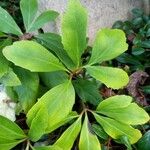
Helleborus niger
Christmas-rose · Black helleborus · Black hellebore · Easter rose · Carnation
Description
Source: leafsnapHelleborus niger, commonly known as the Christmas rose, is a perennial flowering plant belonging to the Ranunculaceae family. Native to Europe and Asia, it is widely cultivated for its attractive white flowers that bloom in winter. The plant grows up to 30 cm in height and features dark green leaves with serrated edges. The Christmas rose produces large, bowl-shaped flowers with five petals that are pure white or sometimes tinged with pink or green. The blooms appear from December through March and are often used for winter decorations. Helleborus niger prefers moist, well-drained soil in partial shade or full shade. It can be propagated by dividing clumps in early spring or by sowing seeds immediately after they ripen. Historically, the plant has been used for medicinal purposes due to its toxic properties, which can cause vomiting if ingested. However, it also contains compounds with anti-inflammatory properties that may be beneficial for treating conditions such as arthritis. Overall, Helleborus niger is a beautiful winter-flowering plant that adds interest and color to gardens during the colder months. Additionally, it has potential medicinal benefits when used appropriately under medical supervision.
💡 The Christmas rose, despite its resemblance to traditional roses, is actually part of the buttercup family, which makes it poisonous. This flower is rich in tradition and legend. According to a story, a shepherd named Madelon had nothing to give the Christ child. As she began to cry, an angel gently brushed away the snow to reveal a beautiful white rose.
🌳 The Christmas rose isn't only used in gardens but also serves a distinct ecological indicator role. Scientists have found that the Christmas rose, like other plants, can point to elevated levels of certain metals in the soil, such as aluminum. This characteristic lets gardeners and researchers evaluate soil health and contamination without complex equipment, thus bringing the Christmas rose into environmental monitoring practices.
🎭 Calmness, stillness, harmony, controversy, unease
Care Guide
💧 Water Every 7 days
The Christmas rose, native to alpine regions, flourishes in cold climates with moderate rainfall. It needs to be watered every one to two weeks and keeps its leaves throughout the year. As an evergreen plant, the Christmas rose can absorb moisture from the air during the winter months when water is scarce.
How should I water my Christmas rose?
To properly water the Christmas rose, it is recommended to use filtered water at room temperature. Tap water should be avoided as it may contain harmful particles. The reason for using room temperature water is that the Christmas rose is accustomed to a warm environment, and cold water can be a shock to its system. Additionally, avoid overhead watering to prevent issues with the foliage. Instead, apply the filtered room temperature water directly to the soil until it is fully soaked. This helps to moisten the roots and support their growth and nutrient absorption.
What should I do if I give my Christmas rose too much or too little water?
Overwatering and underwatering can harm your Christmas rose, but overwatering is more common. When this species gets too much water, its stems and leaves may wilt and turn yellow. Prolonged overwatering can also lead to diseases like root rot, mold, and mildew, which can kill your plant. Underwatering is less common, as the Christmas rose can tolerate drought. However, when it happens, the leaves may become brittle and brown. It's important to spot signs of overwatering early. Some diseases caused by overwatering, like root rot, may be irreversible if not addressed promptly. Reduce watering if you see signs of overwatering and check the soil drainage. Replace poorly draining soil with a loose, well-draining potting mix. If your Christmas rose is not getting enough water, increase the frequency of watering until the signs disappear.
How much water does my Christmas rose need?
If your Christmas rose is in a pot, the best way to determine if it needs water is by checking the soil moisture. Stick your finger into the soil and if the top two to three inches are dry, it's time to water. The same method can be used if your Christmas rose is planted in the ground. Once the first few inches of soil have dried out, it's time to water. Usually, during spring and early fall, watering once a week is sufficient. However, during extremely hot weather, you may need to water twice or more per week. It's worth noting that mature, well-established Christmas rose plants can handle drought conditions quite well.
How much water does the Christmas rose plant need?
When watering your Christmas rose, don't hold back on the water. Wait until the top two to three inches of soil are dry, then give the plant a thorough watering. Make sure the soil is completely soaked, and add enough water to allow excess to drain through the pot's drainage holes. If there is no excess water draining, you may have not watered enough. However, be careful not to let water accumulate in the soil, as this can harm the plant. Conversely, if water doesn't drain well from the pot, it indicates poorly draining soil, which is bad for the plant's health. If the plant is outdoors, one inch of rain per week is enough.
How should I water my Christmas rose during different stages of growth?
The water needs of the Christmas rose can vary depending on its growth stages. In the first few years or after transplanting, it requires more water because it focuses on developing new roots for future growth. These roots perform best with a bit more moisture. As the plant matures, it requires less water. Additionally, during the bloom period, the Christmas rose may need more water to support flower development.
☀️ Light Partial sun
The Christmas rose does well in locations with moderate sun and can also grow healthily in places that receive either direct or filtered light. Native to areas with differing light levels, it has become accustomed to a range of lighting conditions. However, too much or too little light can negatively affect its growth, appearing as discolored or underdeveloped leaves.
What are the sunlight requirements for a Christmas Rose?
Christmas Rose needs about 3-6 hours of sunlight daily, categorized as partial sun. However, it can also grow in environments considered to be full shade or full sun, which means it receives less than 3 hours of direct sunlight. It's important to watch how sunlight moves through your garden to ensure your plants are placed in spots with the ideal balance of light and shade for optimal growth.
What are the essentials for growing a Christmas Rose successfully?
A Christmas Rose thrives in moderate sun exposure and can adapt to both concentrated and filtered light, thanks to its origins in varied lighting conditions. Excessive or insufficient light can harm its growth, leading to discolored or underdeveloped foliage. For indoor plants, artificial lighting such as LED lights can be used, especially when natural sunlight is insufficient. It's recommended to provide 30-50W/sq ft for full sun plants, 20-30W/sq ft for partial sun plants, and 10-20W/sq ft for full shade plants. The artificial light should be placed 12-36 inches above the plant and kept on for 8-12 hours per day.
What are the signs of inappropriate lighting for a Christmas Rose?
If a Christmas Rose is grown under inadequate light, it may show symptoms like smaller new leaves, leggy or sparse growth, faster leaf drop, slowed or halted new growth, lighter-colored new leaves, chlorosis (yellowing leaves due to lack of chlorophyll), sunscald, leaf curling, wilting, and leaf scorching. These symptoms indicate either too much or too little light, impacting the plant's health and growth.
How can I address lighting issues for my Christmas Rose?
To address lighting issues with your Christmas Rose, gradually acclimate the plant to direct sunlight by moving it to sunnier spots each week, aiming for 3-6 hours of sunlight daily. For indoor plants, or those that are not easily movable, consider using artificial light sources like desk or ceiling lamps for at least 8 hours a day, or invest in professional grow lights. Outdoors, the plant should be gradually moved to better-lit areas to prevent sunburn. If your plant has been in inadequate light, parts of it may not recover, but new growth should be healthy with improved light conditions. Reducing obstructions, such as pruning trees around your plants to allow more sunlight through, or transplanting smaller plants to sunnier locations with good drainage, can also help.
🌡️ Temperature 5–35°C
The christmas rose grows best in its native habitat with cool to mild winters of about 5 to 20 ℃ (41 to 68 ℉) and summers around 10 to 20 ℃ (50 to 68 ℉). It can, however, prosper in temperatures from 5 to 35 ℃ (41 to 95 ℉) in a variety of situations. In warmer conditions, some shade is advised to prevent shock, while in colder conditions, mulching can help protect it from rapid temperature shifts.
What are the ideal growing conditions for the Christmas Rose?
The Christmas Rose, also known by its botanical name Helleborus niger, thrives in a native growth environment that experiences cool to mild temperatures. During the winter season, it prefers temperatures ranging from 5 to 20°C (41 to 68°F), and in the summer season, it enjoys 10 to 20°C (50 to 68°F). The plant can also adapt to temperatures between 5 to 35°C (41 to 95°F) in various settings. To counter the effects of warmer weather, it's advisable to provide partial shade to prevent shock. In contrast, during colder weather, applying mulch can offer protection against rapid temperature fluctuations. The Christmas Rose exhibits strong resistance to cold; hence, special frost protection measures are generally unnecessary. Nonetheless, if temperatures are expected to dip below the critical growth limit, shielding the plant with soil or straw can be beneficial. Also, watering the plant generously before the first autumn freeze to maintain soil moisture helps prevent drought stress during the winter and early spring.
How should I care for my Christmas Rose in extreme temperatures?
For the Christmas Rose to remain healthy during varying temperature extremes, specific care is required. In colder conditions, particularly if temperatures fall below the plant's tolerable growth minimum, there may not be immediate visible damage during winter, but a decrease in spring sprouting or no sprouting can occur. To manage this, remove any portions of the plant that have failed to sprout come spring. During hot summer months, it's crucial to keep the plant's exposure to temperatures below its maximum tolerable level. Exceeding this threshold can cause the leaves to lighten in color, curl, become susceptible to sunburn, and in extreme cases, lead to the wilting and drying out of the plant. Addressing sun damage involves trimming away the sunburned and dried sections, relocating the plant to a shaded area or using shade cloth to protect it during peak sunlight hours, and ensuring the soil is kept moist by watering in the morning and evening.
💨 Humidity normal (40-60%)
This plant will thrive in moderate humidity, which is probably the level in your home. However, misting it a few times a week can be very beneficial. Make sure the room has good ventilation.
🪴 Soil 6-7
🌱 Fertilizer Every 100 days
For the Christmas rose, the primary time to fertilize is in early spring when the flowers are developing. Using an appropriate fertilizer promotes better blooms and helps the Christmas rose produce attractive flowers. Fertilizing in early spring ensures good flowers throughout the season and supplies energy for dormant growth phases.
Why is it necessary to put fertilizer on my Christmas rose plant?
Fertilizing a Christmas rose is important for several reasons. Firstly, it helps the plant produce beautiful blooms. Fertilizing in early spring is especially effective in ensuring excellent flowers during that season. Additionally, fertilizer provides the plant with energy that can be stored in the ground during dormant growth phases. By adding nutrients during fall planting or late spring, the Christmas rose can store more energy to use when active growth resumes.
When should I put fertilizer on my Christmas rose?
Fertilizing a Christmas rose is recommended at a few different times. The main time to fertilize is in early spring when the flowers are forming, as this will help promote better blooms. You can also fertilize later in the spring after the flowers have faded. This will give the plant energy to store and use for the next year. If you are planting a Christmas rose for the first time in the fall, providing fertilizer at that time can help ensure a healthy set of flowers during its first growing season.
When is it not a good idea to put fertilizer on my Christmas rose?
To properly fertilize a Christmas rose, do so when you plant it in the fall, during the early spring when it blooms, and in the late spring after it has finished blooming. Avoid fertilizing at any other time as it is unnecessary and may harm the plant. Keep in mind that the Christmas rose has a significant dormant phase, where it requires less fertilizer and water. This dormant phase occurs during the winter, but also during the summer after the flowers have faded and the leaves have died back. Once the leaves have died back, the plant is dormant and does not need fertilizer.
What kind of fertilizer does my Christmas rose need?
There are different types of fertilizer that can be good for your Christmas rose. To keep things simple, use a balanced fertilizer with equal amounts of nitrogen, phosphorus, and potassium. Fertilizer ratios like 10-10-10 or 5-5-5 will work well. It's better to use a granular fertilizer rather than a liquid one. If you want to be more specific with your fertilizer choice, use one that has more phosphorus. Many gardeners believe that phosphorus helps produce better and longer-lasting flowers. Organic materials like bonemeal can provide the phosphorus your Christmas rose needs to bloom well.
How do I add fertilizer to my Christmas rose plant?
To properly care for your Christmas rose, it's important to fertilize it at two key times - during planting in the fall, and in early spring as it begins to bloom. During the planting process, dig a small hole for your bulb and then add granular slow-release fertilizer to the hole. Throughout this process, make sure to water consistently to maintain adequate soil moisture. In the early spring, as the plant emerges and develops its flowers, fertilize again using a granular fertilizer with a balanced mix of nutrients. Sprinkle the fertilizer on the ground and gently water the soil at the same time.
🪴 Pot & Repot 2-3 years
When repotting a Christmas rose, select a pot 1-2 inches (2.5-5.1 cm) larger that offers ample drainage. Use a well-draining potting mix. Repot in spring or fall, ensuring the root ball sits slightly lower than the rim of the flower pot. Water thoroughly after repotting and place it in a warm location with indirect sunlight.
✂️ Pruning
The Christmas rose thrives with minimal pruning, which is best done in early spring. During this time, you should remove any damaged leaves and spent blooms to promote air circulation and prevent disease. Avoid heavy pruning to ensure abundant flowering. Instead, regularly thin out congested growth to support the plant's overall health and vigor.
🌿 Propagating
🐛 Diseases & pets
☠️ Toxicity
Characteristics
- Plant Type
- Herb
- Life Cycle
- Perennial
- Genus
- Helleborus
- Family
- Ranunculaceae
- Hardiness Zone
- 4-9
- Mature Height
- 10 cm to 30 cm
- Mature Spread
- 30 cm to 46 cm
- Leaf Color
- Green
- Leaf Type
- Evergreen
- Flower Color
- White
- Flower Size
- 5.08 cm to 10.16 cm
- Bloom Time
- Early spring, Mid fall, Late fall, Winter
- Planting Time
- Spring, Autumn, Winter
- Harvest Time
- Mid spring, Late spring, Early summer