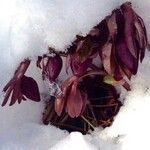
Helleborus viridis
Green hellebore · Lenten Rose · Christmas rose · Bear's Foot · Kukurek (SRB)
Description
Source: leafsnapHelleborus viridis, commonly called green hellebore, is a species of flowering plant in the buttercup family Ranunculaceae, native to Central and Western Europe, including southern England. All parts of the plant are poisonous.It was one of many plants first described by Linnaeus in volume one of the 1753 (tenth) edition of his Species Plantarum. The Latin species epithet viridis means "green". Two subspecies are recognised: Helleborus viridis subsp. viridis from Central Europe and the maritime Alps Helleborus viridis subsp. occidentalis from western Europe including the British Isles.Other common names recorded include bastard hellebore, bear's foot and boar's foot.Growing to around 60 cm (24 in) tall, the green hellebore is a semi-evergreen perennial plant. The flowers appear in spring (February to April). They have five large green oval sepals with pointed tips, and seven to twelve much smaller petals. The roots are rhizomatous. Subspecies viridis has flowers of 4–5 cm (1.6–2.0 in) diameter and leaves covered with fine hairs, while the flowers of subspecies occidentalis are smaller (3–4 cm diameter) and its leaves are smooth.The green hellebore is found in Western and Central Europe, east to eastern Austria and south to northern Italy. It grows on limestone and chalk-based soils in the south of England.It has become invasive in North America, Scandinavia, the Netherlands, and northern Germany.Consumption of any part of the plant can lead to severe vomiting and seizures. Its purgative properties meant that it was traditionally used as a folk remedy to treat worms in children and topically to treat lice.
💡 Green hellebore is a common forest plant found in Southeastern, Central, and Western Europe. In early spring, its vibrant green blooms brighten the otherwise dull forest floor. However, all parts of the plant are toxic, and ingesting them can lead to severe vomiting and seizures. Historically, green hellebore was believed to have magical properties, ranging from the power to cure madness to the ability to make one invisible.
🌳 Green hellebore has attracted interest as a bioindicator for ecological monitoring. Its presence in certain habitats signals a low level of soil disturbance, making it an important marker for environmentalists. It is also being investigated for phytoextraction, using its uptake ability to remove metals like arsenic from contaminated soils, showing promise as a bioremediation tool.
Care Guide
💧 Water
Green hellebore flourishes in cool, moist woodland settings, where it prefers consistent moisture without being waterlogged. After it is established, the plant becomes moderately drought-tolerant. Regular weekly watering is crucial, and using mulch can help retain moisture, especially in temperate areas. This aligns well with its preference for cooler temperatures and semi-shaded environments.
How should I water my Green hellebore?
To properly water the Green hellebore, use filtered water at room temperature or slightly warmer. Tap water may contain harmful particles. Avoid using cold water as it can shock the plant's system. Also, refrain from overhead watering to prevent foliage complications. Instead, soak the soil with filtered room temperature water until it is completely saturated. This method benefits the plant by moisturizing the roots and aiding nutrient absorption.
What if I give my Green hellebore too much or too little water?
Both overwatering and underwatering can harm the health of your Green hellebore, but overwatering is more common. When this plant gets too much water, its stems and leaves may wilt and turn yellow. Overwatering for a long time can also cause diseases like root rot, mold, and mildew, which can be fatal. Green hellebores are fairly tolerant of drought and underwatering is less likely. However, if it does happen, you may notice that the leaves become brittle and brown. It's important to recognize the signs of overwatering early when taking care of your Green hellebore. Some diseases caused by overwatering, such as root rot, may not be fixable if you wait too long. If you see early signs of overwatering, reduce your watering immediately. Also, check the soil quality where your Green hellebore is growing. If the soil drains poorly, replace it with a loose, well-draining potting mix. On the other hand, if you notice signs of underwatering, simply water more frequently until those signs go away.
How frequently should I water my Green hellebore?
If your Green hellebore is in a pot, the most precise way to determine if it needs water is to check the soil. Plunge your finger into the soil and if the top two to three inches feel dry, it's time to water. For Green hellebore planted outdoors, you can use a similar method to test the soil. Again, check the top few inches and if they are dry, it's time to water. Typically, during spring and early fall, watering once a week is sufficient. However, during extremely hot weather, you may need to water twice or more per week. It's important to note that mature, well-established Green hellebore plants can tolerate drought well.
How much water should I give my Green hellebore?
To properly water your Green hellebore, don't hold back on the amount of water you give. When the top two to three inches of soil are dry, thoroughly water the plant until the soil is completely soaked. Make sure to add enough water so that it flows out through the drainage holes at the bottom of the pot. If you don't see any excess water draining, it means you haven't given enough water. On the other hand, be careful not to let the water pool inside the soil, as this can harm the plant. If water doesn't drain properly, it may be due to poorly draining soil, which should be avoided. For outdoor plants, approximately 1 inch of rainfall per week will be enough.
What is the best way to water my Green hellebore as it grows?
The water needs of the Green hellebore can vary depending on its growth stages. In the first few years or when recently transplanted, it is important to provide more water than usual. During these stages, the plant focuses on growing new roots, which require extra moisture for optimal growth. However, as the plant matures, its water requirements decrease. Another stage that may require more water is during the bloom period when the flower development utilizes a significant amount of moisture.
☀️ Light Partial sun
The green hellebore flourishes when it receives a combination of sun and cloud cover for most of the day. Its growth is greatest under these circumstances, largely because it occurs in environments that provide that mixed light. Conversely, either a total lack or an excessive amount of sunlight can adversely affect its health.
What are the sunlight requirements for Green Hellebore?
Green Hellebore requires various sunlight conditions based on its environment. It thrives best in partial sun, defined as 3-6 hours of sunlight a day, but can also grow in full shade, which means receiving less than 3 hours of sunlight. Observing how sunlight moves through your garden is crucial for choosing the best spots for your plants, ensuring they receive the right balance of light and shade.
How does the environment affect Green Hellebore's growth?
The growth of Green Hellebore is maximized when it is exposed to a mixture of sun and cloud coverage for most of the day. This plant originally comes from environments that provide such a light mixture. An environment with either a complete lack of solar exposure or an overflow can negatively impact the plant's health. Artificial lighting can serve as a vital solution for indoor plants when natural sunlight is insufficient, particularly in less sunny spaces or during winter.
What are the recommended artificial lighting practices for Green Hellebore?
For optimal growth under artificial lighting, it's recommended to use LED lights because they can be customized to provide specific wavelengths of light needed by plants. Full sun plants require 30-50W/sq ft, partial sun plants need 20-30W/sq ft, and full shade plants need 10-20W/sq ft of artificial light. The light source should be placed 12-36 inches above the plant to mimic natural sunlight, and most plants need 8-12 hours of light per day.
What symptoms indicate light deficiency in Green Hellebore?
Symptoms of light deficiency in Green Hellebore include smaller new leaves, leggy or sparse growth, faster leaf drop, slower or no new growth, lighter-colored new leaves, and conditions such as chlorosis, sunscald, leaf curling, wilting, and leaf scorching. These symptoms suggest the plant is either getting too much or too little light, affecting its ability to photosynthesize effectively.
What solutions can address sunlight issues for Green Hellebore?
To address sunlight issues for Green Hellebore, gradually acclimatize plants to desired sunlight conditions. For plants that need more light, gradually shift them to sunnier spots each week or use artificial lighting like desk or ceiling lamps for at least 8 hours daily. For outdoor plants, avoid drastic changes in light intensity to prevent sunburn. Minimizing obstructions, such as pruning trees, can help, as well as transplanting smaller plants during their dormant period to locations with better sunlight and drainage. It’s important to note that parts of the plant damaged by insufficient light may not recover, but new growth should be healthy with improved light exposure.
🌡️ Temperature 5–35°C
Green hellebore thrives in cooler environments and prefers temperatures of 41 to 95 °F (5 to 35 ℃). When seasons shift, keep it within this range by providing shade or using artificial heat as required by the outside temperature.
What are the ideal growing conditions for Green hellebore?
Green hellebore thrives in cooler climates, with ideal growing temperatures ranging between 41 to 95°F (5 to 35°C). To maintain this temperature range through the seasons, it's recommended to provide shade during hotter periods or artificial heat when it's cold outside. Green hellebore is known for its strong cold resistance, generally not requiring special frost protection measures during winter. However, in cases where winter temperatures are expected to fall below -25°C, it's essential to protect the plant by covering it with soil or straw and water it abundantly before the first freeze, ensuring the soil stays moist to prevent drought and water scarcity during the colder months.
How does low temperature affect Green hellebore, and what are the solutions?
Green hellebore is cold-tolerant, ideally needing temperatures to stay above 5°C. During the winter months, it's crucial to keep the temperature above -20°C. If temperatures fall below -25°C, the plant may not show noticeable changes during winter, but there could be decreased sprouting or no sprouting at all in spring. The recommended solution for affected plants in spring is to remove any parts that have failed to sprout, ensuring the plant can continue to grow healthily.
How does high temperature affect Green hellebore, and what are the corrective measures?
In summer, it's important to keep Green hellebore's temperature below 35°C. Exceeding 38°C can cause the leaves to lighten in color, become prone to curling, suffer from sunburn, and in severe cases, the entire plant might wilt and dry out. To mitigate these issues, sunburned and dried parts should be trimmed away. Moving the plant to a shaded location or using a shade cloth can protect it from the midday and afternoon sun. Additionally, watering the plant in the morning and evening helps keep the soil moist and supports the plant's health during hotter periods.
💨 Humidity normal (40-60%)
This plant will thrive in moderate humidity, which is probably the level in your home. However, misting it a few times a week can be very beneficial. Make sure the room has good ventilation.
🪴 Soil 5-7
🌱 Fertilizer
The best time to fertilize Green hellebore is in early spring, as it emerges from dormancy and begins active growth. Fertilizing provides essential nutrients needed for healthy development. Although Green hellebore requires relatively little fertilizer, an annual application can improve its survival and encourage better, longer-lasting flowers.
Why should I use fertilizer on my Green hellebore plant?
The main structure of the Green hellebore is made up of its leaves, and fertilization is a significant way to ensure the leaves look great and function well. By fertilizing properly, you can help the Green hellebore maintain consistent colors and a healthy texture in its leaves. Additionally, fertilization has benefits underground as it promotes the growth of new roots and the maintenance of existing ones in the root system. This means that fertilizing not only keeps the plant healthy in the present, but also improves its ability to absorb nutrients from the soil in the future.
When should I fertilize my Green hellebore?
If you grow your Green hellebore outdoors each year, it will start growing new leaves in early spring. This is the signal that it's time to fertilize the plant for the year. While a single application of fertilizer in the spring is usually enough for the Green hellebore to do well, if you want to maximize its growth, you can feed it multiple times throughout the spring and early summer. In this case, you can fertilize your Green hellebore about once every month to a month and a half.
When is it not a good idea to fertilize my Green hellebore?
During the late fall and winter, your Green hellebore will go into a dormant phase and stop growing. It's important to avoid fertilizing it during this time. In the spring and summer, if you choose to fertilize, gradually reduce the amount as summer approaches because the growth rate of your Green hellebore will also slow down. It is never a good idea to fertilize your Green hellebore when the weather is exceptionally hot or the soil is very dry. Fertilizing in these conditions can stress the plant and cause it to die early.
What kind of fertilizer does my Green hellebore plant need?
Choosing the best fertilizer for a Green hellebore is actually quite simple. These plants do well with a general-purpose garden fertilizer that has equal amounts of nitrogen, phosphorus, and potassium, like a 10-10-10 ratio. It's best to steer clear of fertilizers with high nitrogen levels. Granular fertilizers that are slow-release are typically the most effective and easiest to apply to the soil. Additionally, using an organic soil amendment such as compost can be a helpful way to feed your Green hellebore.
How do I make my Green hellebore plant grow better?
To properly care for your Green hellebore, wait until its first leaves sprout in early spring. Once this happens, apply a balanced granular slow-release fertilizer to the soil surrounding the base of the plant. You can repeat this process later in the season if desired. When applying fertilizer, always target the soil at the base of the plant and not the plant itself. Occasionally, you may need to move some leaves to access the soil above the roots. It is also recommended to water the plant before and after fertilizing.
🪴 Pot & Repot Every 12 months
✂️ Pruning
Green hellebore is a perennial plant admired for its attractive foliage and early blooms. To keep the plant healthy, prune it from early to late spring after it has finished flowering. Remove any damaged leaves and cut dead stems down to ground level. It is important to use clean tools during this process to minimize stress and prevent infection, which will promote healthier growth and more vibrant blooms.
🌿 Propagating
🐛 Diseases & pets
☠️ Toxicity
All parts of the plant are poisonous. Consumption of any part of the plant can lead to severe vomiting and seizures.
Characteristics
- Plant Type
- Herb
- Life Cycle
- Perennial
- Genus
- Helleborus
- Family
- Ranunculaceae
- Hardiness Zone
- 5-9
- Mature Height
- 20 cm to 61 cm
- Mature Spread
- 30 cm
- Leaf Color
- Dark Green
- Leaf Type
- Evergreen
- Flower Color
- White, Yellow, Green
- Flower Size
- 4.06 cm to 6.35 cm
- Bloom Time
- Spring
- Planting Time
- Spring
- Harvest Time
- Late spring, Early summer, Mid summer
- Native Area
- Central and Western Europe, including southern England