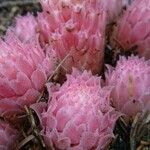
Hemitomes congestum
Coneplant · Gnome plant
Description
Source: leafsnapHemitomes congestum, commonly known as the Pacific Dwarf Mistletoe, is a parasitic plant that belongs to the family Santalaceae. Native to western North America, it thrives in coniferous forests stretching from Alaska to California. The plant boasts a distinctive appearance with its small, yellow-green leaves and red or yellow flowers that bloom in late spring or early summer. It can grow up to 30 cm tall and attaches itself to the branches of its host tree using specialized roots known as haustoria. The Pacific Dwarf Mistletoe is infamous for causing significant damage to its host trees. By extracting water and nutrients, it can result in stunted growth, reduced seed production, and even the death of the tree. Despite its parasitic nature and detrimental effects on trees, Hemitomes congestum plays a vital role in forest ecosystems. It provides food for birds like crossbills, which feed on its seeds. In summary, Hemitomes congestum is a fascinating yet potentially harmful plant with both positive and negative impacts on forest ecosystems.
Care Guide
💧 Water Every 7 days
The gnome plant originates from moist forest floors and prefers consistently moist soil, but it can tolerate moderate drought. To keep the soil at the right moisture level, water it weekly. Since the gnome plant thrives in high humidity, it's often kept indoors to replicate its natural rainforest habitat.
How should I water my Gnome plant?
To properly care for the Gnome plant, follow these guidelines: - Use filtered water at room temperature to water the plant. Tap water may have harmful particles. - Avoid using cold water, as it can shock the plant that is accustomed to warm environments. - Do not overhead water the plant, as it can cause problems with the foliage. - Instead, apply filtered room temperature water directly to the soil until it is completely soaked. - This helps the plant by moistening the roots and allowing them to spread and absorb nutrients effectively.
What should I do if I give my Gnome plant too much water or not enough?
Overwatering and underwatering can both harm your Gnome plant, but overwatering is more common. If you give your Gnome plant too much water, the stems and leaves may wilt and turn yellow. Overwatering for a long time can cause diseases like root rot, mold, and mildew, which can kill your plant. Underwatering is less common because Gnome plants can handle drought, but it can still happen. In that case, the leaves may become brittle and brown. It's important to catch signs of overwatering early, as some diseases like root rot can't be fixed if you wait too long. If you see these signs, reduce your watering schedule and check the soil. If it doesn't drain well, replace it with a loose, well-draining potting mix. If your Gnome plant is showing signs of needing more water, simply water it more regularly until the signs go away.
How often should I give water to my Gnome plant?
If your Gnome plant is in a pot, the most accurate way to determine if it needs water is to insert your finger into the soil. If the top two to three inches of soil feel dry, it's time to water the plant. If you have planted your Gnome plant in the ground outdoors, you can use a similar method to test the soil. Once the first few inches of soil have dried out, it's time to water the plant. Typically, during spring and early fall, you should water the plant about once a week using this method. However, during extremely hot weather, you may need to increase watering to twice a week or even more. It's worth noting that mature, well-established Gnome plants have an impressive ability to withstand drought.
How much water does my Gnome plant require?
To properly water your Gnome plant, be generous with the amount of water you give. Wait until the top 2-3 inches of soil are dry and then give the plant a good, thorough watering. Make sure to soak the entire soil. You want to add enough water that it flows through the drainage holes at the bottom of the pot. If you don't see any excess water draining, it means you haven't watered enough. However, be careful not to let the water accumulate in the soil, as this can harm the plant. On the other hand, if the water doesn't drain well through the pot, it means the soil doesn't drain properly, which is bad for the plant's health. Avoid using such soils. If the plant is outdoors, 1 inch of rain per week should be enough.
How should I water my Gnome plant as it grows?
The water needs of the Gnome plant can vary based on its growth stages. During the first few years of its life or when you transplant it to a new location, it needs more water than usual. This is because it focuses on growing new roots that will support future growth, and these roots perform best with a bit more moisture. However, after a few seasons, the plant requires less water. Another stage that requires more water is during the bloom period, as flower development relies on a significant amount of moisture.
☀️ Light Full shade
Gnome plant is native to habitats such as forest understories or rocky areas, which provide natural shade. It prefers Full Shade but can tolerate Partial Sun.
How much sunlight does the Gnome plant require each day?
Although the Gnome plant doesn't require excessive light, it does need some throughout the day for photosynthesis and proper growth. While it doesn't need a full eight hours of sunlight, it does need at least six hours of indirect sunlight daily to grow healthily.
What type of sunlight does the Gnome plant need to grow well?
The Gnome plant is a shade-loving plant that needs protection from direct sunlight, especially during the hottest parts of the day. However, it can handle some sunlight in the mornings and can even tolerate small amounts of afternoon sun, as long as it's not too hot or in one spot for the entire afternoon and evening.
How can I prevent the Gnome plant from getting too much sun and getting damaged?
To make sure your Gnome plant doesn't get damaged by direct sun, there are a few tricks you can try. First, you can strategically choose locations near buildings or trees where the plant will receive some shade. Another option is to create layers by planting taller plants around the Gnome plant that can handle direct sunlight. Lastly, you can use shade cloth to build a sunshade that faces the sun specifically during the hottest times of the day.
What happens if the Gnome plant doesn't get enough sunlight?
Even though this plant thrives in the shade, it can still suffer from insufficient sunlight. Look out for signs such as leaves bending towards brighter spots, smaller leaves, and slow growth. If your Gnome plant is in a pot, try relocating it or removing other foliage to allow more sunlight to reach it.
What happens if the Gnome plant gets too much sunlight?
The Gnome plant is sensitive to excessive sunlight exposure. If its leaves are consistently exposed to bright, direct sunlight for several hours each day in the same areas, you might observe yellowing or browning at the tips of the leaves. In the most severely affected spots, the leaves may also curl inward. These are indications that your Gnome plant is being overheated by the sun and requires more shade to thrive.
🌡️ Temperature 5–32.2°C
Gnome plant can tolerate a wide range of temperatures, but its distribution may still be restricted by various combinations of moisture and heat. It does best in warm summer conditions with sufficient rainfall or watering. Extended periods of cloudy, rainy weather or prolonged high temperatures increase the chance that the Gnome plant will die. In winter, adequate protection from cold can raise the plant's survival chances.
💨 Humidity
🪴 Soil 5-6
🌱 Fertilizer
A single spring application of fertilizer is generally enough for the Gnome plant, although repeated feedings can enhance growth. Fertilize roughly every month to month and a half. Feeding improves the leaves' appearance and function, helping maintain uniform color and a healthy texture. It also encourages root development and better nutrient uptake for the plant's long-term health.
🪴 Pot & Repot
✂️ Pruning
The gnome plant flourishes in moist, shaded environments. For best results, prune it in early to late spring by removing any dead or damaged parts to boost the plant's health and appearance. Regular light pruning is also beneficial, as it helps improve air circulation and maintain the plant's shape. Always use clean, sharp tools to ensure optimal recovery and growth.
🌿 Propagating
🐛 Diseases & pets
☠️ Toxicity
Characteristics
- Plant Type
- Herb
- Life Cycle
- Perennial
- Genus
- Hemitomes
- Family
- Ericaceae
- Hardiness Zone
- 5-8
- Mature Height
- 2 cm to 10 cm
- Mature Spread
- 2 cm to 5 cm
- Leaf Color
- Brown, Tan
- Leaf Type
- Evergreen
- Flower Color
- Pink
- Flower Size
- 1.02 cm to 2.03 cm
- Bloom Time
- Early summer, Mid summer
- Harvest Time
- Late summer, Early fall