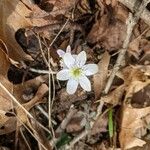
Hepatica americana
Roundlobe hepatica · Round-lobed Hepatica · American Hepatica · American Liverleaf · Round-leaved Hepatica
Description
Source: leafsnapThese herbaceous perennial plants have dainty little flowers that come in shades of blue. Early bloomers, Hepatica are usually one of the first flowers to appear in any garden, and they can stay around for a few weeks. Hepatica are often planted alongside other woodland wildflowers in clumps under tree canopies where the soil is rich or in shady rock gardens. Providing they're left undisturbed, and the conditions are right, they're regarded as being low-maintenance and long-lived.
Care Guide
💧 Water 1-2 times a week
During their growth period in the spring, Hepatica appreciate plenty of water. Adding leaf-mold or another well-rotted compost can help to ensure they retain plenty of moisture. Once you move into the summer, providing the soil is kept lightly moist this should be sufficient. New plants especially need to be well-watered while they establish.
☀️ Light Partial sun
Roundlobe Hepatica grows best with moderate, filtered light similar to its native woodland setting. Too much sun can stress the plant and scorch its leaves, while too little light can restrict growth and reduce flowering.
🌡️ Temperature 5–32.2°C
Roundlobe Hepatica can tolerate a wide range of temperatures, but its occurrence may still be restricted by different combinations of moisture and heat. It does best in warm summer conditions with sufficient rainfall or watering. Long periods of cloudy, rainy weather or extended high temperatures can raise the risk of Roundlobe Hepatica dying. In winter, protecting it from cold improves its chances of survival.
💨 Humidity
🪴 Soil 6-6
🌱 Fertilizer
The best time to fertilize a Roundlobe Hepatica is in early spring, when it is coming out of dormancy and beginning active growth. Fertilization supplies essential nutrients for healthy development. Although Roundlobe Hepatica has relatively low fertilizer requirements, applying fertilizer annually can improve its survival and encourage better, longer-lasting flowers.
🪴 Pot & Repot
✂️ Pruning
Round-lobed Hepatica can be pruned of dead, damaged, or diseased parts. You may also remove spent flowers to prevent vigorous spreading.
🌿 Propagating
🐛 Diseases & pets
☠️ Toxicity
Characteristics
- Plant Type
- Herb
- Life Cycle
- Perennial
- Genus
- Hepatica
- Family
- Ranunculaceae
- Hardiness Zone
- 5
- Mature Height
- 15 cm to 30 cm
- Mature Spread
- 15 cm to 23 cm
- Leaf Color
- Green
- Leaf Type
- Evergreen
- Flower Color
- White, Pink, Purple, Blue, Violet
- Flower Size
- 2.54 cm to 5.08 cm
- Bloom Time
- Early spring, Mid spring
- Planting Time
- Spring, Summer
- Harvest Time
- Late spring, Early summer