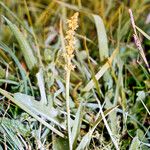
Herminium monorchis
Musk orchid
Description
Source: leafsnapHerminium monorchis, the musk orchid, is a commonly occurring species of orchid. It is widespread across much of Europe and northern Asia from France to Japan, including China, Siberia, Mongolia, Ukraine, Germany, Italy, Scandinavia, etc.It has a localised distribution in Britain; sites where it is found include Ham Hill in Wiltshire and Noar Hill in Hampshire.
Care Guide
💧 Water
The musk orchid flourishes in humid conditions that mimic its natural environment. While it can tolerate moderate drought, it thrives best with consistent moisture, avoiding waterlogged conditions. To ensure its health, water the orchid weekly. Additionally, seasonal rainfall plays a vital role in supporting its outdoor growth and delicate flowering cycle.
How should I water my Musk orchid?
The way you water your Musk orchid depends on whether it is actively growing or not. During active growth, you should water the soil and occasionally water from above if it's warm to allow the leaves to absorb moisture. In winter or cool and wet weather, stick to watering the soil directly. If the roots and leaves of the orchid become dry or discolored, it needs more water. Overwatering will make the orchid look mushy and limp. Use a well-draining potting mix and water the orchid multiple times per week during the growing season, ensuring that each watering drains quickly. The size of the pot will determine how often you water, with larger pots needing water less frequently. Rainwater and distilled water are recommended, and try to match the water temperature to the air temperature as closely as possible.
What should I do if I give my Musk orchid too much water or not enough water?
One common way to kill a Musk orchid is by keeping it in overly moist soil for too long. While these plants need frequent watering during growth, they also require well-draining soil. If overwatered, the plant becomes mushy and develops root rot. In such cases, you can use sterile pruning shears to remove any rotted roots and repot the orchid in a well-draining container and potting mix. However, Musk orchids don't respond well to excessive repotting, so it's important to find the right watering balance. If the orchid is under-watered, it will start to shrivel and feel dry, indicating that the soil is drying out faster than expected. In this case, you should increase watering frequency.
How frequently should I water my Musk orchid?
During the active growth stage, in the spring and summer, you should water your Musk orchid once or twice per week. If it's hot and dry, you may need to water it three times per week or more. In the winter, you'll still need to water your orchid, but not as often. Aim for two to three times per month. Remember, if you keep your orchid indoors during winter, the soil may dry faster, so you might need to water it more frequently. In the fall, gradually reduce your watering from the summer schedule to the reduced winter watering schedule.
What should I think about when watering my Musk orchid at different times of the year and when it is growing?
When planning the watering schedule for your Musk orchid, take into account the two important growth phases. The first phase is the active growth period, which occurs in spring and summer. During this time, it is necessary to water the plant multiple times per week. The second phase is the rest period that the Musk orchid goes through in winter, lasting about two to three months. During this period, the plant requires less water and fertilizer than usual, so water it about once or twice per month. In the fall, gradually decrease the frequency of watering from multiple times per week to once or twice per month, which is appropriate for the winter season.
What is the best way to water my indoor Musk orchid?
The Musk orchid needs a relatively humid growing environment. However, most indoor locations have less air moisture than this plant prefers, so the plant and soil dry out faster when grown indoors. To address this issue, you could use a humidifier in the room where you grow the orchid and water it more often. Remember though, while the orchids like humidity, they also need good air circulation to prevent too much moisture and potential diseases. To ensure proper air circulation, you may want to have a fan in the room where the orchid is being grown.
☀️ Light Partial sun
The musk orchid naturally occurs in habitats like forest understories or rocky sites, where it encounters natural shade. It favors partial sun but can tolerate full sun or deep shade, showing its hardy and adaptable nature.
What are the sunlight requirements for Musk orchid?
Musk orchid thrives in partial sun, requiring about 3-6 hours of sunlight per day. It's native to environments like forest understories or rocky areas, experiencing natural shade. Despite its preference for partial sun, it can also adapt well to full shade conditions. It's important to observe the movement of sunlight through your garden to select spots that offer a balanced mix of light and shade, ensuring the plant's health and happiness.
How can I ensure my Musk orchid receives enough light indoors?
Indoor Musk orchid plants require adequate lighting for optimal growth, especially when natural sunlight is limited. Artificial lighting becomes essential in these scenarios. LED lights are recommended due to their ability to provide specific wavelengths needed by the plant. Full sun plants need 30-50W/sq ft, partial sun plants need 20-30W/sq ft, and full shade plants need 10-20W/sq ft of artificial light. The light source should be placed 12-36 inches above the plant to mimic natural sunlight, and most plants will benefit from 8-12 hours of light per day.
What are the signs of insufficient light in Musk orchid?
Insufficient light in Musk orchid can lead to several symptoms indicating poor growth conditions. These include smaller new leaves, leggy or sparse growth, faster leaf drop, slower or no new growth, and lighter-colored or chlorotic leaves. Sunscald, leaf curling, wilting, and leaf scorching are additional symptoms that may occur with excessive sunlight or sudden exposure to intense light. Monitoring these signs helps in adjusting the plant's exposure to suitable light conditions.
What are effective solutions for light-related issues in Musk orchid?
To address light-related issues in Musk orchid, consider the following indoor, outdoor, and ground solutions. Indoors, gradually shift the plant to sunnier spots each week until it gets 3-6 hours of sunlight or use artificial lighting, such as desk lamps or grow lights, for at least 8 hours daily. Outdoors, move your plants to sunnier locations gradually to prevent sunburn, allowing them to acclimatize to the change. Reducing obstructions like pruning trees or transplanting smaller plants to sunnier areas can also help increase sunlight exposure. Remember, while parts of the plant affected by insufficient light may not recover, new growth will be healthy with improved light conditions.
🌡️ Temperature 0–21.1°C
Musk orchid comes from habitats where temperatures range from 32 to 70 °F (0 to 21 ℃). It achieves its best growth within that range. In colder or warmer seasons, it is advisable to modify the plant's environment to recreate those preferred conditions.
What is the native temperature range for Musk orchid?
Musk orchid is native to environments with temperature ranges from 32 to 70 °F (0 to 21 °C). For optimal growth, maintaining the surrounding temperature within this range is beneficial. In seasons with colder or hotter temperatures, adjusting the plant's surroundings to mimic these preferred conditions can help maintain its health.
Is Musk orchid cold-tolerant, and how should it be cared for in winter?
Musk orchid exhibits high cold tolerance and does not require additional frost protection measures during winter. However, to prepare for winter, it is advised to water the plant generously before the first freeze in autumn. This ensures the soil remains moist when it enters a frozen state, helping to prevent drought and water scarcity for the plant during the winter and early spring.
What should be done if the Musk orchid experiences temperature below its cold tolerance level?
Although Musk orchid is extremely cold-tolerant, winter temperatures should remain above -40°C. If temperatures fall below this threshold, the plant may experience a decrease in sprouting or fail to sprout during spring. In such cases, remove any parts of the plant that have failed to sprout in spring as part of the care regimen.
How does high temperature affect Musk orchid and what are the recommended solutions?
Musk orchid is not tolerant of high temperatures. Growth ceases and the plant becomes more susceptible to rot when temperatures exceed 21°C. To alleviate damage from high temperatures, trim away sunburned and dried-up parts. Moving the plant to provide shade during the midday and afternoon sun, or using a shade cloth, can protect it. Additionally, watering the plant in the morning and evening helps keep the soil moist and supports the plant's health.
💨 Humidity
🪴 Soil 6-7
🌱 Fertilizer
For the Musk orchid, the primary time to fertilize is in early spring when the blooms are forming. The proper fertilizer promotes better blooms and helps the Musk orchid produce attractive flowers. Fertilizing in early spring ensures strong flowering during the season and supplies energy for its dormant growth phases.
🪴 Pot & Repot
✂️ Pruning
The musk orchid has small, fragrant flowers and benefits from pruning between early and late spring. Light trimming promotes healthy blooms and improves airflow, which reduces the risk of disease. To prevent infections, always use sterilized tools for pruning. Additionally, remove any dead stems to support the plant's growth without causing stress.
🌿 Propagating
🐛 Diseases & pets
☠️ Toxicity
Characteristics
- Plant Type
- Herb
- Life Cycle
- Perennial
- Genus
- Herminium
- Family
- Orchidaceae
- Hardiness Zone
- 2
- Mature Height
- 5 cm to 34 cm
- Mature Spread
- 5 cm to 10 cm
- Leaf Color
- Green
- Leaf Type
- Deciduous
- Flower Color
- Yellow
- Flower Size
- 15.24 cm
- Bloom Time
- Early summer, Mid summer
- Planting Time
- Spring, Summer
- Harvest Time
- Late summer, Early fall
- Native Area
- India, Sweden, Austria, Slovakia, Pakistan, Slovenia, Croatia, Belarus, Russia, Germany, Estonia, Koppen, South Korea, Latvia, Romania, Belgium, Netherlands, Nepal, France, Czech Republic, Bulgaria, Poland, Ukraine, Serbia, China, Lithuania, Norway, Italy, Kazakhstan, Switzerland, Denmark, Japan, Mongolia, Finland, United Kingdom, Hungary