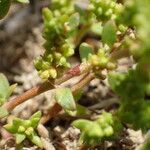
Herniaria glabra
Herniary breastwort · Smooth rupturewort · Rupturewort · Glabrous rupturewort · Smoother rupture-wort
Description
Source: leafsnapHerniaria glabra, commonly known as Rupturewort, is a low-growing perennial plant in the Caryophyllaceae family. Native to Europe and Asia, it has also been introduced as an ornamental plant in other parts of the world. This plant features a prostrate growth habit, forming a dense mat of small, green leaves less than 1 cm long. The leaves are arranged in pairs opposite each other on the stem and lack petioles. Herniaria glabra produces inconspicuous greenish-white flowers from June to August. These small flowers grow in clusters at the tips of stems or within leaf axils. They lack petals but have five sepals that create a cup-like structure around the reproductive organs. The plant thrives in well-drained soils with full sun exposure but can also tolerate partial shade. It is drought-tolerant once established, making it an excellent ground cover for dry areas or rock gardens. In traditional medicine, Herniaria glabra has been valued for its diuretic properties, often used to treat urinary tract infections and kidney stones due to its high content of saponins and flavonoids. Overall, Herniaria glabra is an attractive, low-maintenance ground cover with ornamental value suitable for various landscaping purposes. It also possesses medicinal properties that have been recognized in traditional medicine practices over time.
Care Guide
💧 Water Every 7 days
Smooth rupturewort flourishes in well-drained soils and prefers consistent moisture without becoming waterlogged. It is well-suited to moderate climates and can withstand short periods of dryness. For optimal health, water it weekly. As a groundcover, smooth rupturewort benefits from rainwater, which promotes its dense, mat-forming growth.
How should I water my Smooth rupturewort plant?
When watering the Smooth rupturewort, use filtered room temperature water. Tap water may contain harmful particles for this plant. The Smooth rupturewort prefers warmer water as it comes from a warm environment. Avoid overhead watering to prevent foliage complications. Instead, pour filtered room temperature water onto the soil until it is soaked. This helps moisten the roots and aids in their spreading and nutrient collection.
What should I do if I give my Smooth rupturewort too much or too little water?
Overwatering is a common problem that can harm your Smooth rupturewort. When this plant gets too much water, its stems and leaves wilt, turn yellow, and can develop diseases like root rot, mold, and mildew. These diseases can ultimately kill the plant. Although underwatering is less of a concern for this plant due to its drought tolerance, it can still happen. When underwatering occurs, the leaves become brittle and brown. Therefore, it is important to recognize the signs of overwatering early to prevent irreversible damage. If you notice these signs, reduce your watering schedule immediately and consider replacing the soil if it drains poorly. Conversely, if you see signs of underwatering, simply water the plant more regularly until the signs improve.
How often do I need to water my Smooth rupturewort?
If your Smooth rupturewort plant is in a pot, you can check if it needs water by sticking your finger into the soil. If the top two to three inches of soil are dry, it's time to water it. If you are growing the plant outdoors in the ground, you can use a similar method to test the soil. If the top few inches of soil have dried out, it's time to water. Generally, in the spring and early fall, you'll need to water this plant about once a week using this method. However, during extremely hot weather, you may need to water it twice or more per week. Nevertheless, mature, well-established Smooth rupturewort plants have a remarkable ability to withstand drought.
How much water does my Smooth rupturewort plant need?
When watering your Smooth rupturewort, don't hold back - give it a good amount of water. Make sure the top few inches of soil are dry, then water the plant thoroughly. The water should soak all the way through the soil and drain out of the bottom of the pot. If you don't see any excess water draining, you may not have watered enough. However, be careful not to let water accumulate in the soil, as that can harm the plant. On the other hand, if the water isn't draining, your soil may not be draining well, which is bad for the plant's health. If the plant is outside, about 1 inch of rain per week should be enough.
How do I water my Smooth rupturewort when it is growing at different stages?
The water needs of the Smooth rupturewort vary depending on its growth stages. In the first few years of its life or after being transplanted, it requires more water. During these stages, the plant focuses on developing new roots to support future growth, and these roots need additional moisture. As the plant matures, it will require less water. However, during the bloom period, the development of flowers requires a significant amount of moisture, so it may need more watering at this time.
☀️ Light Full sun
Smooth rupturewort does best beneath a sky bathed in abundant sunlight. However, it can tolerate situations where the sun’s light is more limited. Both too much and too little sun can harm its health, underscoring the need for a balanced amount of light, consistent with its native habitat’s sunny yet sheltered conditions.
What kind of sunlight does Smooth rupturewort require?
Smooth rupturewort plants require full sun every day, needing at least six hours of sunlight to maintain healthy leaves, roots, and blooms. While some perennials like the Orange Daylily or Giant Coreopsis can survive on a minimum of three hours of sunlight, they won't flourish as they would in sunnier conditions.
Does sunlight harm Smooth rupturewort? How can I protect Smooth rupturewort from damage caused by the sun and heat?
In warm climates, some Perennial Flowering Plants may struggle with excessive heat and suffer from sun damage. They can wilt, dry out, or even experience growth problems if they are consistently exposed to the intense afternoon sun. However, not all plants require protection from the light afternoon sun. For those that are harmed by intense afternoon exposure, it is recommended to provide them with some shade in warmer climates. Gardeners can achieve this by planting these plants in areas that do not receive direct heat during the afternoon, such as under trees or behind bushes.
Should I keep Smooth rupturewort out of the sun?
Certain perennial plants require ample sunlight to reach their maximum bloom. However, in warmer climates, some of these plants actually benefit from less sun. For instance, individuals residing in hotter regions might find it beneficial to shade their flowering perennials during the intense afternoon sun, especially during summer months. Although many perennial flowering plants prefer partial shade in the hottest climates, there are exceptions. Take the Giant Coreopsis, for example, as it is not bothered by excessive sun exposure. These plants can flourish even when placed in the full sun during scorching weather.
What happens if the Smooth rupturewort doesn't get enough sunlight?
If your Smooth rupturewort plants are not receiving sufficient sunlight, you will observe signs that indicate their requirements are not being met. These plants will not produce as many blooms as they would if they had access to full sun exposure. Some plants may exhibit dry spots on their leaves, although most will still manage to bloom with insufficient sunlight. However, the flowers that do appear will be smaller and less vibrant.
Does Smooth rupturewort require any specific sunlight care during its various stages of growth?
Smooth rupturewort is a great flower for gardens. It blooms best with at least six hours of sunlight each day. However, during the hottest parts of the day, it can be beneficial to provide some shade to help the flowers stay fresh for longer. For young plants, it is important to ensure they receive enough sunlight but are protected from intense afternoon heat. Fully mature plants should be given plenty of sun to support proper growth.
🌡️ Temperature 5–32.2°C
Smooth rupturewort is a plant that thrives in a temperature range of 68 to 95 °F (20 to 35 °C). If its native environment is more temperate with seasonal changes, bi-seasonal adjustments are indicated for optimal growth.
What is Smooth Rupturewort, and what are its botanical characteristics?
Smooth Rupturewort, botanically known as Herniaria glabra, is a plant that thrives in temperatures ranging from 68 to 95 °F (20 to 35 °C). It originates from a temperate native environment that undergoes seasonal variations. This plant displays strong cold resistance, making it a resilient choice for various climates.
How should Smooth Rupturewort be cared for in cold weather?
Despite its strong cold resistance, it's important to protect Smooth Rupturewort in extremely cold conditions, specifically when temperatures drop below -30°C. Preparing the plant for winter involves abundant watering before the first freeze of autumn to ensure the soil stays moist and enters a frozen state. This helps prevent drought and water scarcity during the colder months. If temperatures are expected to fall significantly below freezing, protecting the plant with covering materials like soil or straw is advisable.
What are some important temperature-related symptoms to watch for in Smooth Rupturewort?
Smooth Rupturewort shows distinct symptoms when exposed to temperatures outside its ideal range. During low-temperature conditions, especially below -30°C, the plant may not show immediate changes but can experience decreased sprouting or no sprouting at all in spring. In response, removing any parts that fail to sprout is recommended. In high temperatures above 35°C, the plant's leaves may become lighter, curl, become susceptible to sunburn, or in severe cases, wilt and dry out. Addressing this involves trimming sunburned and dried parts, providing shade during peak sun hours, and maintaining soil moisture with morning and evening watering.
💨 Humidity
🪴 Soil 6-7
🌱 Fertilizer Every 90 days
A single spring fertilizer application is generally adequate for Smooth rupturewort, though several feedings can boost growth. Apply fertilizer every month to every month and a half. Fertilizing improves the leaves' appearance and function, helping them keep an even color and a healthy texture. It also encourages root development and better nutrient uptake for sustained plant health.
Why is it necessary to give my Smooth rupturewort plant fertilizer?
The main structure of the Smooth rupturewort is made up of its leaves. Fertilization is a really important way to make sure these leaves both look great and serve their purpose effectively. By fertilizing properly, you can ensure that your Smooth rupturewort has consistent leaf color and a healthy texture. Fertilization also has benefits below the surface of the soil. It helps your plant create new roots and maintain the ones it already has. This means that fertilization not only keeps your plant healthy now, but also helps it absorb soil nutrients better in the future.
When should I fertilize my Smooth rupturewort plant?
If you grow Smooth rupturewort outdoors, it will begin to grow new leaves in early spring. This is when you should start fertilizing. Usually, one application of fertilizer is enough, but if you want your plant to grow even more, you can fertilize it multiple times during spring and early summer. In this case, you can fertilize it once every month to a month and a half.
When is the best time to not fertilize my Smooth rupturewort plant?
During late fall and winter, your Smooth rupturewort goes into a dormant phase and stops growing. It's important to avoid fertilizing it during this time. In spring and summer, if you decide to fertilize, start reducing the amount of fertilizer as summer approaches because the growth rate of your Smooth rupturewort will slow down. It's not a good idea to fertilize when the weather is unusually hot or when the soil is very dry because it can stress your Smooth rupturewort and cause it to die prematurely.
What kind of fertilizer does my Smooth rupturewort plant need?
Choosing the best fertilizer for a Smooth rupturewort is thankfully a simple task. These plants will thrive on a general-purpose garden fertilizer with equal amounts of nitrogen, phosphorus, and potassium. A fertilizer with a 10-10-10 ratio or something similar will work effectively. Avoid fertilizers with high nitrogen levels if you're unsure. Granular fertilizers are commonly recommended for Smooth rupturewort, preferably slow-release ones that are easy to apply. Additionally, using an organic soil amendment like compost can be beneficial for feeding your Smooth rupturewort.
How do I help my Smooth rupturewort grow better?
To ensure healthy growth of your Smooth rupturewort in early spring, wait until you see the first leaves emerging from the soil's surface. Once this happens, apply a granular slow-release fertilizer with a balanced formula to the soil surrounding the base of the plant. If desired, you can repeat this process later in the season. Remember to apply the fertilizer to the soil, not directly to the plant. Sometimes, you may need to gently move some leaves to access the soil above the roots. It is also beneficial to water the Smooth rupturewort before and after fertilizing.
🪴 Pot & Repot
✂️ Pruning
Smooth rupturewort is a mat-forming perennial with small green leaves. To maintain its shape and encourage denser growth, prune it in the spring by trimming back one-third of the plant using clean shears. Additionally, remove any dead or damaged stems to enhance its health, appearance, and vigor.
🌿 Propagating
🐛 Diseases & pets
☠️ Toxicity
Characteristics
- Plant Type
- Herb
- Life Cycle
- Perennial, Annual, Biennial
- Genus
- Herniaria
- Family
- Caryophyllaceae
- Hardiness Zone
- 4-8
- Mature Height
- 1 cm to 3 cm
- Mature Spread
- 30 cm
- Leaf Color
- Green, Bronze
- Leaf Type
- Evergreen
- Flower Color
- Green
- Flower Size
- 0.10 cm to 0.18 cm
- Bloom Time
- Late spring, Early summer, Mid summer
- Planting Time
- Spring, Autumn
- Harvest Time
- Mid summer, Late summer, Early fall
- Native Area
- Europe and Asia