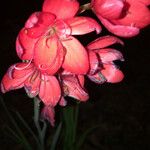
Hesperantha coccinea
Kaffir Lily · River-lily · Crimson Flag Lily
Description
Source: leafsnapHesperantha coccinea, commonly known as the Scarlet River Lily or Crimson Flag Lily, is a perennial plant native to South Africa. This striking plant belongs to the Iridaceae family and is popular for its vibrant red flowers that bloom in autumn. The trumpet-shaped flowers are borne on tall stems that can reach heights of up to 60 cm. The leaves are long, narrow, and resemble blades of grass. Hesperantha coccinea thrives in moist soil and prefers locations with full sun or partial shade. It can be successfully grown in garden beds or containers, making it a versatile choice for any garden. During the growing season, the plant requires regular watering but should be allowed to dry out slightly between waterings. Propagation of Hesperantha coccinea can be achieved through bulb division or by sowing seeds in the spring. Once established, this hardy plant requires minimal maintenance but benefits from occasional fertilization with an all-purpose fertilizer. In summary, Hesperantha coccinea is an attractive and easy-to-grow perennial that brings vibrant color to any garden during the autumn months, a time when many other plants have ceased blooming.
Care Guide
💧 Water Every 7 days
The Kaffir lily thrives in moist conditions, preferring constant moisture without becoming waterlogged. To replicate its natural environment, it should be watered weekly. This outdoor plant flourishes when rainfall patterns match its growth cycles, providing enough hydration during crucial blooming periods.
How should I water my Kaffir lily?
To properly water the Kaffir lily, use filtered water at room temperature. Tap water can harm the plant due to particles it may contain. The water should be at room temperature or slightly warmer because the Kaffir lily prefers warm environments and cold water can shock it. Avoid watering from above as it can cause issues with the foliage. Instead, apply filtered room temperature water directly to the soil until it is completely soaked. This helps moisten the roots and supports their spread through the soil and nutrient absorption.
What should I do if I give my Kaffir lily too much or too little water?
Both overwatering and underwatering can harm your Kaffir lily, but overwatering is more common. Too much water can cause wilting, yellowing leaves, and diseases like root rot, mold, and mildew that can kill the plant. Underwatering is less likely, but it can lead to brittle, brown leaves. To care for your Kaffir lily, it's important to recognize signs of overwatering early. Reduce watering if you see these signs and consider improving soil drainage. For underwatering, simply increase watering until the plant recovers.
How often should I give water to my Kaffir lily?
Determining if your Kaffir lily needs water is easiest when it's in a pot. Simply stick your finger into the soil and if the top two to three inches are dry, it's time to water. For Kaffir lilies grown outdoors, test the soil in a similar manner. If the top few inches are dry, it's time to water. In the spring and early fall, watering once a week is usually sufficient. However, in extremely hot weather, you may need to water twice a week or more. It's worth noting that mature Kaffir lilies have a remarkable ability to withstand drought.
How much water does my Kaffir lily require?
When watering your Kaffir lily, don't be afraid to give it plenty of water. Make sure the top few inches of soil are dry before watering thoroughly. You want to add enough water to saturate the soil and allow excess to drain through the pot's drainage holes. If you don't see water draining, you may have not watered enough or have poorly draining soil. Avoid letting water accumulate in the soil, as this can be harmful to the plant. If the plant is outside, 1 inch of rain per week should be enough.
How do I water my Kaffir lily as it grows?
The water needs of the Kaffir lily vary depending on its growth stages. In the first few years or after transplanting, it requires more water to support the growth of new roots. These roots need extra moisture to perform well. As the plant matures, it will require less water. During the bloom period, the plant may also need more water due to the significant amount of moisture used for flower development. So, additional watering may be necessary during this time.
☀️ Light Full sun
Kaffir lily does best in settings with plentiful natural light, replicating the conditions of its native habitat. It cannot tolerate shade and needs unfiltered light for healthy growth. Too little sunlight can hinder its flowering and overall development, while too much light may scorch the leaves.
What are the sunlight requirements for Kaffir Lily?
Kaffir Lily requires more than 6 hours of direct sunlight daily to thrive. It's essential to monitor the sun's movement through your garden to find a location that offers a good balance of light and shade. In its natural habitat, Kaffir Lily prefers abundant natural light and does not tolerate shade. Insufficient sunlight can affect its blooming and growth, while too much direct light may lead to leaf scorching.
Can I use artificial lighting for my Kaffir Lily?
Yes, artificial lighting can be used for Kaffir Lily, especially when natural sunlight is insufficient, such as in winter or in less sunny spaces. LED lights are a popular choice because they can be customized to meet the needs of your plants. Full sun plants require 30-50W/sq ft of artificial light, partial sun plants need 20-30W/sq ft, and full shade plants need 10-20W/sq ft. The light source should be placed 12-36 inches above the plant and kept on for 8-12 hours per day to mimic natural sunlight conditions.
What are the symptoms of incorrect lighting for Kaffir Lily?
Symptoms of incorrect lighting for Kaffir Lily include small or lighter-colored new leaves, leggy or sparse growth, faster leaf drop, and slower or no new growth. In cases of excessive light, symptoms may include chlorosis, sunscald, leaf curling, wilting, and leaf scorching. These indicators reflect the plant's effort to adapt to insufficient or excessive light conditions.
How can I address lighting issues for Kaffir Lily?
For indoor Kaffir Lilies, gradually increase exposure to sunlight or use artificial light, ensuring at least 6 hours of direct sunlight daily. Use a south-facing window or invest in professional plant grow lights. For outdoor plants, gradually move them to sunnier spots, avoiding sudden changes to prevent sunburn. To increase sunlight penetration, prune obstructing trees or branches, and for smaller plants, consider transplanting during their dormant period to a location with better sunlight and drainage. It's important to note that parts of the plant affected by insufficient sunlight may not recover, but new growth should be healthy with improved light conditions.
🌡️ Temperature 10–35°C
The Kaffir lily is native to temperate regions and prefers a comfortable temperature of 50 to 95 °F (10 to 35 °C). Adjust care when seasons change to keep temperatures within that optimal range.
What is the preferred temperature range for Kaffir lily?
Kaffir lily, also known as Hesperantha coccinea, thrives in temperate zones and prefers a comfortable temperature range of 50 to 95 °F (10 to 35 °C). It is crucial to adjust care during different seasons to maintain these optimal temperatures. The plant possesses strong cold resistance, which typically negates the need for special frost protection measures during winter. However, in conditions where winter temperatures are expected to fall below -25°C, cold protection becomes important. This can be provided by covering the plant with soil or straw and ensuring the soil is moist before the first freeze hits in autumn to prevent drought and water scarcity.
How does Kaffir lily react to low temperatures?
The Kaffir lily is cold-tolerant and flourishes best when the temperature is maintained above 10°C. It should be kept above -15°C during the winter months. If temperatures drop below -25°C, the plant may show no noticeable changes during the winter, but there could be a delay in sprouting or even a complete lack of sprouting in the spring. If parts of the plant fail to sprout in the spring, it is advisable to remove those sections to promote healthier growth.
What are the effects of high temperatures on Kaffir lily?
During the summer, it is essential to keep the Kaffir lily below 35°C to avoid stress and damage to the plant. Exceeding temperatures of 38°C may result in the leaves becoming lighter in color, curling, becoming susceptible to sunburn, and in severe cases, the plant may wilt and become dry. To mitigate these issues, the damaged parts should be trimmed away. The plant should be moved to a shaded location or covered with shade cloth to protect it from the midday and afternoon sun. Additionally, watering the plant in the morning and evening will help keep the soil moist and reduce stress on the plant.
💨 Humidity
🪴 Soil 6-7
🌱 Fertilizer
For the Kaffir lily, the best time to apply fertilizer is in early spring while the blooms are forming. Using the appropriate fertilizer promotes stronger blooms and helps the Kaffir lily produce attractive flowers. Fertilizing in early spring guarantees good flowers throughout the season and supplies energy for dormant growth periods.
Why should I put fertilizer on my Kaffir lily?
Fertilization is important for the Kaffir lily, as it provides key nutrients for the plant's growth. Although the fertilization needs of the Kaffir lily are relatively low, annual fertilization can be very beneficial. It helps keep the plant alive and encourages the production of better and longer-lasting flowers. Therefore, those who want their Kaffir lily to look its best should make sure to fertilize it yearly.
When should I fertilize my Kaffir lily?
The best time to fertilize a Kaffir lily is late winter to early spring when it is coming out of dormancy and starting to grow. Fertilizing during this time encourages healthy growth for the season. It is also okay to fertilize in the fall, but it is not recommended to fertilize in the summer or winter.
When is the best time to not fertilize my Kaffir lily?
To care for your Kaffir lily, it is best to only fertilize it during late winter and early spring. This plant doesn't require much fertilizer, so a single annual feeding is enough. Fertilizing throughout the rest of the year can lead to overfertilization and its associated problems. The only exception is if you missed fertilizing in spring, then it's okay to feed the plant in fall. Additionally, there's no need to fertilize during winter as the Kaffir lily is in a dormant phase and doesn't grow during this time.
What kind of plant food does my Kaffir lily need?
When it comes to fertilizing Kaffir lilies, most general-purpose fertilizers with a balanced amount of the three main plant nutrients will do the job. However, there are some specific nutrient blends that can provide even better results. Many gardeners believe that using a fertilizer with higher levels of phosphorus can lead to stronger roots and better flowers for flowering plants like the Kaffir lily. So, opting for a phosphorus-rich fertilizer might be the best choice. It doesn't matter if the fertilizer comes in granular or liquid form, as long as it provides plenty of nutrients. Alternatively, you can improve the soil for your Kaffir lily by using organic materials like compost and manure, which can help create a healthy growing environment.
How should I provide nutrients to my Kaffir lily?
To fertilize a Kaffir lily, the most common method is to use granular or pellet fertilizer. It is important to fertilize the plant when it is transitioning from its dormant phase to active growth, which typically occurs in early spring. Wait until the plant starts to send shoots through the soil before applying the fertilizer. Alternatively, you can opt for a liquid fertilizer, but make sure to dilute it with water before using. Whether you choose granular or liquid fertilizer, it is advisable to moisten the soil before, during, and after application.
🪴 Pot & Repot 2-3 years
The Kaffir lily should be repotted every 2 to 3 years, ideally in the spring. When repotting, use a pot that is just slightly larger than the existing group of bulbs. After repotting, ensure the soil remains moist and place the plant in a location with bright, indirect light. Be gentle when handling the Kaffir lily, as it is sensitive to root disturbances.
✂️ Pruning
To maintain their shape and encourage strong growth, prune kaffir lilies from early to late spring. Trim away dead stems and spent flowers to stimulate the development of new blooms. This practice helps prevent overcrowding and improves air circulation, resulting in healthier plants and enhanced visual appeal.
🌿 Propagating
🐛 Diseases & pets
☠️ Toxicity
Characteristics
- Plant Type
- Herb
- Life Cycle
- Perennial
- Genus
- Hesperantha
- Family
- Iridaceae
- Hardiness Zone
- 6-9
- Mature Height
- 61 cm
- Mature Spread
- 10 cm to 49 cm
- Leaf Color
- Green
- Leaf Type
- Semi-evergreen
- Flower Color
- Red
- Flower Size
- 4.06 cm
- Bloom Time
- Mid summer, Late summer, Fall
- Planting Time
- Spring, Autumn
- Harvest Time
- Late summer, Fall, Early winter
- Native Area
- South Africa, Eswatini, Lesotho, Mozambique