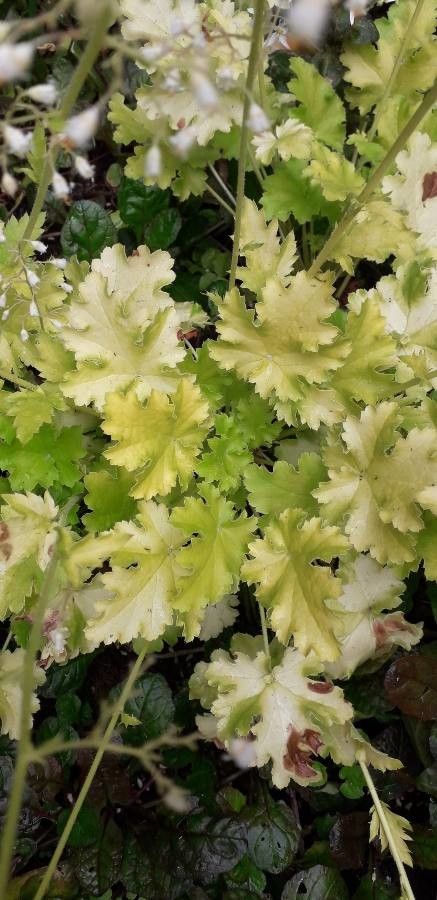
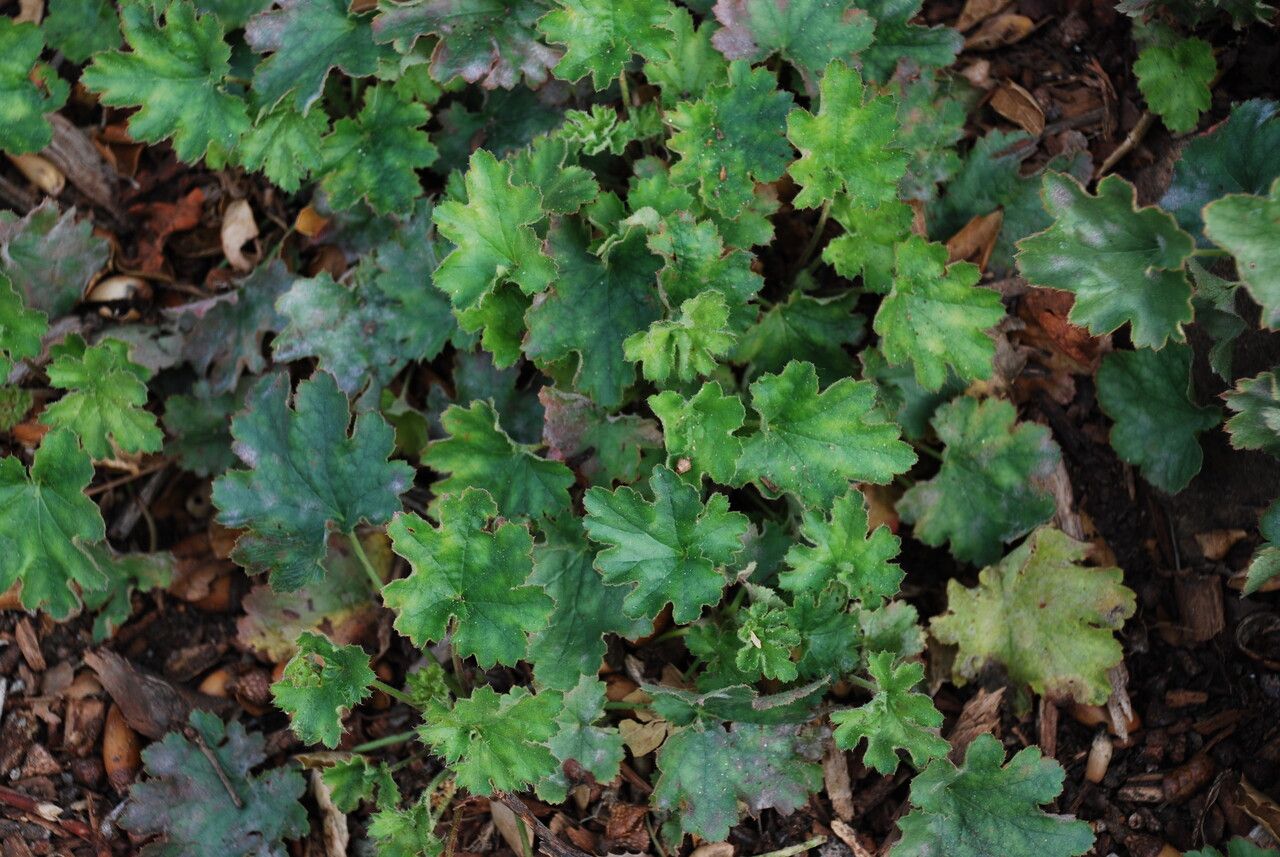
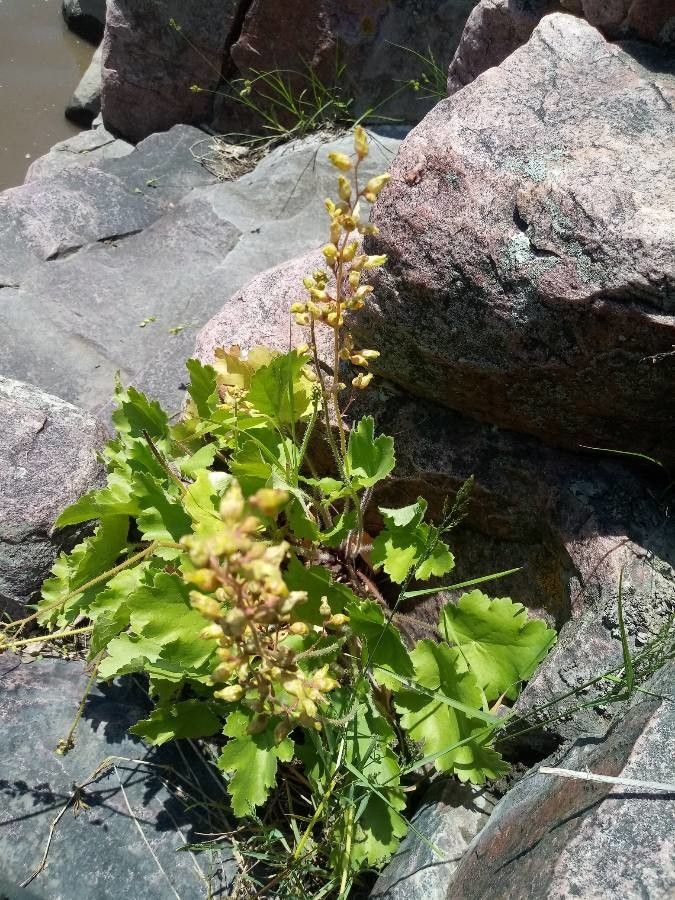
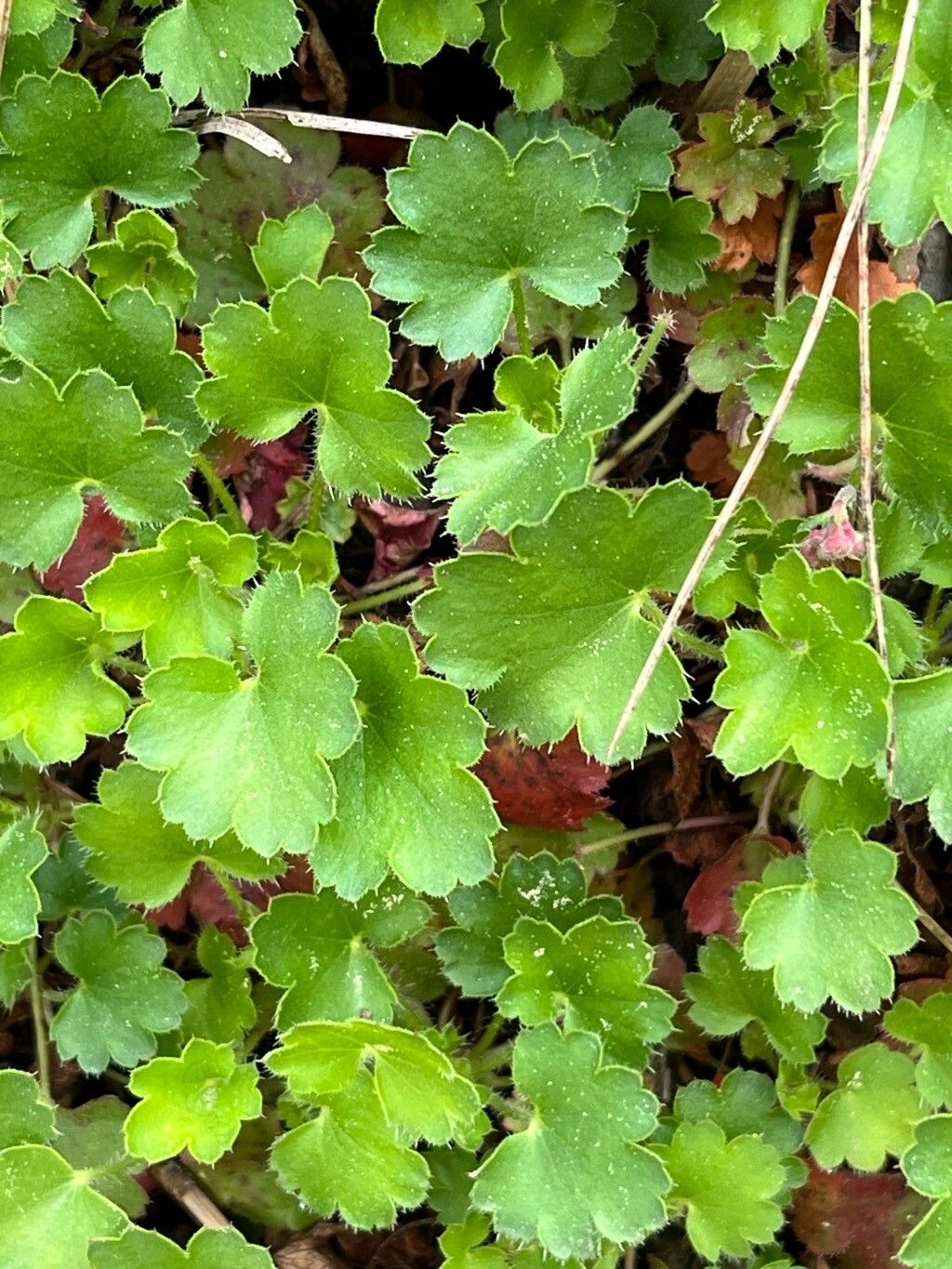
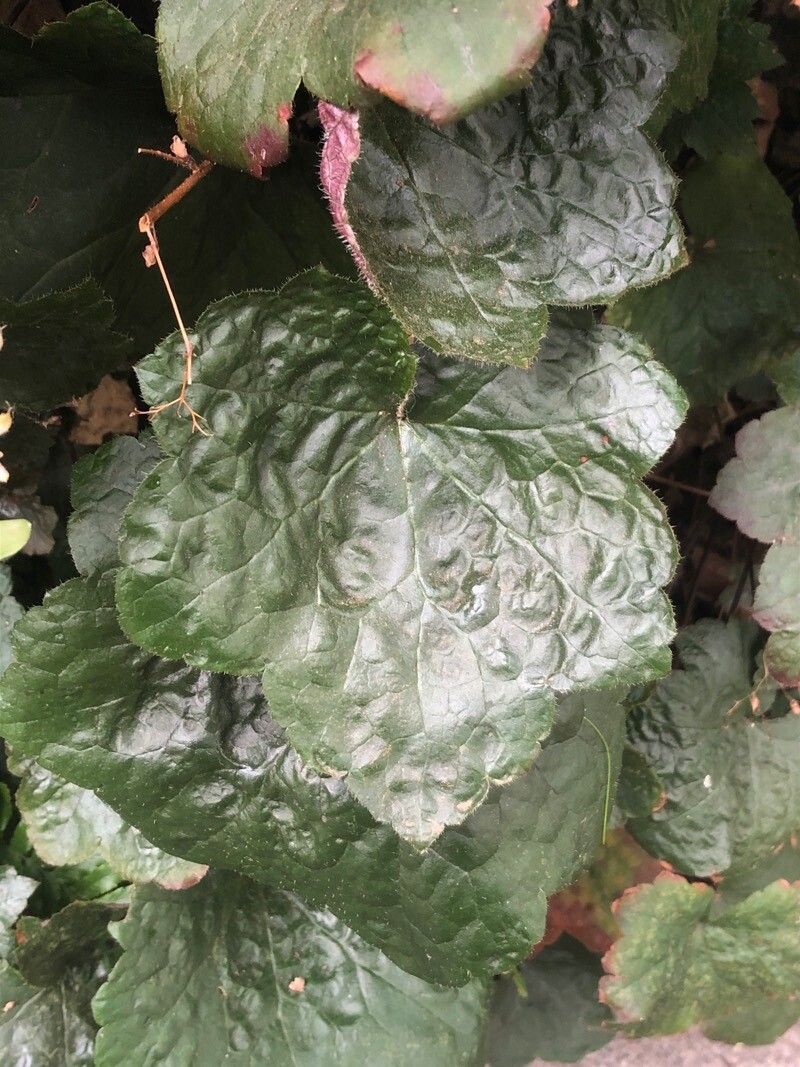
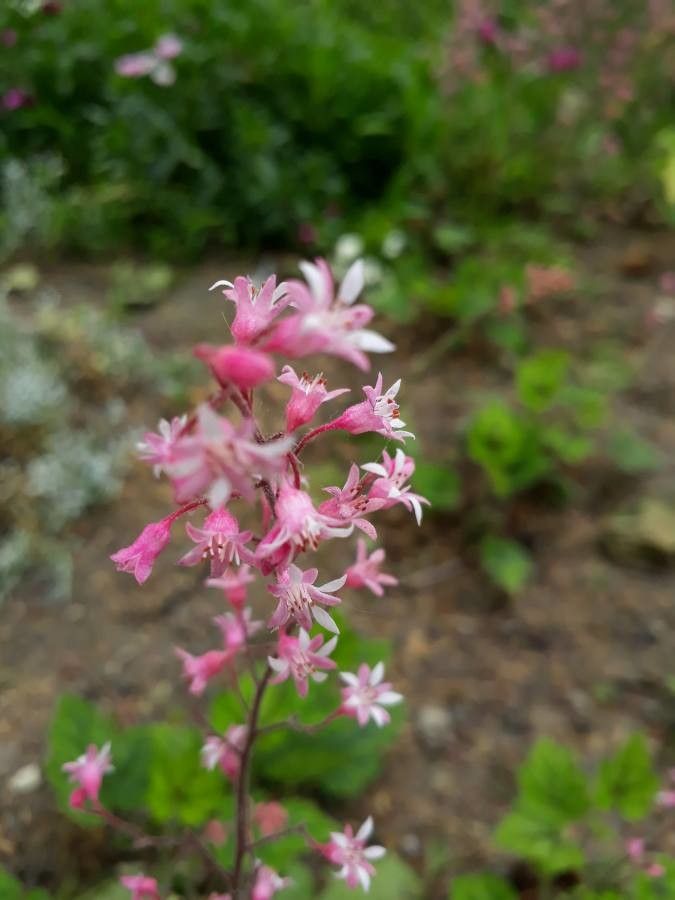
Heuchera maxima, commonly known as Island Alumroot, is a herbaceous perennial plant that belongs to the Saxifragaceae family. It is native to the rocky slopes and canyons of California and Baja California. The plant can grow up to 2 feet tall and 3 feet wide, featuring large basal leaves that are either rounded or heart-shaped with scalloped edges. The leaves are green, with a velvety texture on the top and hairy undersides.
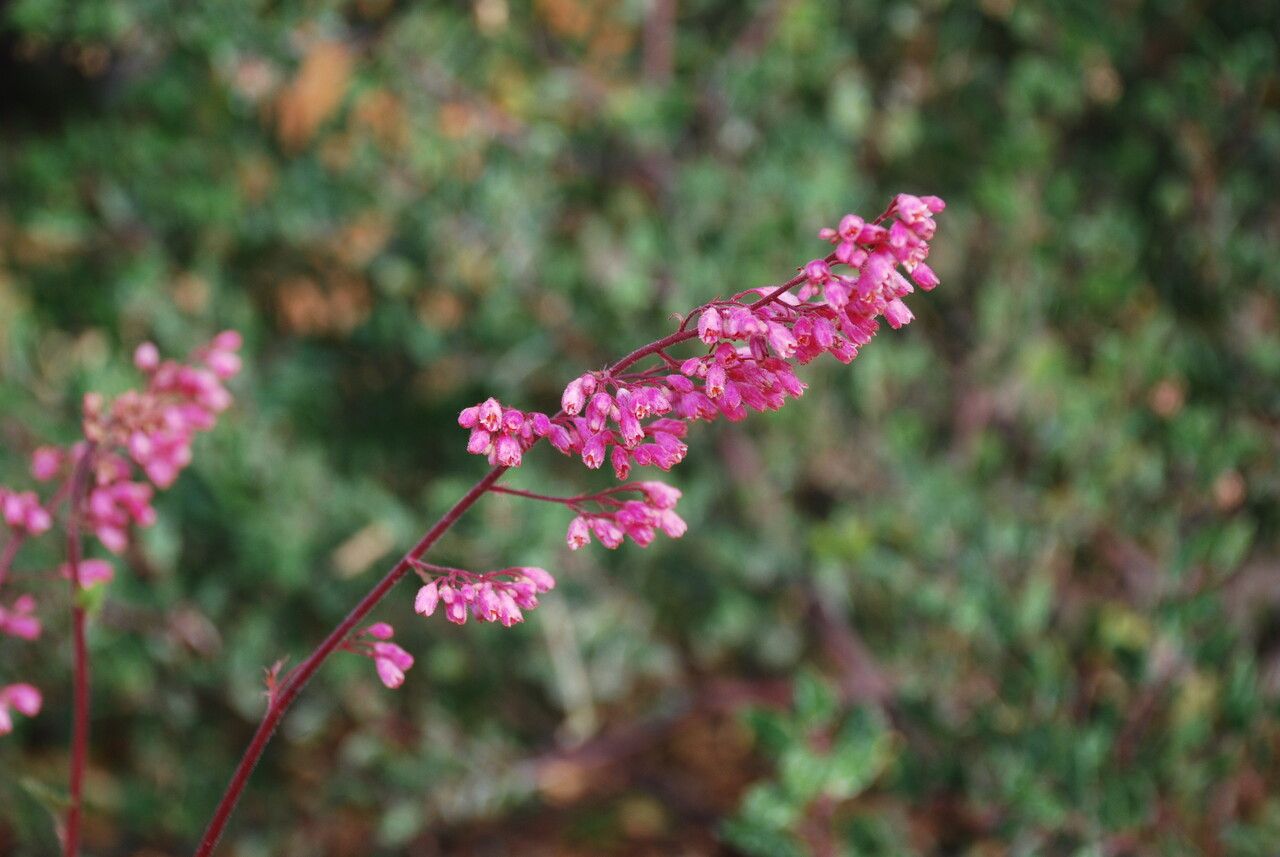
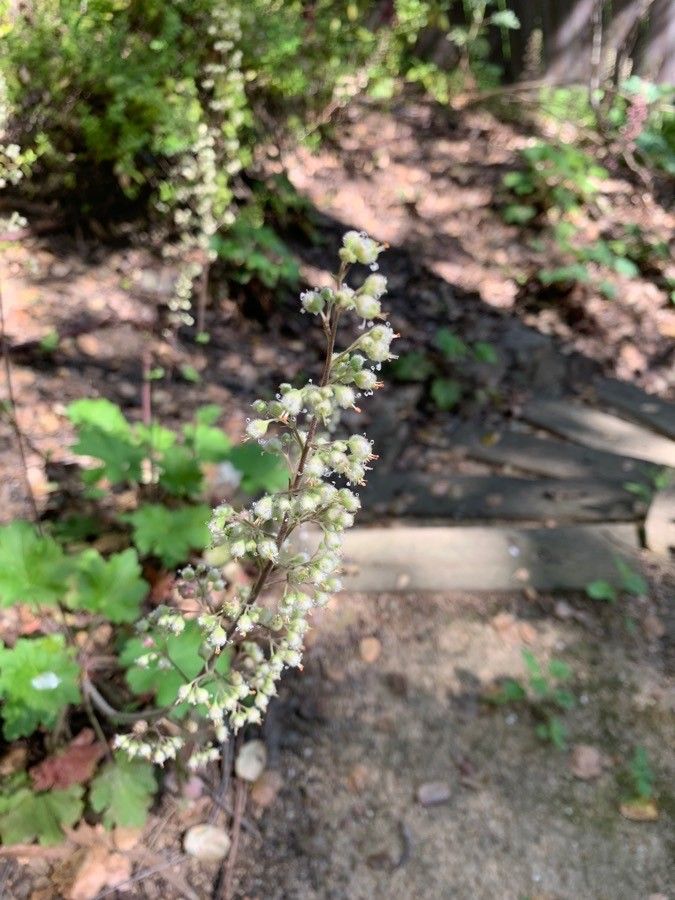
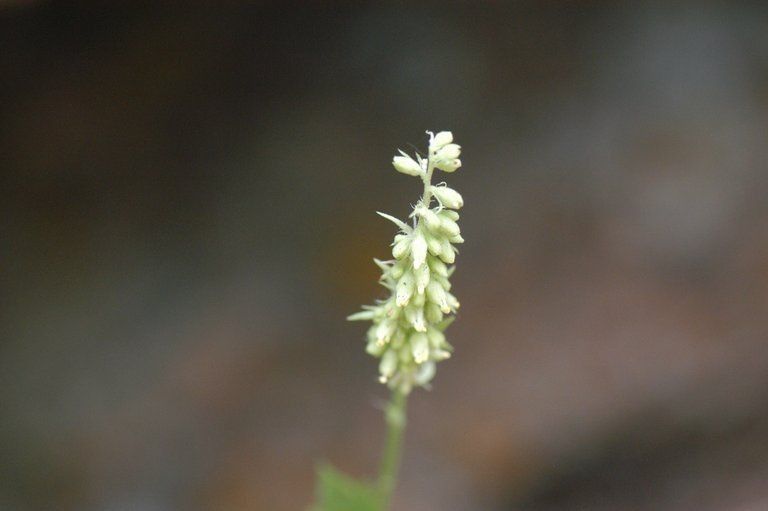
Island Alumroot produces tall spikes of small white or pink flowers from late spring through summer, attracting bees and butterflies. It prefers partial shade but can tolerate full sun given adequate moisture.
Heuchera maxima is an excellent choice for rock gardens, woodland gardens, or as ground cover under trees, adding color to shady areas. It also makes an attractive addition to mixed borders when planted alongside other perennials such as ferns or hostas.
The plant thrives in well-drained soil rich in organic matter, but it can tolerate poor soil conditions if provided adequate moisture during dry periods. Overall, Heuchera maxima is an easy-to-grow perennial that enhances any garden setting, providing beauty and serving as a habitat for pollinators like bees and butterflies.
Jill of the rocks is fairly disease-resistant and usually not prone to illnesses. Still, it can be vulnerable to pests and diseases present in its environment. These issues are typically mild. Regarding care, the plant needs moderate upkeep. It should be pruned regularly to keep a neat appearance and support healthy growth. Fertilizing can also encourage flowering. Jill of the rocks is well suited for anyone with outdoor areas like a garden or patio and does not demand extensive gardening experience. It may need more attention when grown indoors.
How to keep Heuchera Maxima.
Light
Jill of the rocks is a sun-loving perennial herbaceous plant native to open habitats, commonly found growing in meadows and grasslands. It prefers full sun but can also tolerate partial sun.
Water
"Jill of the Rocks thrives in consistently moist environments and needs weekly watering without becoming waterlogged. Although primarily an ornamental outdoor plant, it benefits from additional rainfall. Providing adequate hydration during the growing season is essential for promoting vigorous growth and vibrant leaf coloration."
Temperature
Jill of the rocks can tolerate a broad range of temperatures, but its range may still be restricted by various combinations of moisture and heat. It does best in warm summer conditions with adequate rainfall or watering. Long stretches of cloudy, rainy weather, as well as extended high temperatures, can increase the chance of Jill of the rocks dying. In winter, shielding the plant from cold can boost its survival chances.
Fertilizer
The best time to fertilize a Jill of the rocks is in early spring, when it is coming out of dormancy and beginning active growth. Fertilization supplies important nutrients necessary for healthy growth. Although Jill of the rocks has fairly low fertilizer requirements, applying fertilizer annually can improve its survival and encourage better, longer-lasting flowers.
Pruning
To ensure "Jill of the Rocks" thrives, regular pruning from early to late spring is essential. Begin by removing dead leaves to improve growth and air circulation. Trim any faded flowers to encourage new blooms or to redirect energy toward the foliage. Pruning also prevents legginess, helping maintain a compact and vibrant garden display.
Botanical profile.
- Plant Type
- Herb
- Life Cycle
- Perennial
- Genus
- Heuchera
- Family
- Saxifragaceae
- Hardiness Zone
- 4-9
- Mature Height
- 30 cm to 91 cm
- Mature Spread
- 30 cm to 46 cm
- Leaf Color
- Dark Green, Forest Green
- Leaf Type
- Evergreen
- Flower Color
- White
- Flower Size
- 0.51 cm to 0.76 cm
- Bloom Time
- Spring
- Planting Time
- Spring, Autumn
- Harvest Time
- Summer
Other names.
Reader questions.
How should I water my Jill of the rocks plant?
To properly water the Jill of the rocks, use filtered water at room temperature. Tap water may have harmful particles, so filtered water is preferred. The plant is used to warm environments, so avoid using cold water as it may shock the plant. Additionally, overhead watering should be avoided to prevent issues with the foliage. Instead, water the plant by applying filtered room temperature water directly to the soil until it is completely soaked. This helps to moisten the roots and promote their spread and nutrient absorption in the soil.
What are the sunlight requirements for Jill of the Rocks?
Jill of the Rocks thrives best in full sun conditions, which means it requires more than 6 hours of direct sunlight each day. However, it can also tolerate partial sun, receiving about 3-6 hours of sunlight daily. It's essential to watch how sunlight moves through your garden to find spots that offer the ideal balance of light and shade for the plant, ensuring its health and happiness.
What is the common name of Heuchera maxima?
The common name of Heuchera maxima is Jill of the rocks.
What do I need to do if I give my Jill of the rocks too much or too little water?
Overwatering and underwatering can both harm your Jill of the rocks, but overwatering is more common. When this species gets too much water, its stems and leaves may wilt and turn yellow. Overwatering for a long time can also lead to diseases like root rot, mold, and mildew, which can kill your plant. Underwatering is less likely for the Jill of the rocks because it can tolerate drought. However, underwatering can happen, and in that case, the leaves may become brittle and brown. It's important to notice signs of overwatering early when caring for your Jill of the rocks. Some diseases caused by overwatering, like root rot, may not be fixable if you wait too long. If you see early signs of overwatering, reduce watering immediately. Also, check the soil quality where your Jill of the rocks grows. If it drains poorly, replace it with a loose, well-draining potting mix. However, if you see signs of underwatering, simply water more regularly until those signs disappear.
What are some essential facts about Jill of the Rocks?
Jill of the Rocks is a perennial herbaceous plant that loves the sun and originates from open habitats such as meadows and grasslands. It prefers full sun but can tolerate partial sun conditions. For indoor plants facing inadequate natural sunlight, especially during winter or in less sunny areas, using artificial lighting is recommended. Indoor plants need proper lighting for optimal growth, with full sun plants requiring 30-50W/sq ft, partial sun plants needing 20-30W/sq ft, and full shade plants requiring 10-20W/sq ft of artificial light. The right type of light, the appropriate distance from the plants (12-36 inches), and the ideal duration of light exposure (8-12 hours per day) are crucial factors for indoor plant growth.
How frequently should I water my Jill of the rocks plant?
If your Jill of the rocks plant is in a pot, the most accurate way to determine if it needs water is by feeling the soil with your finger. If you find that the top two to three inches of soil are dry, then it's time to water the plant. If you have your Jill of the rocks plant growing in the ground outdoors, you can also test the soil using a similar method. Once again, when you observe that the top few inches of soil have dried out, it's a signal to give it some water. Typically, during the spring and early fall seasons, you'll need to water this plant approximately once a week using this method. However, when the weather gets extremely hot, you may need to increase the frequency of watering to about twice a week or even more. It's worth noting that mature and well-established Jill of the rocks plants have an impressive ability to tolerate drought.
What are the symptoms and solutions for light deficiency in Jill of the Rocks?
When Jill of the Rocks does not receive sufficient sunlight, it may exhibit various symptoms such as smaller new leaves, leggy or sparse growth, faster leaf drop, slower or no new growth, lighter-colored leaves, chlorosis, sunscald, leaf curling, wilting, and leaf scorching. To address these issues, gradually increase sunlight exposure for both indoor and outdoor plants by moving them to sunnier locations each week until they reach at least 6 hours of sunlight daily. For indoor plants, consider using artificial lighting if the plant is large or not easily moved. For outdoor and ground-planted varieties, reduce sunlight obstructions and consider transplanting to a sunnier location during the plant's dormant period for better health and growth.
How much water does my plant called Jill of the rocks need?
To effectively water your Jill of the rocks plant, don't hesitate to give it a generous amount of water. Make sure the top two to three inches of soil are dry before watering. It's best to thoroughly water the plant, ensuring that the entire soil is soaked. You'll know you've added enough water when it starts to overflow through the drainage holes at the bottom of the pot. If there's no excess water draining, it means you haven't watered the plant enough. However, avoid letting the water accumulate in the soil as it can harm the plant. On the other hand, if water isn't draining properly, it may indicate poorly draining soil, which can negatively affect the health of the plant. If you're growing the plant outside, one inch of rain per week should be sufficient.
How should I water my Jill of the Rocks plant when it is growing at different stages?
The water requirements of Jill of the rocks can vary depending on its growth stages. In the early years and when it is transplanted to a new location, it is necessary to provide more water than usual. During these stages, Jill of the rocks focuses on developing new roots, which requires additional moisture for optimal growth. After a few seasons, the plant will require less water. Additionally, during the bloom period, Jill of the rocks may need extra water as flower development consumes a significant amount of moisture.
How often should I water my Jill of the Rocks plant in different seasons?
The Jill of the rocks has different water needs depending on the season. During the hottest months of the year, which is the height of summer, you may need to water the plant more than once per week if the soil dries out quickly. On the other hand, during the winter, the plant goes into a dormant phase and requires much less water. In fact, you may not need to water the plant at all during this period. However, if you do decide to water during winter, it should be done no more than once per month. Over-watering during this time can increase the risk of disease for your Jill of the rocks.
How does watering my Jill of the rocks indoors compare to watering it outdoors?
For gardeners who live in temperate and tropical regions, growing Jill of the rocks indoors is the most common approach. However, it's important to note that the soil in a container may dry out faster than ground soil. Additionally, factors like air conditioning units can further accelerate the drying out process, meaning your Jill of the rocks will require more frequent watering compared to if it were planted outside. Conversely, if you have planted it outside and receive regular rainfall, you may not need to water your Jill of the rocks much at all, as the rainfall alone could be sufficient to keep the plant alive. On the other hand, if you choose to grow this plant indoors, you will need to water it more often since relying on rainwater to naturally moisten the soil is not an option.