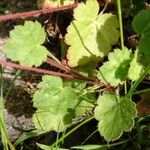
Heuchera sanguinea
Coral Bells · Red Coalbells · Black Pearl · Koraļļu Zvaniņi (LVL) · Хойхера
Description
Source: leafsnapHeuchera sanguinea, called coral bells, is a species of flowering plant in the genus Heuchera, native to the US states of Arizona and New Mexico, and to northern Mexico. A number of cultivars are commercially available. The Latin specific epithet sanguinea means blood-red, in reference to the color of the flowers. Flowers are deep pink to red, sweetly fragrant, and bell-shaped. Heuchera sanguinea is a perennial herb. The plant attracts bees and hummingbirds.
🌳 Coral bells are more than just decorative plants; they act as a magnet for pollinators. Their bright flowers draw in bees, butterflies, and hummingbirds, creating a busy center of activity. This emphasizes their often overlooked role in supporting local ecosystems by enabling pollination. Beyond their looks, it is this ecological interaction that makes coral bells notable in the human–plant relationship.
Care Guide
💧 Water
Coral bells thrive in well-drained, consistently moist soil and prefer to be watered weekly. Once established, they are moderately drought-tolerant. Primarily grown as ornamental perennials, coral bells have decorative foliage and can tolerate partial shade. They flourish both indoors and outdoors with adjusted watering during dry spells.
How should I water my Coral bells?
To properly care for Coral bells, it's important to consider the water you use. Filtered water is recommended because tap water may contain harmful particles. Additionally, it's best to use water that is at room temperature or slightly warmer. This is because Coral bells are accustomed to warm environments and cold water could be a shock to them. Another tip is to avoid overhead watering, which could lead to problems with the foliage. Instead, simply apply the filtered room temperature water directly to the soil until it is completely soaked. This helps to moisten the roots and support their growth and nutrient absorption.
What should I do if I give my Coral bells too much or too little water?
Overwatering is a common problem for Coral bells, leading to wilting, yellowing, and potential diseases like root rot, mold, and mildew. Underwatering is less common but can cause brittle, brown leaves. It's important to recognize the signs of overwatering early to prevent irreversible damage. Reduce watering and improve soil drainage if overwatering is detected. Increase watering if signs of underwatering are present.
How often do I need to water my Coral bells?
If your Coral bells plant is in a pot, the most precise way to determine if it needs water is to insert your finger into the soil. If the top two to three inches of soil feel dry, it's time to water it. If you have Coral bells growing outdoors in the ground, you can also use this method to test the soil. When the top few inches of soil have dried out, it's time to water. Typically, this means watering the plant once a week during spring and early fall. However, during extremely hot weather, you may need to water it twice or more per week. It's important to note that mature, well-established Coral bells have a remarkable ability to withstand drought.
How much water does my Coral bells plant need?
When watering your Coral bells, don't hold back on the amount of water you give. Make sure the top two to three inches of soil are dry before watering thoroughly. Water it until the soil is completely soaked, and allow excess water to drain through the pot's holes. If you don't see any excess water draining, you might have not watered enough. However, don't let water accumulate in the soil as it can harm the plant. On the other hand, if water doesn't drain through the pot, it may indicate poorly draining soil, which can be harmful to the plant's health. If the plant is outdoors, one inch of rain per week should be enough.
How do I water my Coral bells when they are growing at different stages?
The water needs of Coral bells can vary based on growth stages. In the first few years or after transplanting, more water is necessary. During these stages, the plant focuses on sprouting new roots to support future growth, requiring more moisture. As the plant matures, less water is needed. Additionally, during the bloom period, more water may be required as the flowers utilize a significant amount of moisture.
☀️ Light Partial sun
Coral bells grow best in moderate sunlight. Although they can tolerate full sun, they prefer filtered light. Excessive exposure may cause leaf scorch, while insufficient light restricts growth. Their ancestral habitat was sheltered, temperate woodlands with dappled sunlight.
What are the sunlight requirements for Coral Bells?
Coral Bells, or Heuchera sanguinea, flourish best in moderate sunlight but can endure the full impact of the sun. They prefer diffused light, resembling their ancestral environment of sheltered, temperate woodlands with dappled sunlight. It’s crucial to understand that 'Partial sun' means about 3-6 hours of sunlight, while 'Full sun' refers to more than 6 hours of sunlight per day. Overexposure may lead to leaf scorch, whereas insufficient light stunts growth. Observing how sunlight moves through your garden helps in choosing spots with an ideal balance of light and shade.
How can artificial lighting support Coral Bell's growth indoor?
Indoor Coral Bells require adequate lighting for optimal growth, especially when natural sunlight is scarce, such as in winter or less sunny spaces. Artificial lighting, like LED lights, serves as a crucial alternative, facilitating faster and healthier growth. These lights can provide the specific wavelengths needed by the plants. Full sun plants need 30-50W/sq ft, partial sun plants 20-30W/sq ft, and full shade plants 10-20W/sq ft of artificial light. The light source should be placed 12-36 inches above the plant for 8-12 hours per day to mimic natural sunlight.
What symptoms indicate insufficient light for indoor Coral Bells?
When Coral Bells receive insufficient light indoors, several symptoms may manifest, including small leaves compared to ones matured under better light, leggy or sparse growth, quick leaf drop to conserve resources, delayed or halted growth, and pale or irregularly colored new leaves. Chlorosis, sunscald, leaf curling, wilting, and leaf scorching are other signs. These symptoms stem either from too little or too much sunlight, indicating a need for light condition adjustments.
What are the solutions for Coral Bells suffering from insufficient sunlight?
To remedy insufficient sunlight for Coral Bells, gradually move them to increasingly sunnier spots each week until they get 3-6 hours of direct sunlight daily for outdoor plants, or use artificial lighting for indoor plants. Consider a desk or ceiling lamp on for at least 8 hours daily, or invest in professional plant grow lights. It's crucial to avoid drastic changes in light intensity to prevent sunburn. For ground plants, minimize sunlight obstructions by pruning obstructive branches or transplanting smaller plants to sunnier locations with ample sunlight and good drainage. Note that parts of the plant affected by light insufficiency may not recover, but new growth will be healthy with corrected light exposure.
🌡️ Temperature 5–32.2°C
Coral bells is native to a temperate climate and does best when temperatures remain between 41 and 89.6 °F (5 to 32 ℃). As seasons change, you may need to alter the plant's environment to keep it within this preferred range.
What is the ideal temperature range for Coral bells?
Coral bells thrive best within a temperate climate, specifically in a temperature range of 41 to 89.6 °F (5 to 32 °C). It is important to adjust the plant's environment during seasonal temperature changes to maintain this preferred temperature range. Coral bells exhibit strong cold resistance and typically do not require special frost protection measures in winter. However, if winter temperatures are expected to fall below -30°C, it's crucial to provide cold protection by covering the plant with materials such as soil or straw. Additionally, watering the plant abundantly before the first freeze in autumn is recommended to ensure the soil remains moist, helping to prevent drought and water scarcity during winter and early spring.
How do Coral bells react to low temperatures?
Coral bells are cold-tolerant plants that perform best when temperatures remain above 5°C. They should be kept above -25°C during winter. In the event that temperatures dip below -30°C, while there may not be immediate visible changes, there could be a decrease in sprouting or an absence of sprouting come spring. In such cases, it is suggested to remove any parts of the plant that have failed to sprout as part of the management strategy come spring.
What should be done if Coral bells experience high temperatures?
During the summer, it is crucial to ensure that Coral bells do not experience temperatures above 32°C. When temperatures exceed 35°C, the leaves may exhibit signs of stress such as becoming lighter in color, prone to curling, experiencing sunburn, and in severe instances, the entire plant might wilt and dry out. To mitigate these effects, sunburned and dried-up parts should be trimmed away. The plant should be moved to a location that offers shade, especially from the midday and afternoon sun, or a shade cloth can be used to create sufficient shade. Watering the plant in the morning and evening is recommended to maintain soil moisture and support the plant’s well-being during high temperatures.
What are Coral bells and their botanical classification?
Coral bells, scientifically known as Heuchera sanguinea, are a type of plant native to temperate climates, renowned for their cold tolerance and ability to thrive within a specific temperature range. They are characterized by their resilience to cold environments, although they require certain care and adjustments in response to seasonal temperature variations and extreme weather conditions.
💨 Humidity normal (40-60%)
This plant will thrive in moderate humidity, which is probably the level in your home. However, misting it a few times a week can be very beneficial. Make sure the room has good ventilation.
🪴 Soil 6-7
🌱 Fertilizer
Early spring, as Coral bells come out of dormancy and begin active growth, is the ideal time to fertilize them. Fertilizer supplies the key nutrients needed for healthy growth. Although Coral bells have relatively low fertilization requirements, an annual application can improve their survival and encourage better, longer-lasting flowers.
Why do I have to use fertilizer on my Coral bells?
Fertilization is important for Coral bells due to several reasons. The main benefit is that it provides essential nutrients for the plant's growth above and below the ground. However, Coral bells have relatively low fertilization needs and can sometimes survive without it. Still, annual fertilization can greatly benefit Coral bells by keeping them alive and promoting the production of better and longer-lasting flowers. Therefore, those who want their Coral bells to look their best should maintain regular annual fertilization.
When should I fertilize my Coral bells?
The best time to fertilize a Coral bells is in the late winter to early spring when it is coming out of dormancy and starting to grow. This will help promote healthy growth. Although it's generally recommended to fertilize in the early spring, it is also okay to fertilize in the fall. However, it's not advisable to fertilize during the summer or winter seasons.
When is it not a good idea to fertilize my Coral bells?
To avoid overfertilization and complications, it is best to only fertilize Coral bells in late winter and early spring. A single annual feeding should be enough as this plant has low fertilization needs. Fertilizing during spring, summer, and fall can easily lead to overfertilization, except if you didn't fertilize in spring, then feeding in fall is allowed. Additionally, there is no need to fertilize during winter as Coral bells are in a dormant growth phase and do not produce new growth.
What kind of fertilizer does my Coral bells plant need?
When fertilizing Coral bells, most general-purpose fertilizers with balanced amounts of the three main plant nutrients will suffice. However, there are specific blends that can be especially beneficial. For example, some gardeners believe that higher levels of phosphorus result in stronger roots and better flowers. Considering Coral bells is a flowering plant, using a phosphorus-rich fertilizer may be the ideal choice. Whether in granular or liquid form, as long as the fertilizer is nutrient-rich, it will work well. In addition to manufactured fertilizers, organic options like compost and manure can significantly improve the soil quality for Coral bells. Using these materials will contribute to creating a healthy environment for your plants.
How can I make my Coral bells grow better?
To fertilize Coral bells, the most common method is to use granular or pellet fertilizer. The best time to fertilize is when the plant is transitioning from its winter dormant phase to active growth. In early spring, wait for shoots to emerge from the soil before applying fertilizer. If you prefer a liquid fertilizer, dilute it with water before applying. Whether using granular or liquid fertilizer, it is important to moisten the soil before, during, and after application.
🪴 Pot & Repot 2-3 years
To promote healthy growth and abundant blooms, it's best to repot coral bells every 2 to 3 years in early spring. Choose a moderately-sized container with well-draining soil for the best results. Water the plants regularly until they become established, as slightly root-bound plants tend to bloom more. Refreshing the container helps maintain healthy growth and prevents root rot.
✂️ Pruning
Seasonal pruning is crucial for maintaining the health and appearance of coral bells. To encourage new growth, prune them in early spring or late winter by removing dead leaves and spent flowers. Be sure to use clean tools to prevent infection, which will help ensure their resilience and a vibrant display throughout the growing season.
🌿 Propagating
🐛 Diseases & pets
☠️ Toxicity
Heuchera sanguinea has no toxic effects reported.
Characteristics
- Plant Type
- Herb
- Life Cycle
- Perennial
- Genus
- Heuchera
- Family
- Saxifragaceae
- Hardiness Zone
- 4-8
- Mature Height
- 25 cm to 34 cm
- Mature Spread
- 23 cm to 30 cm
- Leaf Color
- Green
- Leaf Type
- Evergreen, Semi-evergreen
- Flower Color
- Red, Pink
- Flower Size
- 0.13 cm to 0.18 cm
- Bloom Time
- Late spring, Early summer, Mid summer
- Planting Time
- Spring
- Harvest Time
- Mid summer
- Native Area
- Mexico