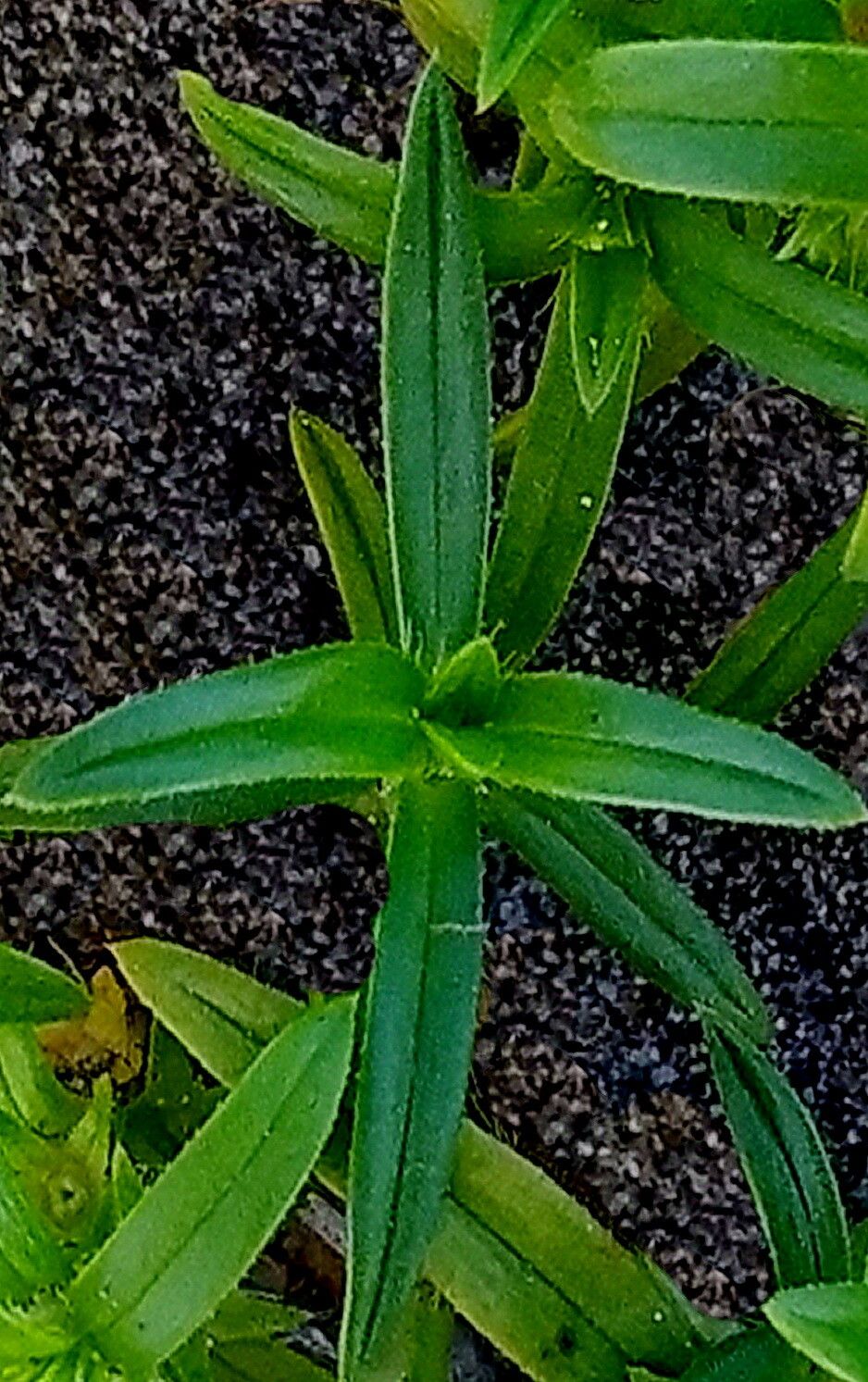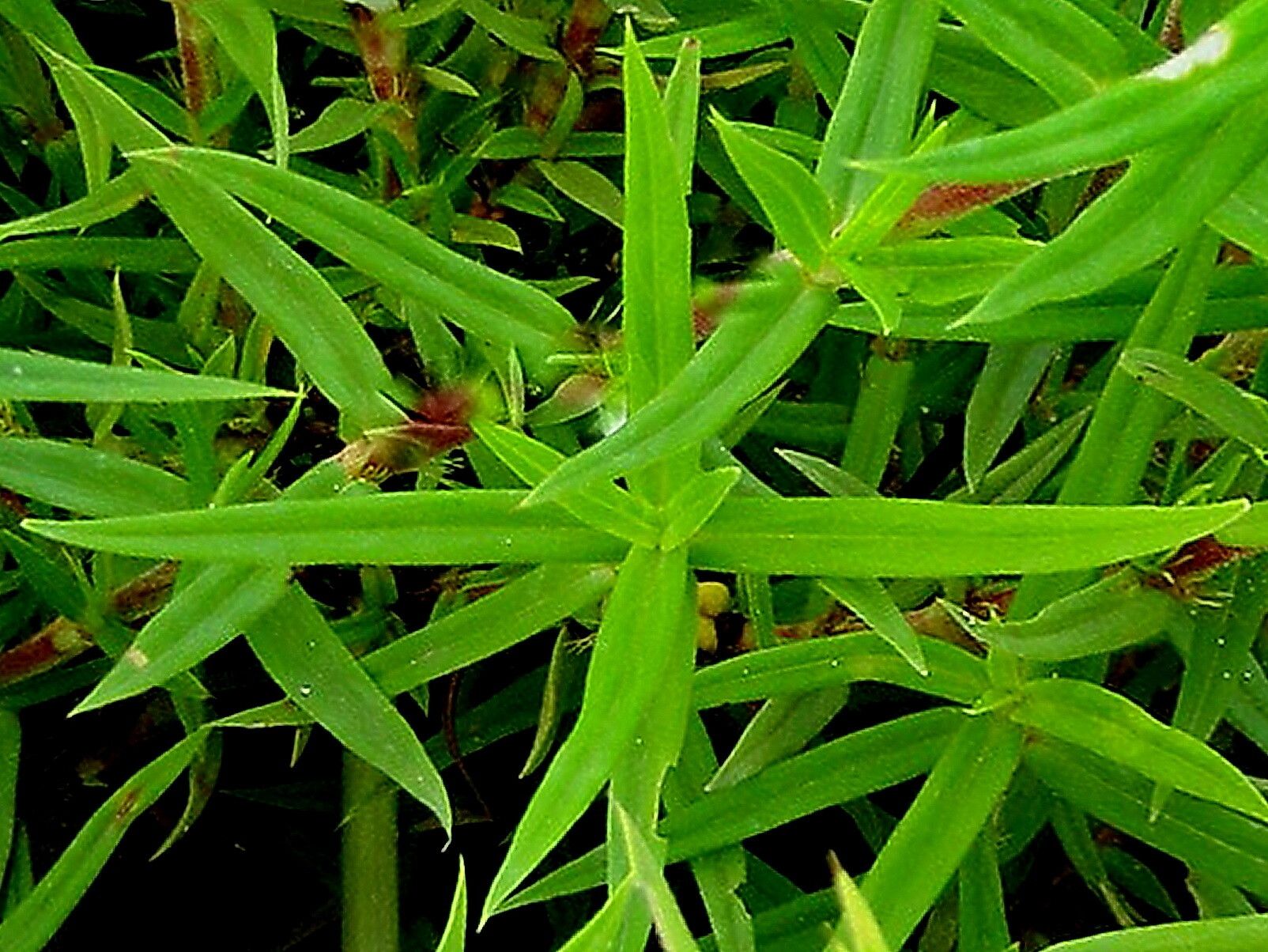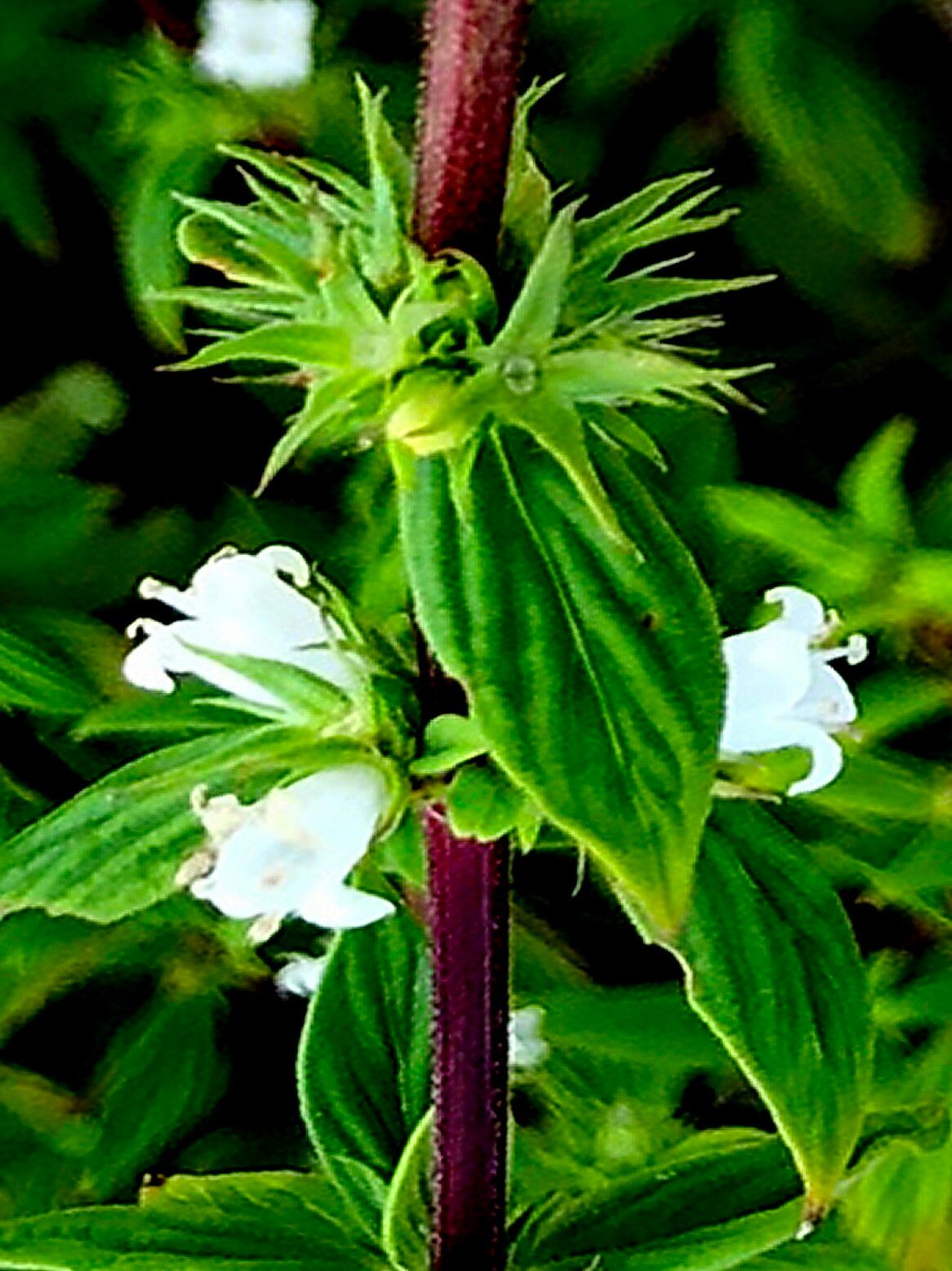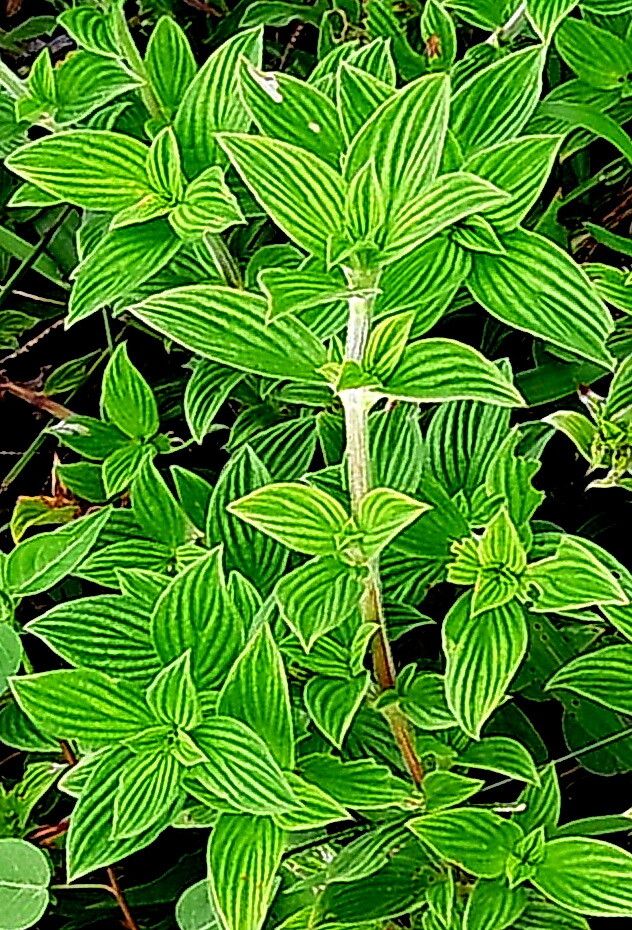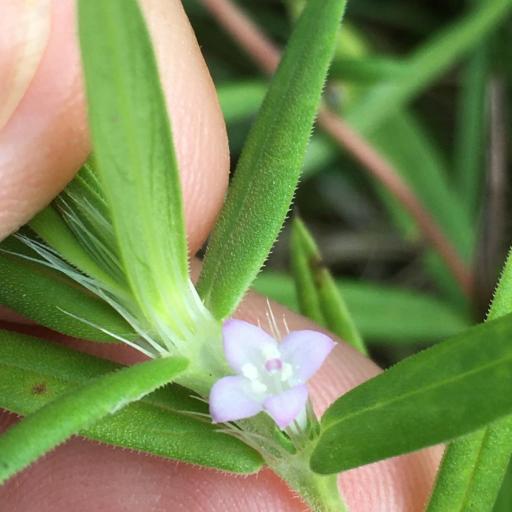
Hexasepalum teres is a species of flowering plant in the coffee family known by the common names poorjoe and rough buttonweed. This annual plant is native to Mexico, Central America, South America, the West Indies and the United States from California to Florida and from Kansas to Massachusetts. The species is also naturalized in the Netherlands, the Canary Islands, Western Africa, Angola, China, Japan and Korea, India, and Madagascar. Hexasepalum teres has a thin, erect or prostrate stem rarely up to 65 cm in height. It has opposite leaves which are stiff, dark green, elliptical, pointed, and roughly-textured, up to 3 cm long. Each pair of leaves cradles a flower at its base. The small white to pinkish-purple flower has four stiff petal-like lobes up to 12 mm long and 10 mm wide. The fruit is ellipsoid, splitting into two nutlets This plant is most common in sandy areas such as desert dunes and river floodplains.
Poorjoe shows good resistance to disease and is generally not likely to get sick. That said, it can be vulnerable to pests and diseases present in its environment. These problems are usually mild. Regarding care, this plant needs moderate maintenance. It should be pruned regularly to keep a neat appearance and encourage healthy growth. Fertilizing can also help stimulate flowering. Poorjoe is well suited to anyone with outdoor space, such as a garden or patio, and does not demand much experience in plant care. It may require increased attention when cultivated indoors.
How to keep Hexasepalum Teres.
Light
Poorjoe comes from bright, open habitats and performs best in full sun. It can tolerate some partial shade but favors direct sunlight for optimal growth. This plant, which can be annual or biennial, is noted for its sun-loving habit.
Water
Poorjoe thrives best in well-drained soils with moderate moisture levels. It prefers soil that is slightly moist but not waterlogged. It's recommended to water it weekly. When grown outdoors, Poorjoe can withstand short periods of dryness, demonstrating its resilience to unpredictable rain cycles.
Temperature
Poorjoe comes from tropical areas, where the climate is generally warm and humid. Therefore, it is adapted to high temperatures and moisture. It is sensitive to abrupt temperature shifts and prefers a constant temperature, so avoiding indoor temperature fluctuations is important. It typically cannot tolerate cold and needs warmer conditions to grow. If the surrounding temperature falls too low, the plant may stop growing or even die.
Fertilizer
Poorjoe responds well to regular, dilute applications of fertilizer to encourage healthy leaf development. You should apply fertilizer to Poorjoe about once a month during the summer months. Nitrogen is essential for foliage, and adding nitrogen-rich sources helps Poorjoe thrive.
Pruning
To ensure Poorjoe plants thrive, prune them from early to late spring. This encourages healthier growth and prevents overcrowding. Prioritize trimming dead stems to improve air circulation and sunlight access, which helps minimize the risks of pests and diseases. Use sharp, sanitized tools to maintain the plants' aesthetic appeal and vigor.
Botanical profile.
- Plant Type
- Herb
- Life Cycle
- Annual, Perennial
- Genus
- Hexasepalum
- Family
- Rubiaceae
- Hardiness Zone
- 8-12
- Mature Height
- 46 cm
- Mature Spread
- 20 cm to 40 cm
- Leaf Color
- Green
- Leaf Type
- Deciduous
- Flower Color
- White
- Flower Size
- 0.76 cm
- Bloom Time
- Early summer, Mid summer
- Planting Time
- Spring, Summer, Autumn
- Harvest Time
- Mid summer