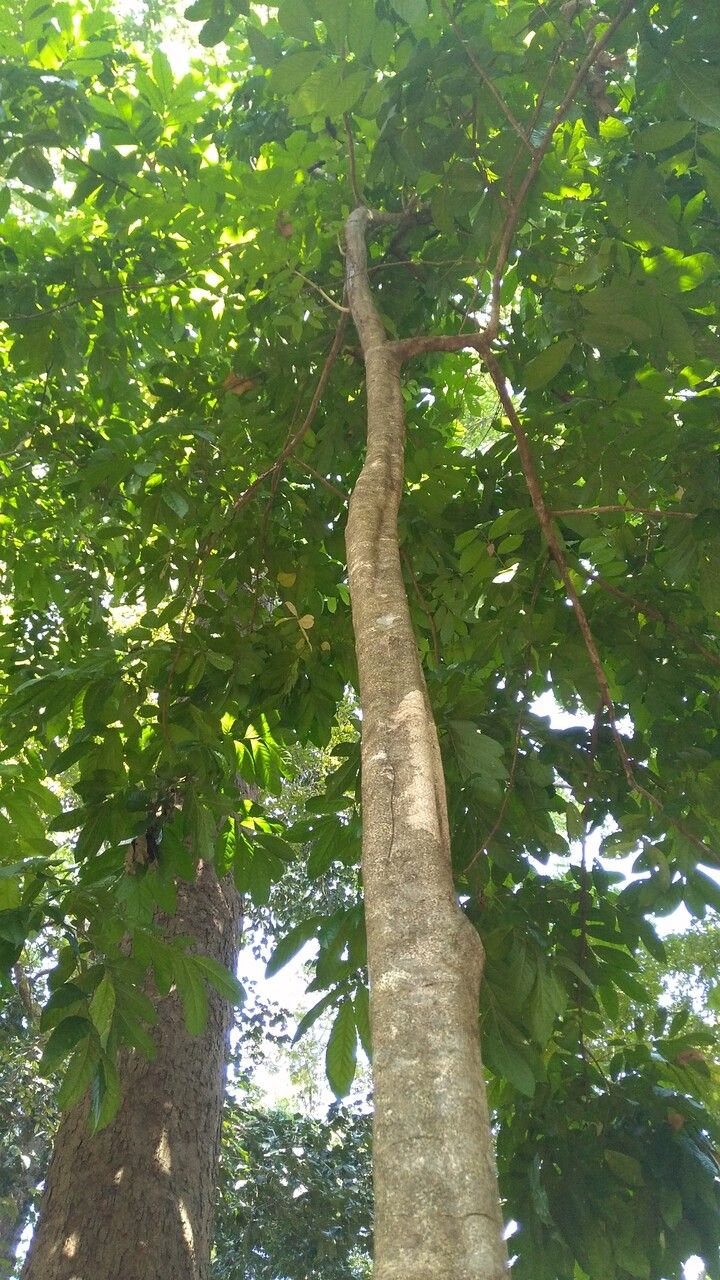
Heynea trijuga is a species of plant in the family Meliaceae. It is found in Nepal and Manipur in North East India and in the Western Ghats. It is threatened by habitat loss in Nepal.
Indian heynea has strong resistance to disease and is typically not susceptible to illnesses. Regarding care, this plant is fairly low-maintenance. Outdoors it needs only minimal watering, and larger specimens usually do not require pruning. Smaller plants, however, should be pruned after they finish blooming. Indian heyneat is appropriate for anyone with an outdoor area, such as a garden or deck, and does not need much gardening experience.
How to keep Heynea Trijuga.
Light
Indian heynea grows naturally in habitats like forest understories or rocky locations, where it is exposed to natural shade. It favors partial sun but can tolerate both full sun and full shade, showing that it is adaptable and hardy.
Water
The Indian heynea, a plant native to arid regions, demonstrates remarkable drought tolerance and efficiently conserves water. It thrives with minimal moisture and generally needs watering only once every 2-3 weeks. Because of these qualities, the Indian heynea is an excellent choice for xeriscaping and is well-suited to climates with infrequent rainfall.
Temperature
Indian heynea comes from tropical areas where the climate is generally warm and humid. Consequently, it is adapted to high temperatures and moisture. It does not tolerate sudden temperature changes and prefers a steady temperature, so avoiding indoor temperature fluctuations is important. It typically cannot withstand cold and needs warmer conditions to grow. If the surrounding temperature falls too low, the plant may stop growing or even die.
Fertilizer
The best time to fertilize an Indian heynea is in early spring, as it comes out of dormancy. This stimulates overall growth and flower formation. Fertilizing improves the foliage, stems, and branches, while encouraging flowers that are larger, more vibrant, and longer-lasting. It helps transport nutrients from the roots to the flowers and enhances the plant's health and resistance to disease.
Pruning
The Indian heynea benefits from seasonal pruning, which is best done from early to late winter to improve its shape and promote healthy growth. Effective pruning techniques include thinning the branches to improve air circulation and removing any dead wood. It's important to use clean, sharp tools and to respect the plant's natural form. This will encourage vigorous growth and flowering while also preventing overgrowth.
Botanical profile.
- Plant Type
- Tree
- Life Cycle
- Perennial
- Genus
- Heynea
- Family
- Meliaceae
- Hardiness Zone
- 10-12
- Mature Height
- 4.88 m to 10.06 m
- Mature Spread
- 3.05 m to 4.88 m
- Leaf Color
- Dark Green, Forest Green
- Leaf Type
- Evergreen
- Flower Color
- White
- Flower Size
- 0.25 cm to 0.51 cm
- Bloom Time
- Late spring, Early summer, Mid summer
- Planting Time
- Spring, Summer
- Harvest Time
- Late summer, Early fall, Mid fall
- Native Area
- Nepal, India, Malaysia, Indonesia, Cambodia, Vietnam, Myanmar, Philippines, Bhutan, Bangladesh, Laos, Brunei, Thailand, China
Reader questions.
What are the sunlight requirements for Indian Heynea?
Indian Heynea thrives in partial sun, needing about 3-6 hours of sunlight per day, but it can also grow in full shade conditions. This makes it a versatile perennial herbaceous plant ideally suited for environments like forest understories or rocky areas. When choosing a location for your Indian Heynea, observe how sunlight moves through your garden to ensure a spot that provides a balance of light and shade, enhancing the plant's growth and happiness.
How can artificial lighting be used for Indian Heynea indoors?
For Indian Heynea plants grown indoors, artificial lighting can compensate when natural sunlight is insufficient, especially during winter or in less sunny spaces. LED lights are recommended because they can be customized to provide specific wavelengths required for optimal plant growth. The intensity of artificial light needed varies: full sun plants require 30-50W/sq ft, partial sun plants need 20-30W/sq ft, and full shade plants need 10-20W/sq ft. The light source should be placed 12-36 inches above the plant to mimic natural sunlight, and the duration of exposure should be 8-12 hours per day to imitate natural daylight hours.
What are the signs of insufficient light in Indian Heynea?
When Indian Heynea receives inadequate light, it may exhibit several symptoms indicating light deficiency. These include smaller leaves than usual, leggy or sparse growth, faster leaf drop, and cessation of new growth. Leaves may also develop lighter colors or irregular patterns due to insufficient chlorophyll, indicative of poor light conditions. Furthermore, symptoms like chlorosis, sunscald, leaf curling, wilting, and leaf scorching could manifest, each related to light issues, whether it's too much or too little exposure.
What solutions are available for Indian Heynea experiencing insufficient light?
To address insufficient light for Indian Heynea, indoors, gradually transition the plant to sunnier spots or use artificial light like desk or ceiling lamps for at least 8 hours daily. For outdoor plants, move them to sunnier locations weekly to prevent sunburn and allow adaptation. If sunlight obstruction is an issue, prune trees or relocate smaller plants to sunnier areas. Remember, parts of the plant damaged by inadequate sunlight may not recover, but new growth should be healthy with corrected light exposure.