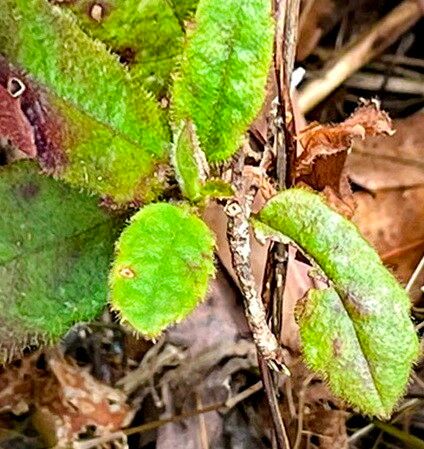
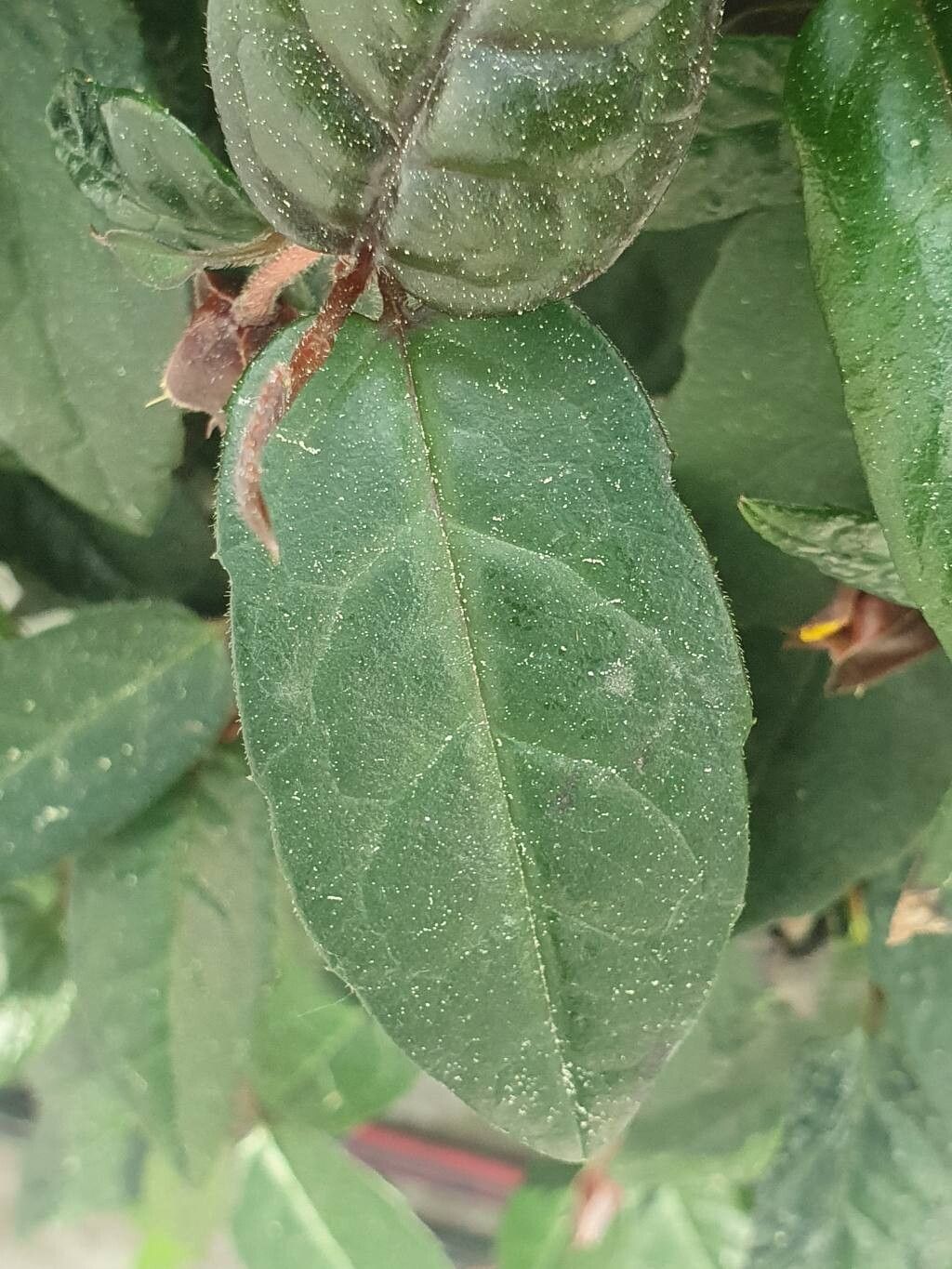
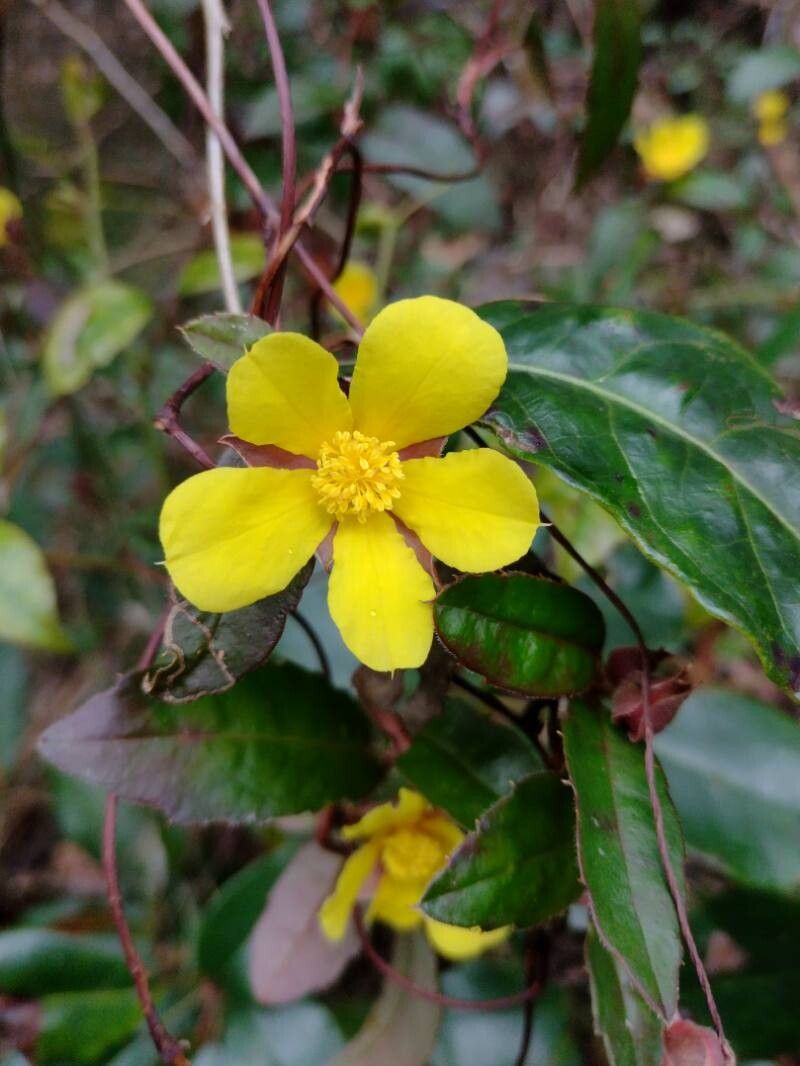
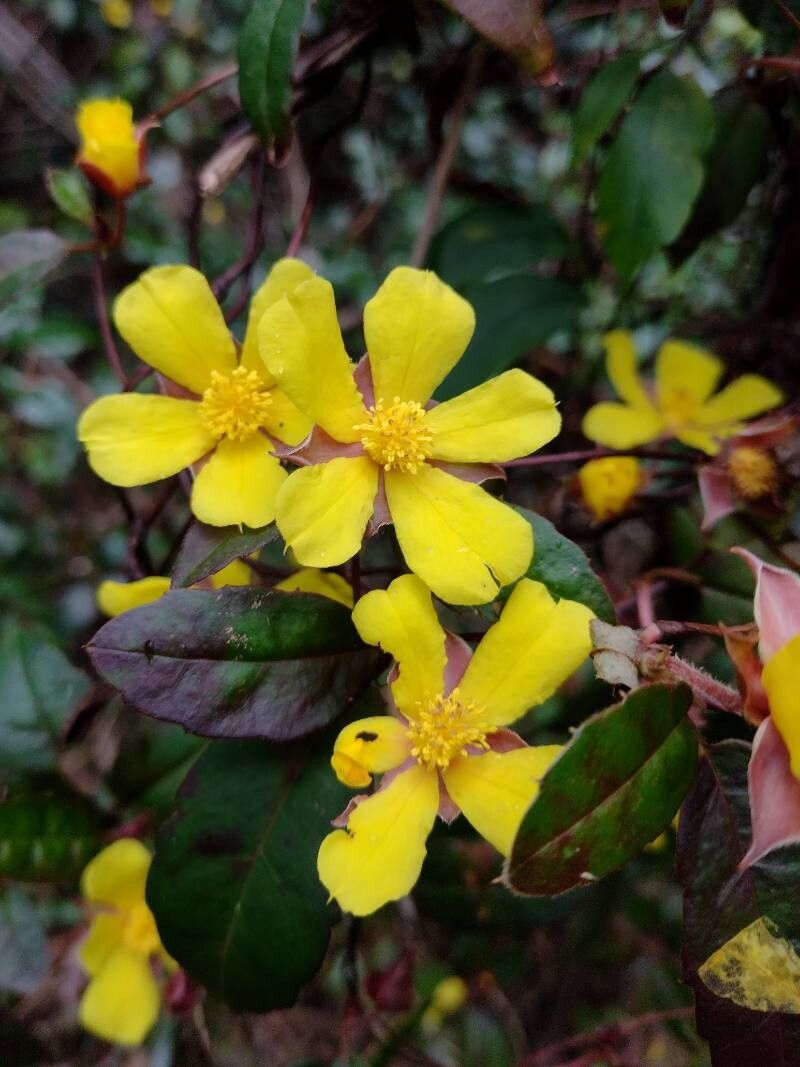
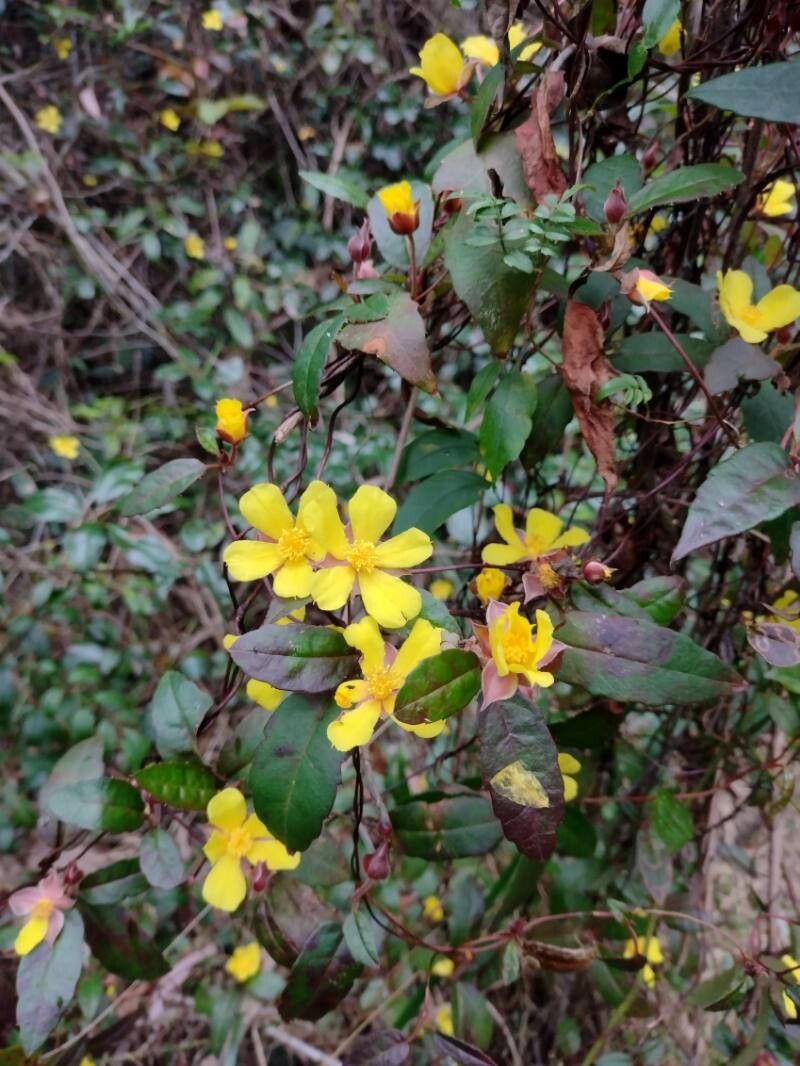
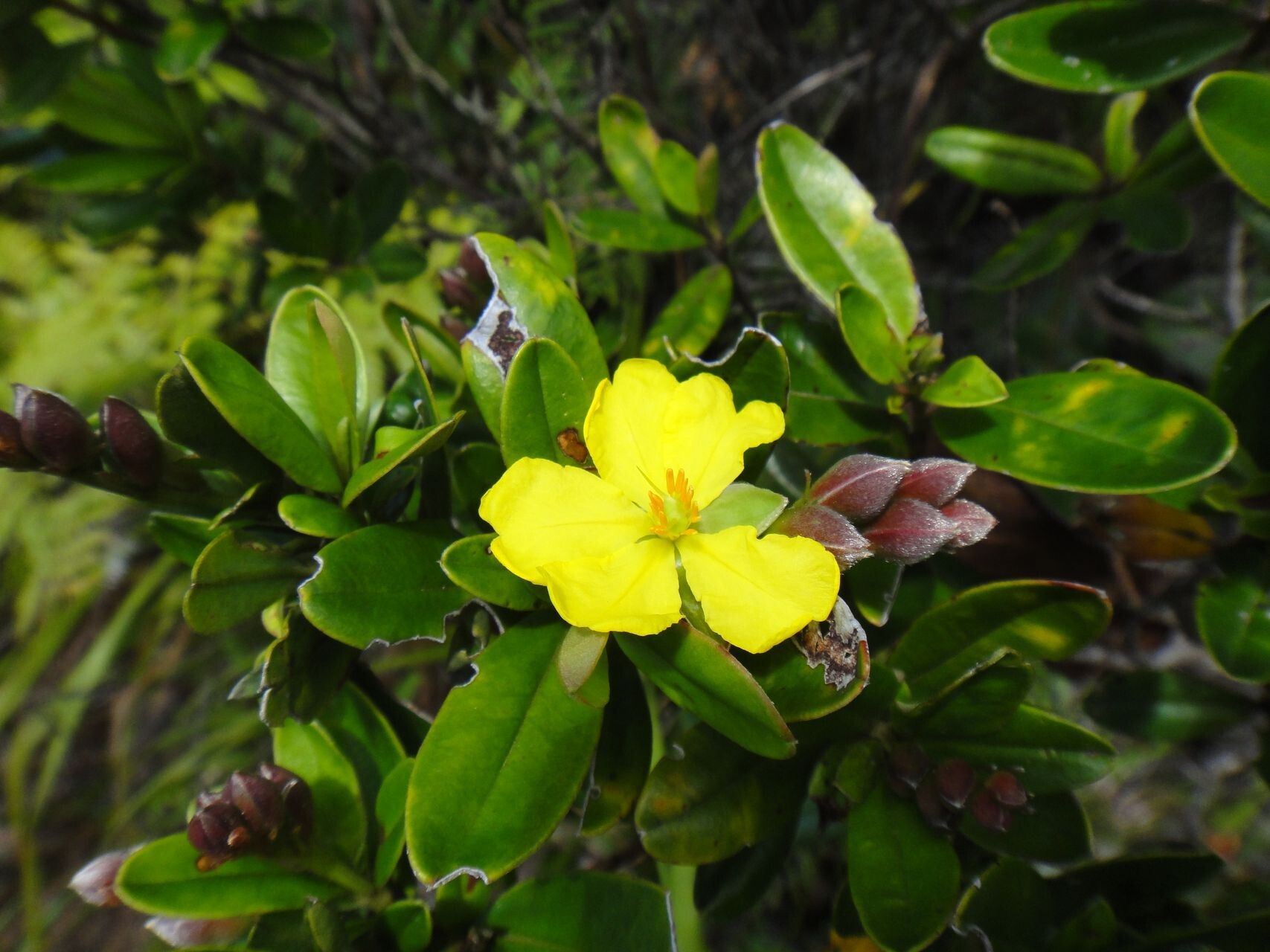
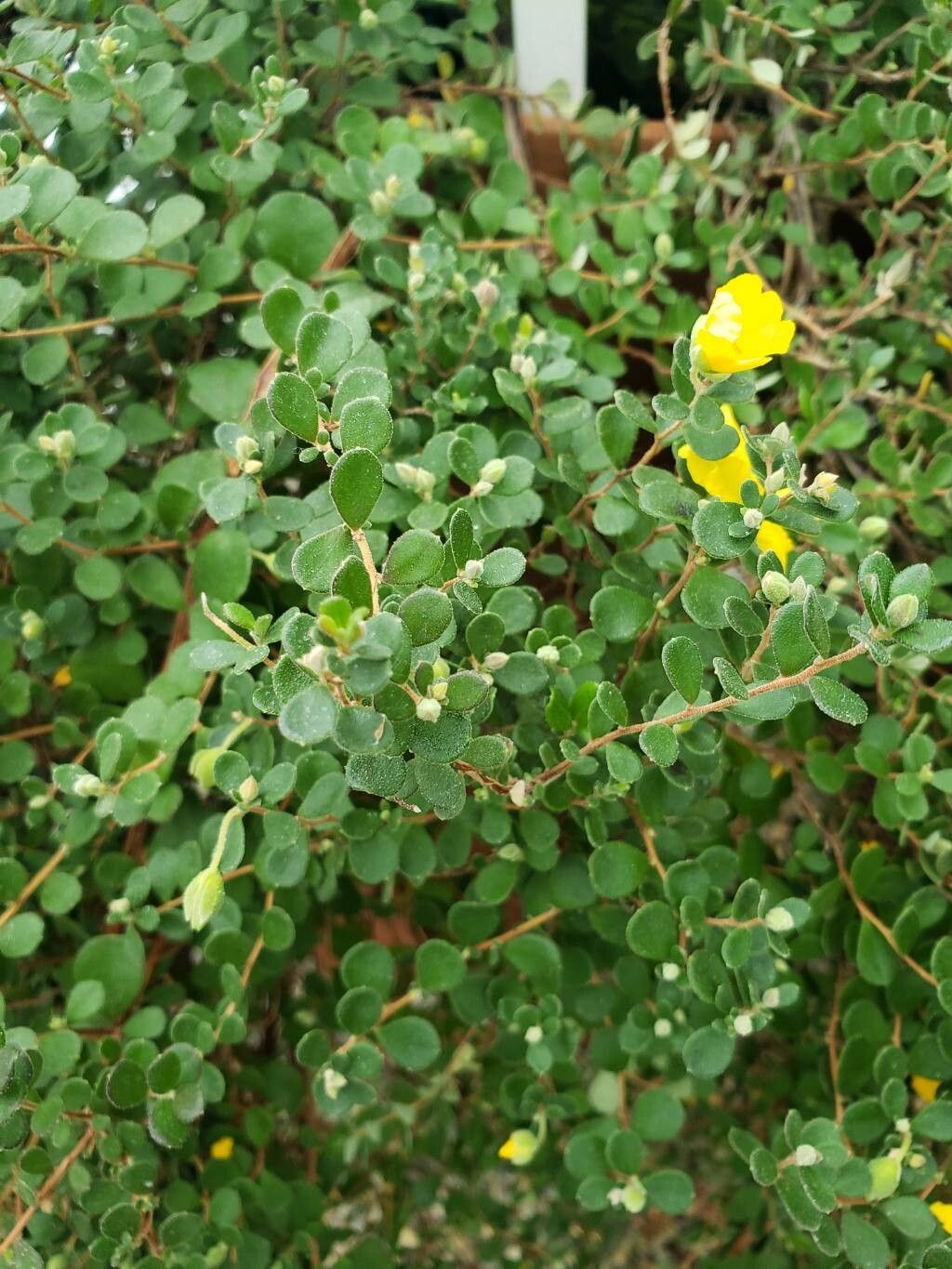
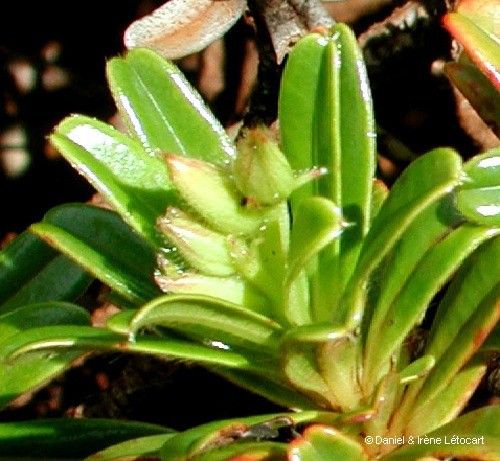
Hibbertia dentata, commonly known as toothed guinea flower, trailing guinea flower or twining guinea flower, is an ornamental plant in the family Dilleniaceae native to the east coast of Australia. Found in woodland, it is a trailing or twining vine with leaves with several small 'teeth' on the margins and bright yellow flowers in early spring. It adapts readily to cultivation and can be grown as a pot plant. The species was first described in 1817.
Twining guinea flower is highly disease-resistant and generally not liable to develop illnesses. In terms of maintenance, this plant is fairly low-maintenance. When grown outdoors it needs only light watering, and larger specimens typically do not require pruning. Smaller plants, however, should be trimmed after they finish blooming. Twining guinea flower is appropriate for anyone with an outdoor area, such as a garden or deck, and does not need much prior plant-care experience.
How to keep Hibbertia Dentata.
Light
The twining guinea flower occurs naturally in habitats like forest understories or rocky areas, where it grows under natural shade. It prefers partial sun but can adjust to full sun or full shade, showing its versatility and hardiness.
Temperature
The twining guinea flower is highly adaptable to a range of climates, from very hot summers to cold winters. However, it has an ideal temperature range for healthy growth. If temperatures become too high, the plant can suffer heat and humidity stress that may kill it. In areas where temperatures approach the lower limit of its cold tolerance, it is necessary to provide insulation to protect the plant.
Fertilizer
The timing of fertilizing Twining guinea flower is important. Apply fertilizer in early spring and then every month through early summer. Fertilizer promotes attractive blooms and supplies energy during both dormant and active growth periods.
Pruning
The twining guinea flower features vigorous climbing stems and bright yellow blossoms. To maintain its health, prune the plant in early spring. This practice encourages robust growth, enhances air circulation by removing dead stems, and helps maintain a compact shape with a light trim after flowering. Regular pruning not only controls the plant's spread but also improves its overall appearance. Be sure to use clean tools to prevent the spread of disease.
Botanical profile.
- Plant Type
- Shrub
- Life Cycle
- Perennial
- Genus
- Hibbertia
- Family
- Dilleniaceae
- Hardiness Zone
- 9-11
- Mature Height
- 0.91 m to 3.05 m
- Mature Spread
- 0.91 m to 2.13 m
- Leaf Color
- Green, Dark Green
- Leaf Type
- Evergreen
- Flower Size
- 2.03 cm to 4.06 cm
- Bloom Time
- Winter, Early spring, Mid spring
- Planting Time
- Autumn
- Harvest Time
- Spring
Other names.