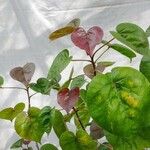
Hibiscus elatus
Cuban bast · Blue mahoe · Mahoe · Mountain mahoe
Description
Source: leafsnapTalipariti elatum, the blue mahoe, is a species of flowering tree in the mallow family, Malvaceae.
🌳 Sea hibiscus flowers possess an unusual trait: during a single day they shift in color from yellow to red and can act as indicators of environmental conditions. Apart from their decorative role, parts of the plant are gathered for strong fibers that were historically used in the Philippines for cordage and textiles. In Polynesian cultures, the inner bark is also used to make traditional tapa cloth, showing the plant’s versatile uses.
🎭 Friendship and family ties, happiness, joy, and everything brimming with optimism.
Care Guide
💧 Water
☀️ Light Full sun
Sea hibiscus grows best in bright, sunny conditions, though it can tolerate moderate light. Native to sun-drenched habitats, the plant endures substantial light exposure that supports vigorous growth. However, both excessive and inadequate sunlight can negatively impact the plant’s health, while proper sunlight guarantees an optimal growth phase.
🌡️ Temperature 20–37.8°C
Sea hibiscus prefers temperatures from 68 to 100 ℉ (20 to 38 ℃). It is native to tropical and subtropical regions and needs seasonal temperature adjustments. In the hot season, maintain adequate soil moisture and provide partial shade to prevent heat stress. By contrast, during the cold season it is best to keep the plants indoors to protect them from frosts and low temperatures.
💨 Humidity normal (40-60%)
This plant will thrive in moderate humidity, which is probably the level in your home. However, misting it a few times a week can be very beneficial. Make sure the room has good ventilation.
🪴 Soil 5-7
🌱 Fertilizer
Fertilization is essential to the care of Sea hibiscus. Consistent feeding during the growing season maintains the energy for its showy leaves and encourages overall growth. Skipping fertilization can lead to unhealthy leaves, reduced ornamental appeal, and stunted or weak growth that is prone to breaking.
🪴 Pot & Repot 2-3 years
When repotting a Sea hibiscus, pick a pot 1-2 inches (2.5–5.1 cm) larger that has good drainage. Use a well-draining potting mix. Repot in spring or fall, making sure the root ball sits slightly below the rim of the pot. Water thoroughly after repotting and keep the plant in a warm spot with indirect sunlight.
✂️ Pruning
🌿 Propagating
🐛 Diseases & pets
☠️ Toxicity
Characteristics
- Plant Type
- Tree, Shrub
- Life Cycle
- Perennial
- Genus
- Hibiscus
- Family
- Malvaceae
- Hardiness Zone
- 9-12
- Mature Height
- 3.96 m to 10.06 m
- Mature Spread
- 10.06 m
- Leaf Color
- Green, Blue
- Leaf Type
- Evergreen
- Flower Color
- Yellow
- Flower Size
- 6.35 cm to 7.62 cm
- Bloom Time
- All year round
- Planting Time
- Spring, Autumn
- Harvest Time
- All year round
- Native Area
- Sri Lanka, India, Malaysia, Vanuatu, Madagascar, Nigeria, Australia, Fiji, Guinea-Bissau, Brunei, Indonesia, Cambodia, Equatorial Guinea, Liberia, Cameroon, Ghana, Congo, South Africa, Philippines, Bangladesh, Laos, Guinea, China, Vietnam, Japan, Myanmar, Senegal, Singapore, Côte d'Ivoire, Gambia, Congo (DRC), Thailand, Gabon