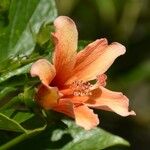
Hibiscus liliiflorus
Care Guide
💧 Water
☀️ Light Full sun
Chinese hibiscus is a sun-loving plant that requires plenty of light to support healthy growth. Native to areas with high light exposure, it performs best in places where the sun shines strongly for most of the day. It can also grow with moderate sunlight, but too much or too little sun can reduce its vigor.
🌡️ Temperature 20–37.8°C
The chinese hibiscus naturally grows in temperate regions and is sensitive to cold, so it prefers a temperature range of 68 to 100 ℉ (20 to 38 ℃) for proper growth. In winter, when temperatures fall below 50 ℉ (10 ℃), bring the plant indoors or into a warm greenhouse. During hot summer, extra watering is essential to keep the soil moist and the plant hydrated.
💨 Humidity
🪴 Soil 6-7
🌱 Fertilizer
The best time to fertilize a Chinese hibiscus is in early spring, as it breaks dormancy. This encourages overall growth and flower formation. Fertilization improves the foliage, stems, and branches, and promotes blooms that are large, vivid, and long-lasting. It assists in moving nutrients from the roots to the flowers and enhances the plant’s health and resistance to disease.
🪴 Pot & Repot 2-3 years
When repotting Chinese hibiscus, select a pot 1–2 inches (2.5–5.1 cm) larger with ample drainage. Use a well-draining potting mix. Repot in spring or fall, ensuring the root ball sits slightly lower than the rim of the flower pot. Water thoroughly after repotting and place it in a warm spot with indirect sunlight.
✂️ Pruning
🌿 Propagating
🐛 Diseases & pets
☠️ Toxicity
Characteristics
- Plant Type
- Shrub
- Life Cycle
- Perennial
- Genus
- Hibiscus
- Family
- Malvaceae
- Hardiness Zone
- 9-11
- Mature Height
- 0.91 m to 4.88 m
- Mature Spread
- 1.52 m to 3.05 m
- Leaf Color
- Green
- Leaf Type
- Evergreen
- Flower Color
- White, Yellow, Pink, Orange, Red, Gold
- Flower Size
- 4.06 cm to 17.78 cm
- Bloom Time
- Summer, Early fall
- Planting Time
- Spring, Autumn
- Harvest Time
- All year round
- Native Area
- Ecuador