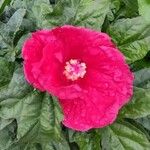
Hibiscus moscheutos
Crimsoneyed rosemallow · Swamp rose-mallow · Rose of Sharon · Midnight Marvel · Swamp rosemallow
Description
Source: leafsnapHibiscus moscheutos, commonly known as the swamp rose mallow or hardy hibiscus, is a perennial flowering plant native to North America. As a member of the mallow family, this plant can grow up to 6 feet tall and features large, showy flowers that can measure up to 12 inches in diameter. The flowers are available in shades of pink, white, and red, and they have a prominent central stamen that attracts pollinators such as bees and butterflies. This plant thrives in moist soil conditions and full sun exposure but can also tolerate partial shade. It blooms from mid-summer through early fall and requires regular watering during dry periods. Hibiscus moscheutos has been used by Native Americans for its medicinal anti-inflammatory properties. Additionally, the roots were utilized as a food source by indigenous people. Beyond its ornamental appeal in gardens and landscapes, Hibiscus moscheutos is crucial for wetland restoration projects because of its ability to thrive in wet soil conditions.
💡 The flowers of the swamp rose mallow are like a face that changes throughout the day. In the morning, they appear pure and lovely, either white or pink. As the day progresses, by noon, these flowers transform into a bright red. This remarkable change occurs in just half a day, making the swamp rose mallow truly special.
🌳 Swamp rose mallow, known for its showy blooms and tall habit, serves an important role in wetland ecosystems beyond its appearance. As a consistent indicator species, swamp rose mallow reflects the health of wetland habitats. Its vigorous growth creates microhabitats that support a range of wildlife. Insects attracted to its flowers take part in the pollination network, while the dense foliage provides shelter and nesting sites, thereby increasing local biodiversity and indicating environmental stability.
🎭 Fame, good fortune in love
Care Guide
💧 Water Every 7 days
The swamp rose mallow, which originates from wetlands, flourishes in environments with high moisture levels. It requires consistent hydration, ideally through watering every 1-2 weeks. As a herbaceous perennial usually grown outdoors, it needs sufficient moisture during its growing season to encourage lush flowering, but care should be taken to avoid over-saturation.
When Should I Water My Swamp Rose Mallow?
Timely watering of the swamp rose mallow, Hibiscus moscheutos, is critical for its health and growth, contributing to vibrant blooms and a lush appearance. The plant favors consistently moist soil, so check moisture levels by probing the soil—if the top 1-2 inches are dry, it's time to water. Visual cues such as wilting or curling leaves suggest the plant needs water, but ensure wilting isn't from over-watering, which also causes similar symptoms. Bud and bloom dropping indicate insufficient watering. Environmental conditions like dry, hot, or windy weather increase water needs, while cooler, humid conditions reduce them. Water the plant carefully to avoid both over and under-watering, which can lead to root rot, dehydration, stunted growth, reduced flowering, and susceptibility to pests and diseases.
How Should I Water My Swamp Rose Mallow?
Swamp rose mallow requires attentive watering practices. Bottom-watering is a highly recommended method for this plant, allowing roots to absorb moisture efficiently without oversaturating the soil or wetting the foliage, thus minimizing fungal disease risks. When using a watering can, opt for one with a narrow spout to direct water to the base of the plant and prevent excessive moisture on the leaves. This targeted hydration approach caters to the plant's needs while maintaining health and vigor.
How Much Water Does Swamp Rose Mallow Really Need?
Swamp rose mallow thrives in moist conditions, reflecting its natural swampy habitat. For pots, maintaining a water level about 1\/3 of the pot size aids in meeting the plant's deep rooting system needs. After watering, ensure there is no standing water in the saucer to prevent waterlogging. Proper watering will result in firm, healthy leaves and robust blooming. Over or under-watering can lead to root rot or desiccation, respectively, highlighting the importance of balancing watering practices to support the plant's health.
What Kind of Water is Best for Swamp Rose Mallow?
The optimal water type for swamp rose mallow is rainwater, due to its natural composition, balanced pH, and lack of chemicals. Filtered water serves as a suitable alternative if it is free from harmful contaminants. Tap water is the least preferred due to potential chlorine content, which the plant is sensitive to and can cause leaf burn. If tap water must be used, dechlorinate it by letting it sit for 24 hours before use. Swamp rose mallow prefers water at moderate temperatures, specifically room temperature (around 68-72°F or 20-22°C) to avoid shock from extreme temperatures.
How Do Swamp Rose Mallow's Watering Needs Change with the Seasons?
Swamp rose mallow's watering needs vary throughout the year. During spring's growth resurgence, ensure the soil stays evenly moist with deeper, less frequent waterings to encourage root development but avoid overwatering. In summer, with higher temperatures and active growth, keep soil consistently moist, adjusting for increased evaporative demand without watering foliage directly. Autumn's approach calls for reduced watering as the plant prepares for dormancy, focusing on root strength and applying mulch for moisture retention. Winter demands the least water, only necessary during dry spells to prevent desiccation or overwatering risks, focusing water at the base to avoid freezing.
☀️ Light Full sun
The swamp rose mallow grows best with plentiful sunlight; ample sun is important for its healthy development. It still does reasonably well in moderate light. Although it comes from bright habitats, insufficient light can lead to stunted growth. Conversely, light beyond its tolerance can also inhibit growth.
What are the sunlight requirements for Swamp Rose Mallow?
Swamp Rose Mallow (Hibiscus moscheutos) thrives best under full sunlight, requiring more than 6 hours of sunlight daily for optimal growth. It can still grow satisfactorily with about 3-6 hours of sunlight (partial sun). However, too little or excessive sunlight can affect the plant's health negatively. Observing how sunlight moves through your garden will help you select the ideal locations that provide the right balance of light and shade, crucial for the plant's well-being.
How does sunlight affect Swamp Rose Mallow's growth?
Ample sunlight is crucial for the healthy growth of Swamp Rose Mallow, as it originates from light-rich habitats. Inadequate sunlight exposure can lead to stunted growth, while extreme exposure beyond its tolerance can also inhibit its growth. During periods of insufficient natural sunlight, particularly in winter or less sunny spaces, artificial lighting serves as an essential alternative, promoting faster, healthier plant development. Appropriate lighting for indoor plants includes using LED lights to provide specific wavelengths needed by the plant, ensuring 30-50W/sq ft for full sun plants, 20-30W/sq ft for partial sun plants, and 10-20W/sq ft for full shade plants.
What are the symptoms of insufficient or excessive sunlight in Swamp Rose Mallow?
Symptoms of inadequate sunlight include smaller new leaves, leggy or sparse growth, early leaf drop to conserve resources, delayed or halted growth, and paler new leaves or irregular color patterns indicating a lack of chlorophyll. Conversely, excessive sunlight can lead to chlorosis (leaves turning yellow), sunscald (damaged leaves/stems from too much sun), leaf curling as a defense mechanism to reduce water loss, wilting from increased transpiration, and leaf scorching characterized by brown, dry, and crispy leaf edges. These conditions signal the plant's struggle with its light environment.
What solutions can be applied for Swamp Rose Mallow facing sunlight issues?
For indoor plants facing inadequate light, gradually move them to sunnier locations to ensure at least 6 hours of direct sunlight daily or use artificial lighting sources like plant grow lights or desk/ceiling lamps for at least 8 hours daily. For outdoor plants, moving them to sunnier spots gradually over weeks helps them adapt without risking sunburn. Addressing obstructions by pruning trees or transplanting to optimal sunlight locations can also benefit the plant. However, parts of the plant already affected may not recover fully, but new growth should be healthy with improved light conditions.
🌡️ Temperature 5–32.2°C
Swamp rose mallow originates in temperate regions and does best in temperatures of 68 to 95 °F (20 to 35 ℃). When seasons change, the capacity to cope with temperature swings is important. Be careful of frost in the colder months.
What is the ideal temperature range for Swamp Rose Mallow?
Swamp Rose Mallow thrives in temperate regions, preferring temperatures between 68 to 95°F (20 to 35°C). It is adaptable to temperature fluctuations, but be mindful to protect it from frost during cold months. Despite having strong cold resistance and usually not requiring special frost protection measures, it's crucial to offer cold protection if temperatures are expected to fall below -25°C. Such protection can include covering the plant with soil or straw, and before the onset of the first freeze in autumn, it's advisable to water the plant thoroughly to keep the soil moist, which helps prevent drought and water scarcity during winter and early spring.
What should I do if the Swamp Rose Mallow experiences low temperatures?
Swamp Rose Mallow is cold-tolerant and favors temperatures above 20°C, ideally remaining above 0°C during winter. In cases where temperatures drop below -25°C, the plant might not show immediate changes but could experience reduced sprouting or fail to sprout in spring. To counteract this, remove any parts of the plant that have failed to sprout in spring, fostering healthier growth.
How do I care for Swamp Rose Mallow during high temperatures?
During the summer, ensure the Swamp Rose Mallow's environment stays below 35°C. High temperatures exceeding 38°C can cause the leaves to lighten in color, curl, become prone to sunburn, and in severe cases, lead to wilting and drying of the entire plant. To mitigate these effects, trim away sunburned and dried parts, relocate the plant to a shaded area or use a shade cloth to protect it from the midday and afternoon sun. Additionally, watering the plant in the morning and evening will help keep the soil moist and cool.
💨 Humidity
🪴 Soil 5-7
🌱 Fertilizer
Early spring, as it comes out of dormancy and begins active growth, is the best time to fertilize a Swamp rose mallow. Fertilizer supplies essential nutrients for healthy growth. Although Swamp rose mallow has relatively low fertilizer requirements, annual fertilization can improve its survival and promote better, longer-lasting flowers.
Why should I put fertilizer on my Swamp rose mallow?
Fertilization plays an important role in the growth and development of the Swamp rose mallow and other plants. It provides essential nutrients that support both above and below-ground growth. Although the Swamp rose mallow has relatively low fertilization requirements, annual fertilization can greatly benefit the plant. This practice not only helps to sustain its survival but also promotes the production of more vibrant and longer-lasting flowers. Therefore, those interested in maintaining the optimal appearance of their Swamp rose mallow should prioritize annual fertilization.
When should I fertilize my Swamp rose mallow plant?
The best time to fertilize a Swamp rose mallow is in late winter to early spring. At that time, the plant is coming out of dormancy and entering a phase of active growth. Fertilizing during this time will help promote healthy growth for the season. Although early spring is generally the most beneficial time to fertilize, it is also acceptable to fertilize in the fall. However, it is not recommended to fertilize the plant during summer or winter.
When is the best time to not fertilize my Swamp rose mallow?
To properly care for your Swamp rose mallow, it is important to know when to fertilize. The ideal time for fertilization is during late winter and early spring, when the plant has low fertilization needs. Giving it one annual feeding during this time is sufficient. It is best to avoid fertilizing throughout the rest of the year, as overfertilization can easily occur and cause complications. The only exception is if you missed fertilizing in spring, then it is permissible to feed the plant in fall. Also, there is no need to fertilize during the winter when the Swamp rose mallow is in a dormant growth phase and does not produce new growth. Therefore, it is not advised to fertilize during most of the winter.
Which fertilizer should I use for my Swamp rose mallow?
To help your Swamp rose mallow thrive, any general-purpose fertilizer with a balanced mix of nutrients will work well. But there are specific nutrient blends that can be even more beneficial. Many gardeners believe that higher phosphorus levels promote stronger roots and better flowers. Since Swamp rose mallow is a flowering plant, using a fertilizer rich in phosphorus may be the best choice. Granular or liquid fertilizers both work as long as they provide ample nutrients. In addition to manufactured fertilizers, you can also improve the soil for your Swamp rose mallow using organic methods. Compost, manure, and similar materials can greatly enhance the quality of the growing medium.
How can I make my Swamp rose mallow grow better?
The most common way to fertilize a Swamp rose mallow is by applying granular or pellet fertilizer to the soil around the plant. It is important to fertilize during the plant's active growth phase, which typically occurs after its winter dormant period. In early spring, wait for shoots to emerge from the soil before applying the fertilizer. Alternatively, some people prefer using liquid fertilizer, which should be diluted with water before application. Regardless of the type of fertilizer used, it is recommended to moisten the soil before, during, and after fertilization.
🪴 Pot & Repot 2-3 years
When repotting Swamp rose mallow, select a pot 1-2 inches (2.5–5.1 cm) larger that has good drainage. Use a well-draining potting mix. Repot in spring or fall, making sure the root ball sits slightly lower than the rim of the flower pot. Water thoroughly after repotting and place the pot in a warm spot with indirect sunlight.
✂️ Pruning
Prune swamp rose mallow in late spring to encourage new growth. Cut the old stems back to about 30 cm (1 ft) above the ground. This helps improve air circulation, overall plant health, and flower production. Be sure to use clean, sharp tools to prevent disease, and keep an eye on the growth cycle to achieve the best results.
🌿 Propagating
🐛 Diseases & pets
☠️ Toxicity
Characteristics
- Plant Type
- Shrub
- Life Cycle
- Perennial
- Genus
- Hibiscus
- Family
- Malvaceae
- Hardiness Zone
- 5-8
- Mature Height
- 0.91 m to 2.44 m
- Mature Spread
- 0.49 m to 1.22 m
- Leaf Color
- Green
- Leaf Type
- Deciduous
- Flower Color
- White, Pink, Red
- Flower Size
- 10.16 cm to 22.86 cm
- Bloom Time
- Early summer, Mid summer
- Planting Time
- Spring, Summer, Autumn, Winter
- Harvest Time
- Mid summer, Late summer
- Native Area
- Eastern North America