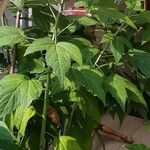
Hibiscus palustris
Swamp Rose Mallow · Swamp Rosemallow · Sea hollyhock · Marshmallow · Hardy Hidiscus
Description
Source: leafsnapHibiscus palustris, commonly known as swamp rose mallow, is a perennial plant belonging to the Malvaceae family. Native to North America, it thrives in wetlands, marshes, and alongside ponds and streams. This plant can grow up to 6 feet tall and spread 3 to 4 feet wide. The leaves of Hibiscus palustris are dark green, heart-shaped at the base, and feature serrated edges. The flowers are striking, large (up to 6 inches in diameter) with five petals, varying in color from white to pink or red. They bloom from mid-summer through early fall. Hibiscus palustris is a crucial food source for many pollinators, including bees, butterflies, and hummingbirds. It also provides habitat for various wildlife species, such as birds and small mammals. Historically, Native Americans used the plant for medicinal purposes, such as treating fever and inflammation. Early settlers utilized the roots as a substitute for tea or coffee. Overall, Hibiscus palustris is an attractive native plant offering ecological benefits while enhancing the beauty of wetland areas or gardens with moist soil conditions.
Care Guide
💧 Water Every 7 days
☀️ Light Full sun
Hibiscus moscheutos subsp. moscheutos is native to well-lit, open settings where it flourishes in direct sunlight. It can endure some partial sun exposure, but its growth is most optimal in full sunshine. This plant, which is both annual and biennial, has a well-known affinity for sunlight.
🌡️ Temperature 5–35°C
Hibiscus moscheutos subsp. moscheutos exhibits a broad adaptability to various temperature environments, though certain combinations of heat and water conditions could still restrict its range. Optimal growth occurs in summer temperatures that are warm, supplemented with sufficient rain or watering. A longer span of cloudy, rainy weather or elevated temperatures could boost the chances of Hibiscus moscheutos subsp. moscheutos perishing. During the winter months, protection from cold weather can enhance the plant's chances of survival.
💨 Humidity normal (40-60%)
This plant will thrive in moderate humidity, which is probably the level in your home. However, misting it a few times a week can be very beneficial. Make sure the room has good ventilation.
🪴 Soil 6-8
🌱 Fertilizer
When the Hibiscus moscheutos subsp. moscheutos has largely blossomed, it is the appropriate period to commence fertilization once more. As soon as the flowers reach their highest production count, set off the fertilization process every three to four weeks, depending on the weather conditions. Once you notice a reduction in the production of new flowers from the Hibiscus moscheutos subsp. moscheutos, discontinue the fertilization since the plant does not require it if it isn't producing additional blooms.
🪴 Pot & Repot
✂️ Pruning
🌿 Propagating
🐛 Diseases & pets
☠️ Toxicity
Characteristics
- Plant Type
- Herb
- Life Cycle
- Annual, Perennial
- Genus
- Hibiscus
- Family
- Malvaceae
- Hardiness Zone
- 5-9
- Mature Height
- 1.52 m to 2.44 m
- Mature Spread
- 0.91 m to 1.52 m
- Leaf Color
- Green, Dark Green
- Leaf Type
- Deciduous
- Flower Color
- White, Pink
- Flower Size
- 15.24 cm to 25.40 cm
- Bloom Time
- Summer, Early fall
- Planting Time
- Spring, Summer, Autumn
- Harvest Time
- Fall