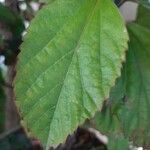
Hibiscus rosa-sinensis
ختمى چينى · Hawaiian hibiscus · Hibiscus · Chinese hibiscus · China-rose
Description
Source: leafsnapHibiscus rosa-sinensis, commonly known as the Chinese hibiscus or shoe flower, is a tropical evergreen shrub belonging to the family Malvaceae. Native to East Asia, it is widely cultivated in tropical and subtropical regions worldwide for its ornamental value. The plant can reach up to 3 meters in height and features glossy green leaves that are oval-shaped with pointed tips. Its large, showy flowers come in a variety of colors, including red, pink, orange, yellow, and white, typically featuring a prominent central stamen. Popular for its stunning blooms, the Chinese hibiscus is often grown as an ornamental plant. It flowers throughout the year in warm climates, requiring full sun exposure and well-drained soil with regular watering during dry periods. The plant can be propagated through stem cuttings or seeds. In addition to its aesthetic appeal as an ornamental plant in gardens and landscapes, Hibiscus rosa-sinensis is valued for its medicinal properties, as recognized by traditional medicine practitioners worldwide. Extracts from this plant are believed to possess anti-inflammatory properties, making them useful for treating skin conditions such as acne. Moreover, they have antioxidant properties that help protect against cellular damage caused by free radicals. Overall, Hibiscus rosa-sinensis stands out as one of nature's most beautiful plants, appreciated not only for its aesthetic appeal but also for its medicinal benefits, making it an important part of many cultures globally.
🌳 Not just pleasing to look at, chinese hibiscus offers a range of notable uses. It is honored as Malaysia's national flower, known there as 'bunga raya' meaning 'celebratory flower', and it also serves a practical role in India. The plant's vivid petals are employed to shine shoes, earning it the names 'shoe plant' and 'shoeblack plant'. Rubbing shoes with chinese hibiscus blossoms refreshes the leather and gives a glossy finish, showing the plant's usefulness beyond its decorative appeal.
🎭 New love, gentle beauty, elegance, purity, renown, splendor
Care Guide
💧 Water Every 7 days
The Chinese hibiscus, originally from tropical regions, thrives in conditions of high humidity. It needs to be watered every 1-2 weeks, ensuring the soil dries out slightly between waterings. While best grown outdoors, the Chinese hibiscus flourishes with plenty of sunlight and benefits from rainfall during its active growing season.
When Should I Water My Chinese Hibiscus?
Watering your Chinese Hibiscus (Hibiscus rosa-sinensis) correctly is crucial for its health and growth. The soil's dryness is a primary indicator for when to water. You should water the plant when the top inch of soil feels dry to the touch, making sure to check beneath the surface as the top can dry out faster. Additionally, if the leaves appear droopy or if the plant's growth has slowed, it may need watering. Be cautious not to overwater, as this can lead to root rot and other issues. It's equally important not to water too early or too late during the day to prevent diseases.
How Should I Water My Chinese Hibiscus?
Watering your Chinese Hibiscus involves a balance to prevent overwatering and ensure healthy growth. The root system is sensitive so avoiding waterlogging is essential. Techniques such as bottom-watering can be effective, allowing roots to access moisture directly without saturating the soil surface, which minimizes disease risks. Misting the leaves can help maintain humidity, especially in dry conditions. Utilize tools like a moisture meter and a watering can with a long spout to monitor soil moisture and deliver water precisely to the base without wetting the foliage unnecessarily. Focus on watering the soil at the base and avoiding direct application to leaves and flowers to prevent disease.
How Much Water Does Chinese Hibiscus Really Need?
The amount of water your Chinese Hibiscus requires depends on several factors including pot size, the depth of the roots, and the size of the plant itself. This plant prefers its soil to be kept evenly moist but not waterlogged to prevent root rot. Signs of proper hydration include vibrant, healthy-looking leaves and soil that feels moist but not soggy. The roots, which extend around 10-12 inches deep, should receive moisture throughout this depth, which means watering thoroughly until it reaches down to 6 inches. Adjust the frequency of watering according to the pot's size and the plant's growth stage. Be cautious of both over and underwatering, as these can harm the plant.
What Kind of Water is Best for Chinese Hibiscus?
The best water for your Chinese Hibiscus includes distilled water, rainwater, or filtered water. These types are preferred because they are free from contaminants and harmful chemicals. While tap water can be used, it often contains chlorine and may need to be left to stand for 24 hours to allow the chlorine to evaporate before use. The plant has a moderate sensitivity to chlorine, which can stress the plant and cause leaf burn. Water temperature is also crucial; it prefers room temperature water around 68-72°F (20-22°C), as extreme temperatures can shock the plant.
How Do Chinese Hibiscus's Watering Needs Change with the Seasons?
The watering needs for Chinese Hibiscus change seasonally. In spring, focus on maintaining evenly moist soil as the plant enters a growth phase and the weather warms. Summer demands more frequent watering due to higher evaporation rates, with attention to keeping the soil consistently moist. As autumn arrives and temperatures cool, reduce watering frequency, allowing the top layer of soil to dry slightly between waterings. Winter sees a further reduction in watering needs as the plant goes dormant; only water lightly when needed, being cautious of overwatering. Always adjust your watering schedule based on current weather conditions and soil moisture.
☀️ Light Full sun
Chinese hibiscus is a sun-loving plant that requires plenty of light to support healthy growth. Native to areas with high light exposure, it performs best in places where the sun shines strongly for most of the day. It can also grow with moderate sunlight, but too much or too little sun can reduce its vigor.
What are the sunlight requirements for Chinese Hibiscus?
Chinese Hibiscus requires full sun, meaning it thrives in areas receiving above 6 hours of sunlight daily. It can also grow in partial sun, receiving about 3-6 hours of sunlight. Observing the movement of sunlight through your garden and choosing locations that offer a perfect balance of light and shade is crucial for the plant's health and happiness.
What essentials should be considered for growing Chinese Hibiscus?
Growing Chinese Hibiscus requires an abundant amount of sunlight as it is a sun-loving plant. Originating from bright, well-lit habitats, it performs best when exposed to full sunlight for most of the day but can also tolerate moderate sunlight. It's important to ensure it doesn't receive too much or too little sunlight as this could impact its health. For indoor plants, artificial lighting such as LED lights are recommended to provide adequate light, especially in spaces with insufficient natural sunlight. The required intensity varies depending on the plant's sunlight needs, with full sun plants needing 30-50W/sq ft, partial sun plants 20-30W/sq ft, and full shade plants 10-20W/sq ft.
How does insufficient sunlight affect Chinese Hibiscus and what are the solutions?
Insufficient sunlight can lead to several symptoms in Chinese Hibiscus, including impact on flowering and fruiting, faster leaf drop, leggy or sparse growth, chlorosis, sunscald, leaf curling, wilting, and leaf scorching. To counteract these issues, it's recommended to gradually move plants to sunnier locations until they receive at least 6 hours of direct sunlight daily. For indoor plants, using artificial light like desk or ceiling lamps for at least 8 hours a day, or investing in plant grow lights can provide additional light. When seeking to improve outdoor light exposure, gradually transitioning plants to sunnier spots and reducing obstructions by pruning or transplanting can be effective strategies. Note that parts of the plant affected by insufficient light may not recover, but new growth should be healthy with increased light exposure.
🌡️ Temperature 20–37.8°C
The chinese hibiscus naturally grows in temperate regions and is sensitive to cold, so it prefers a temperature range of 68 to 100 ℉ (20 to 38 ℃) for proper growth. In winter, when temperatures fall below 50 ℉ (10 ℃), bring the plant indoors or into a warm greenhouse. During hot summer, extra watering is essential to keep the soil moist and the plant hydrated.
What are the ideal temperature conditions for the Chinese hibiscus?
The Chinese hibiscus thrives in temperate regions and prefers a temperature range of 68 to 100°F (20 to 38°C) for optimal growth. It is extremely sensitive to cold temperatures and requires additional care during winter and hot summer periods. In winter, temperatures below 50°F (10°C) necessitate moving the plant indoors or to a warm greenhouse to protect it from the cold. To ensure the plant remains hydrated during hot summers, it's crucial to keep the soil moist through extra watering. Maintaining temperatures above 20°C in winter benefits the plant, while exposing it to temperatures approaching 0°C can be harmful. During autumn, it's recommended to bring outdoor-grown Chinese hibiscus indoors, placing it near a bright window but away from direct heat sources to avoid damage.
How should I care for my Chinese hibiscus in low temperatures?
Chinese hibiscus plants thrive best in warm conditions and are not tolerant to low temperatures, flourishing optimally when the temperature remains above 20°C. To protect your plant during cold weather, ensure it is kept at a temperature above 0°C. Exposure to temperatures below -5°C can cause the leaves to lighten in color, leading to brown or black discoloration and signs of frost damage such as wilting and drooping. To mitigate damage, trim off the affected parts and move the plant to a warmer indoor setting promptly. Placing the plant near a south-facing window ensures it receives sufficient sunlight, but avoid direct exposure to heaters or air conditioning vents to prevent air dryness.
What precautions should be taken for Chinese hibiscus in high temperatures?
During the hot summer months, it’s important to keep the Chinese hibiscus below 38°C to prevent heat stress. Temperatures above 43°C can lead to lighter leaf colors and increase the risk of sunburn. To care for your plant under high temperature conditions, trim away sunburned or dried parts and relocate the plant to a shaded area, particularly during the midday and afternoon sun. Watering the plant in the morning and evening will help keep the soil adequately moist and ensure the plant remains hydrated despite the heat.
💨 Humidity high (>60%)
This plant needs special care because it loves high humidity levels of 60-80% or more. The best way to achieve this is by placing a humidifier near the plant. Daily misting is also essential! Make sure the room has good ventilation.
🪴 Soil 6-7
🌱 Fertilizer
The best time to fertilize a Chinese hibiscus is in early spring, as it breaks dormancy. This encourages overall growth and flower formation. Fertilization improves the foliage, stems, and branches, and promotes blooms that are large, vivid, and long-lasting. It assists in moving nutrients from the roots to the flowers and enhances the plant’s health and resistance to disease.
When should I put fertilizer on my Chinese hibiscus for the best results?
The best time to fertilize a Chinese hibiscus is in early spring when it is starting to come out of its dormant phase and preparing to open its buds. This will provide the plant with the energy it needs for growth and flower development. However, it is also beneficial to give the plant a second feeding in the fall, although it doesn't need to be as large as the first one. Some gardeners prefer to fertilize their Chinese hibiscus during planting, but it is not always necessary.
Why should I put fertilizer on my Chinese hibiscus?
Fertilization plays a crucial role in the overall health and well-being of a Chinese hibiscus. By providing the right amount of energy and nutrients, fertilization promotes the development of healthy foliage, sturdy stems, and branches. However, the real value for gardeners lies in the flowers of the Chinese hibiscus. Thankfully, fertilization also enhances the production of large, vibrant, and long-lasting flowers. This is because the appropriate fertilizer facilitates the efficient transfer of fuel from the roots to the stems and ultimately to the flowers. Moreover, proper fertilization helps maintain the plant's overall health, making it more resilient against diseases.
When is the best time to not use fertilizer on my Chinese hibiscus?
During the winter, Chinese hibiscus plants are in a dormant phase, so fertilization is not necessary. Overfertilizing during this time can have negative effects. The best times to fertilize a Chinese hibiscus are in early spring and fall. Fertilization is not needed during most of the spring and summer, and it's also recommended to withhold fertilizer if the plant is experiencing extreme heat or dry conditions.
What kind of fertilizer should I use for my Chinese hibiscus plant?
To better care for Chinese hibiscus plants, it is recommended to use a specific type of fertilizer. While a general-purpose fertilizer with equal amounts of nitrogen, phosphorus, and potassium may be sufficient for some plants, Chinese hibiscus plants often thrive when they receive a fertilizer that is tailored to their needs. Nitrogen and phosphorus are particularly important nutrients for Chinese hibiscus, so the fertilizer should contain higher levels of these compared to potassium. A fertilizer with an N-P-K ratio of 10-10-8, or a similar ratio, is a good choice. Additionally, it can be beneficial to use organic materials such as compost for at least one annual feeding. When applying fertilizer, granular fertilizer is commonly used for Chinese hibiscus plants.
How can I make my Chinese hibiscus plant grow better?
Feeding your Chinese hibiscus with fertilizer is a simple task that any gardener can do, even with minimal experience. To use granular fertilizer, just sprinkle it on the soil after moistening it with water. If you prefer using organic materials like compost or manure to improve the soil, you can place them on top and gently work them into the first few inches with a hand rake, being careful not to disturb the roots.
🪴 Pot & Repot 2-3 years
When repotting Chinese hibiscus, select a pot 1–2 inches (2.5–5.1 cm) larger with ample drainage. Use a well-draining potting mix. Repot in spring or fall, ensuring the root ball sits slightly lower than the rim of the flower pot. Water thoroughly after repotting and place it in a warm spot with indirect sunlight.
✂️ Pruning
Chinese hibiscus is a flowering shrub renowned for its large blossoms. To promote growth and increase blooming, prune dead or weak stems and shape the plant in late spring, after it has finished flowering. Use sharp tools to ensure clean cuts, and remove up to one-third of the plant to rejuvenate it.
🌿 Propagating
🐛 Diseases & pets
☠️ Toxicity
The rosemallow plant is a safe and non-toxic houseplant to have around children and pets.
Characteristics
- Plant Type
- Shrub
- Life Cycle
- Perennial
- Genus
- Hibiscus
- Family
- Malvaceae
- Hardiness Zone
- 9-11
- Mature Height
- 0.91 m to 4.88 m
- Mature Spread
- 1.52 m to 3.05 m
- Leaf Color
- Green
- Leaf Type
- Evergreen
- Flower Color
- White, Yellow, Pink, Orange, Red, Gold
- Flower Size
- 4.06 cm to 17.78 cm
- Bloom Time
- Summer, Early fall
- Planting Time
- Spring, Autumn
- Harvest Time
- All year round
- Native Area
- Ecuador