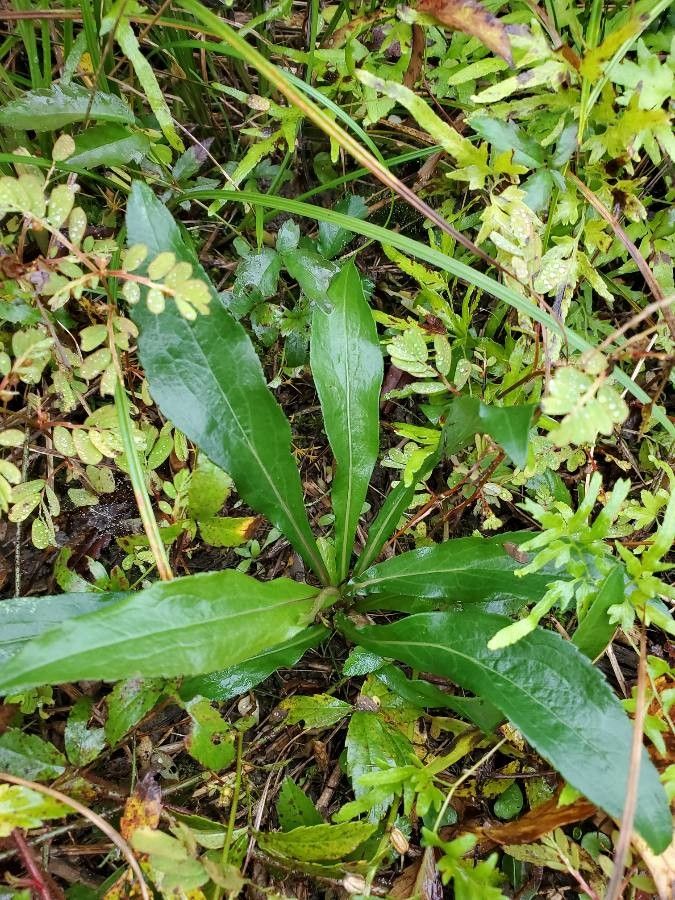
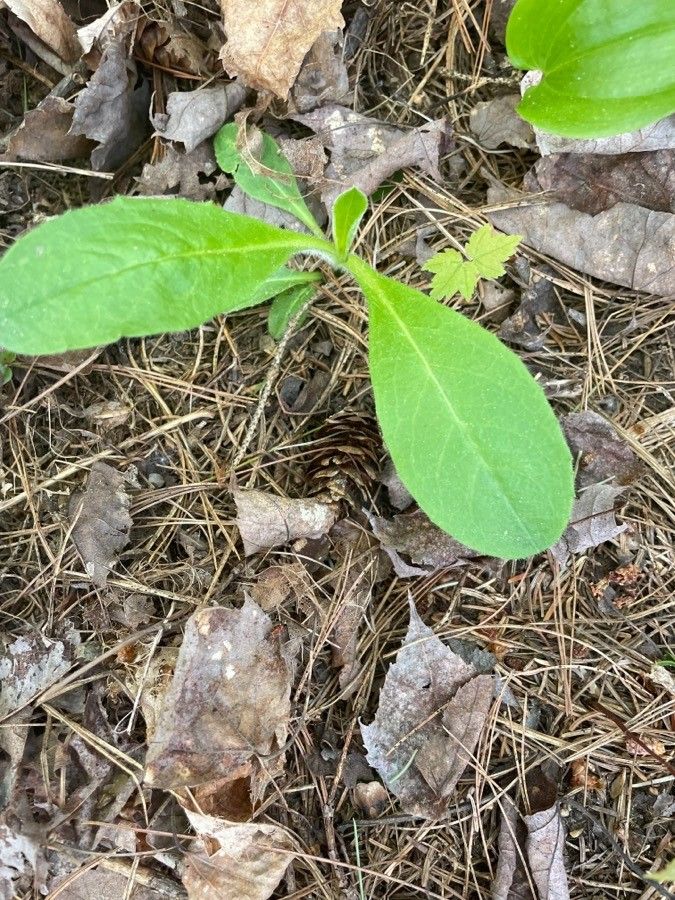
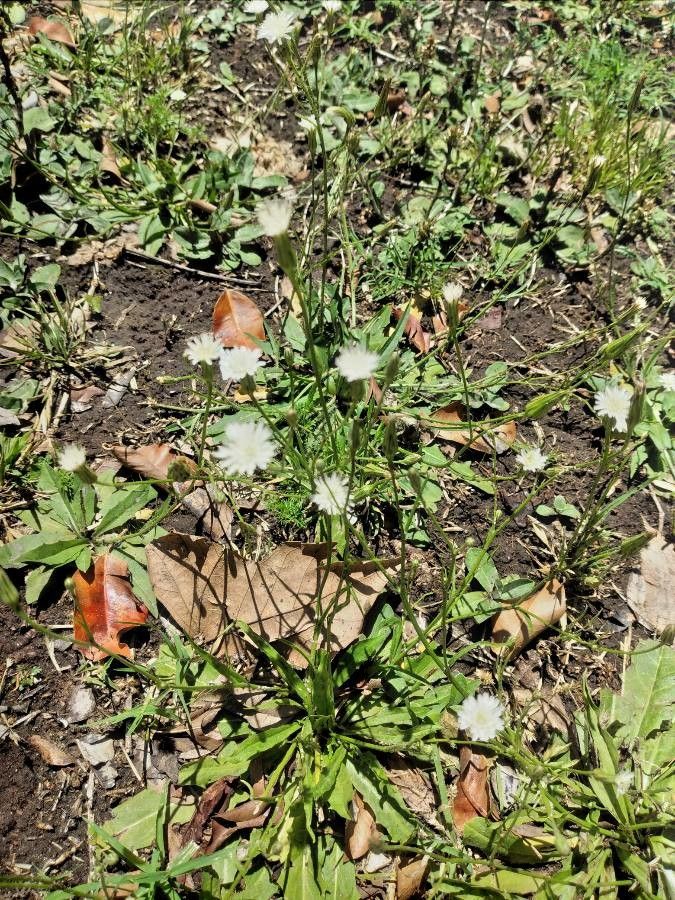
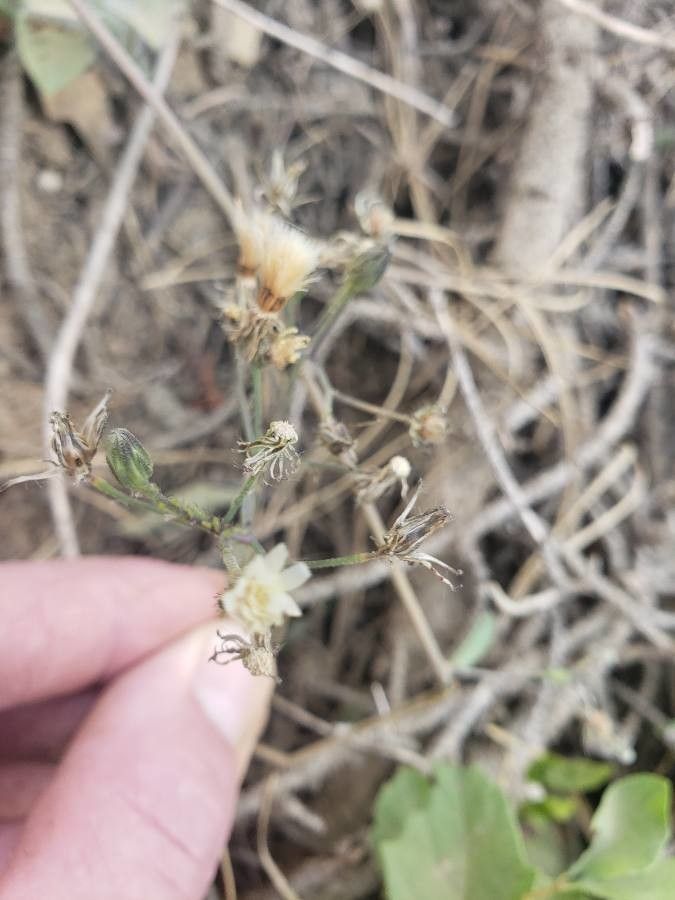
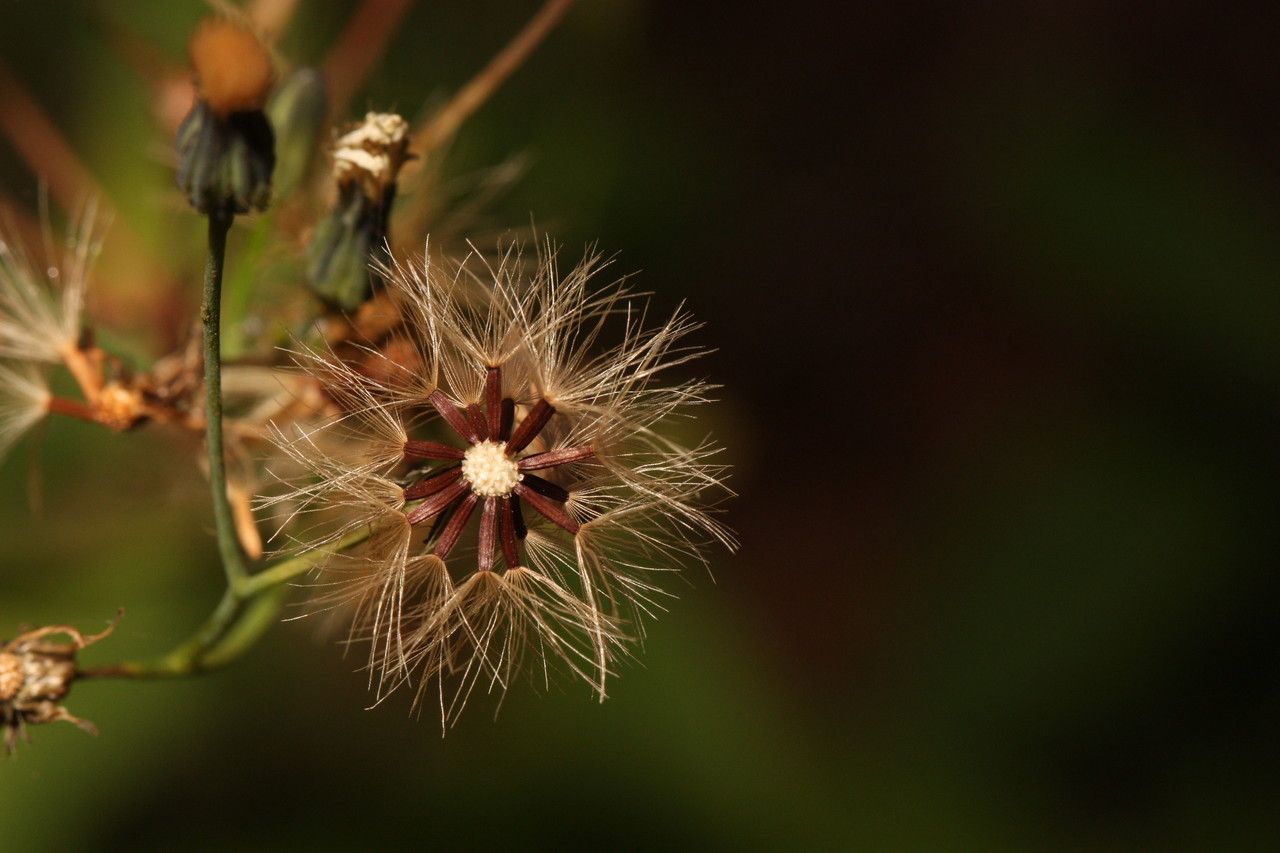
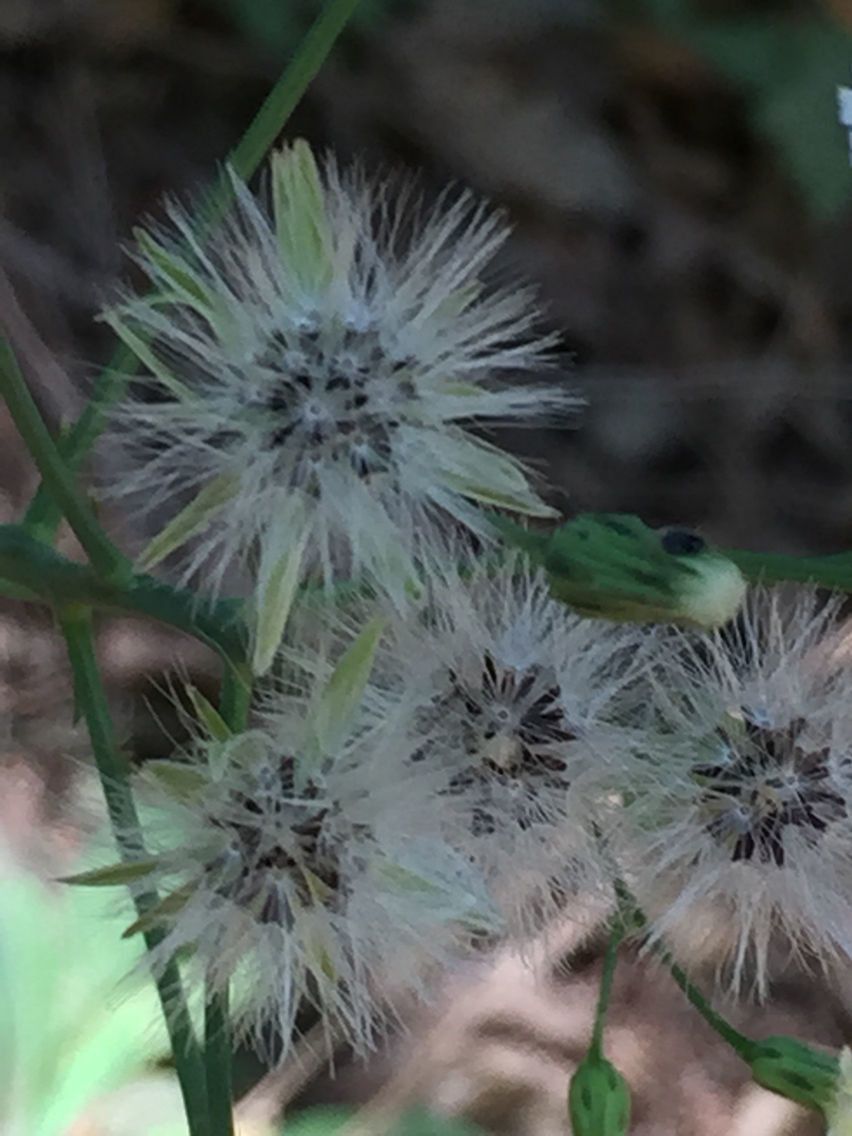
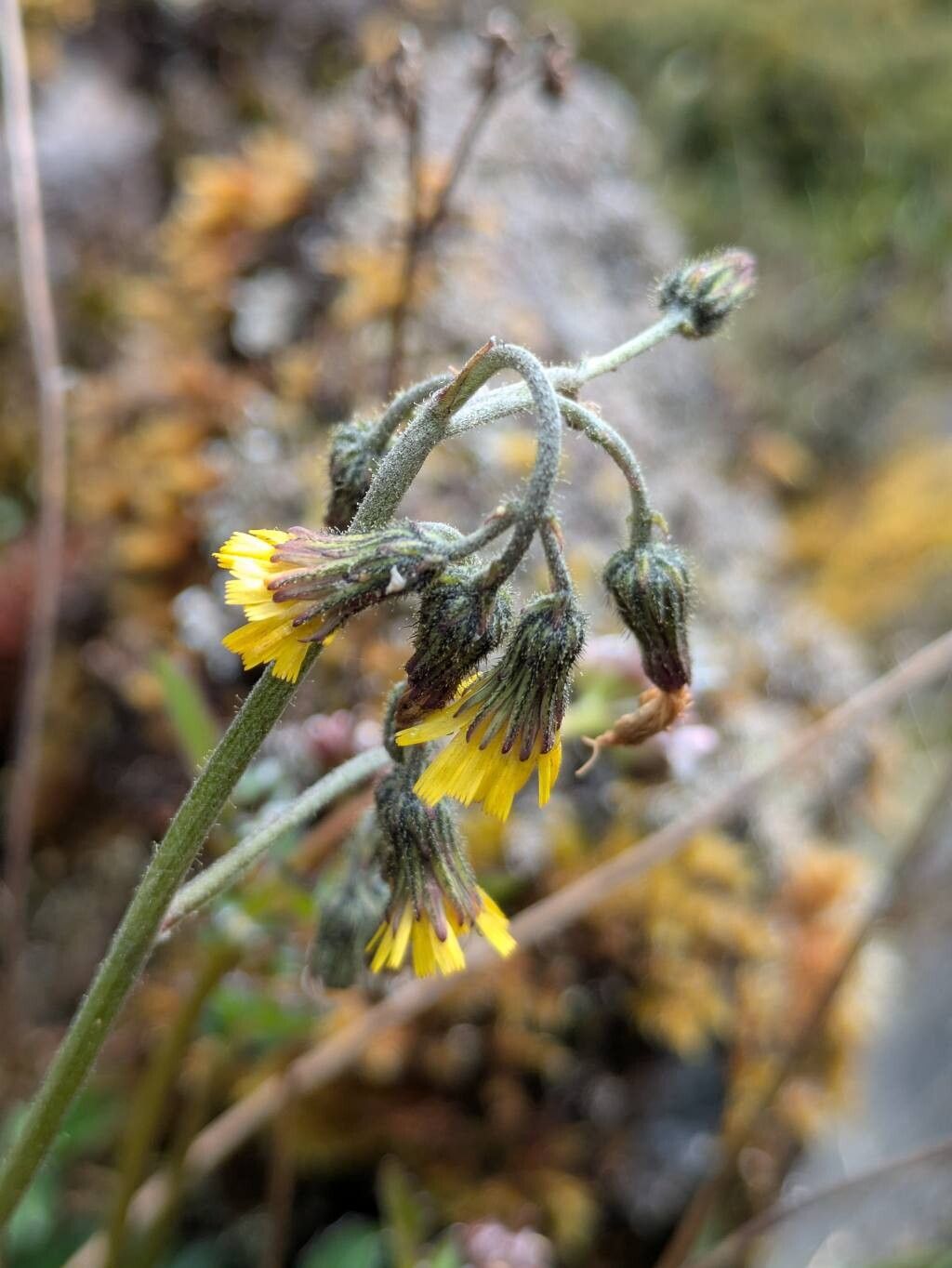
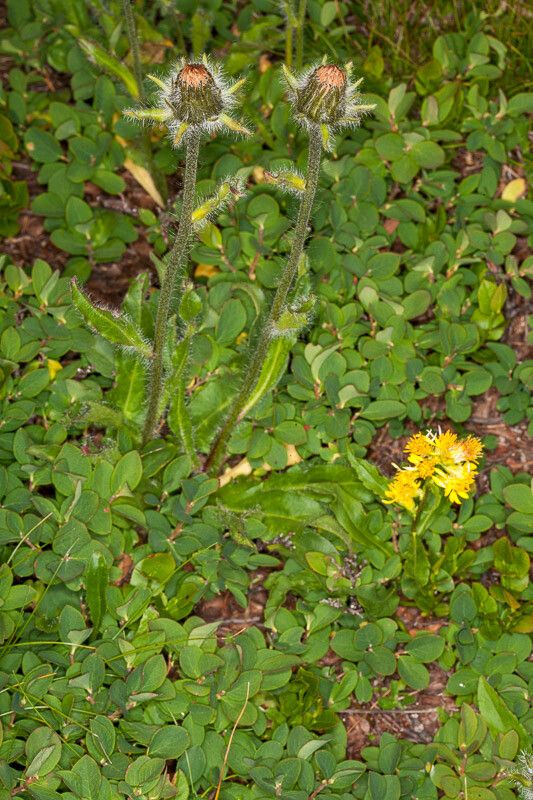
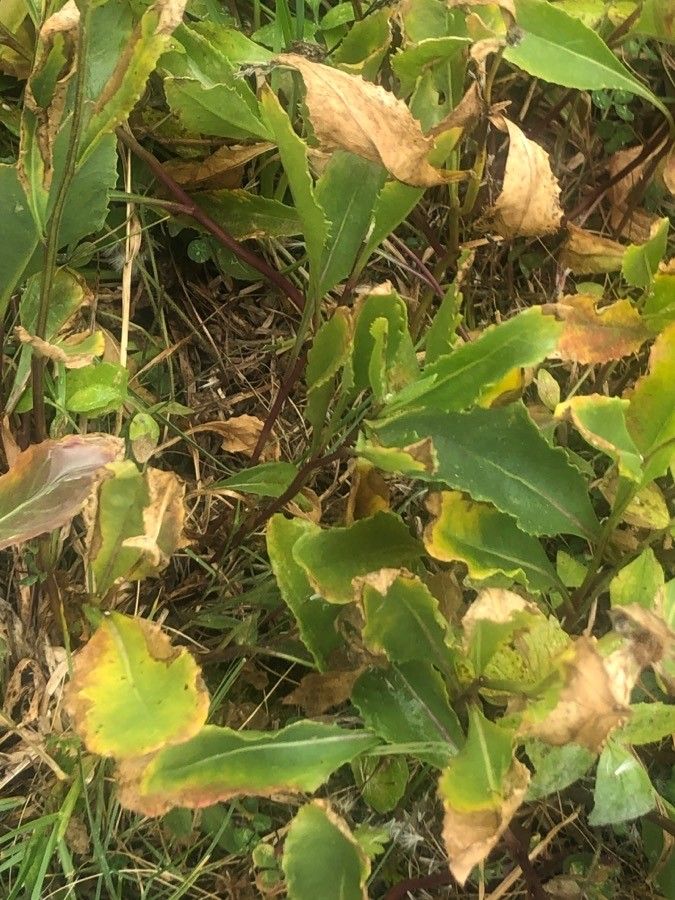
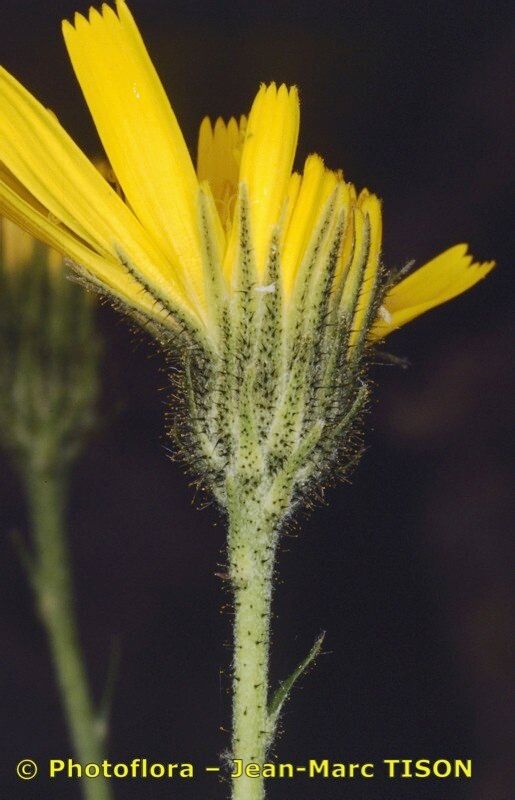
Hieracium albiflorum, commonly known as white-flowered hawkweed, is a perennial herbaceous plant in the Asteraceae family. It is native to North America and thrives in diverse habitats such as meadows, forests, and rocky slopes. The plant can reach up to 60 cm in height and features a basal rosette of lance-shaped leaves with toothed edges. Its stem is hairy, bearing clusters of small white flowers at the top. These flowers bloom from June to August and are primarily pollinated by insects like bees and butterflies. The leaves of Hieracium albiflorum have been traditionally used by Native Americans for medicinal purposes, including treating wounds, stomach ailments, headaches, and respiratory issues. However, caution is advised when using this plant medicinally, as it contains pyrrolizidine alkaloids, which can be toxic if ingested in large amounts. In addition to its medicinal uses, Hieracium albiflorum is valued for its ornamental appeal, with its attractive white flowers enhancing the beauty of gardens and natural landscapes. However, it should not be planted near natural areas because it has the potential to become invasive. Overall, Hieracium albiflorum is an intriguing herbaceous perennial with notable medicinal properties. Nonetheless, caution is necessary due to its potential toxicity if improperly ingested and its potential invasiveness, which can harm local ecosystems.
Botanical profile.
- Plant Type
- Herb
- Life Cycle
- Perennial
- Genus
- Hieracium
- Family
- Asteraceae
- Hardiness Zone
- 3
- Mature Height
- 30 cm to 91 cm
- Mature Spread
- 15 cm to 25 cm
- Leaf Color
- Green, Dark Green
- Leaf Type
- Deciduous
- Flower Color
- White, Yellow
- Flower Size
- 1.52 cm to 2.03 cm
- Bloom Time
- Summer
- Planting Time
- Spring
- Harvest Time
- Late summer, Early fall, Mid fall
Other names.