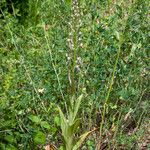
Himantoglossum adriaticum
Adriatic lizard orchid
Description
Source: leafsnapHimantoglossum adriaticum, the Adriatic lizard orchid, is a species of orchid native to Italy, Slovenia, Croatia, Austria, Czech Republic and Slovakia. It is Europe's tallest orchid, often reaching the height of 1 metre.
Care Guide
💧 Water
The Adriatic lizard orchid thrives with adequate moisture but can tolerate occasional drought. During summer, water the plant weekly, and in winter, water it every 10 days. To maintain humidity, regularly mist the orchid. Use water with a neutral pH by neutralizing tap or rainwater; you can do this by storing the water to allow dissolved substances to evaporate.
☀️ Light Partial sun
The Adriatic lizard orchid occurs naturally in settings like forest understories and rocky habitats, where it grows in natural shade. It prefers partial sun but can adjust to either full sun or full shade, showing its adaptable, hardy character.
🌡️ Temperature 10–35°C
The Adriatic lizard orchid can adjust to a broad range of temperatures, yet its distribution may still be restricted by different combinations of moisture and heat. It performs best in warm summer conditions with sufficient rainfall or watering. Long periods of cloudy, rainy weather or sustained high temperatures can raise the chance of the Adriatic lizard orchid dying. In winter, adequate protection from cold can enhance the plant's survival.
What is the Adriatic Lizard Orchid?
The Adriatic Lizard Orchid, with its botanical name Himantoglossum adriaticum, is a species of orchid that does not have listed essentials or symptoms in the provided data. This species is known for its unique attributes and falls under the orchid family, offering a distinct addition to the diversity of plant life.
💨 Humidity
🪴 Soil 6-8
🌱 Fertilizer
The best time to fertilize an Adriatic lizard orchid is in early spring, as it emerges from dormancy and starts active growth. Fertilization supplies essential nutrients for healthy development. While the Adriatic lizard orchid has fairly low fertilizer requirements, annual feeding can boost its survival and encourage better, longer-lasting flowers.
🪴 Pot & Repot
✂️ Pruning
The Adriatic lizard orchid boasts unique, lizard-like flowers and requires minimal pruning. To encourage growth and flowering, remove dead foliage in early spring. Avoid heavy pruning, as this orchid is sensitive to excessive cutting. To prevent fungal diseases and support healthy growth, ensure good air circulation by thinning the plants.
🌿 Propagating
🐛 Diseases & pets
☠️ Toxicity
Characteristics
- Plant Type
- Herb
- Life Cycle
- Perennial
- Genus
- Himantoglossum
- Family
- Orchidaceae
- Hardiness Zone
- 6-9
- Mature Height
- 30 cm to 61 cm
- Mature Spread
- 20 cm to 30 cm
- Leaf Color
- Green, Dark Green
- Leaf Type
- Deciduous
- Flower Color
- Pink
- Flower Size
- 1.02 cm to 2.03 cm
- Bloom Time
- Late spring, Early summer
- Planting Time
- Spring, Summer
- Harvest Time
- Mid summer, Late summer
- Native Area
- Austria, Italy, Czech Republic, Slovakia, Albania, Moldova, Hungary, Croatia, Slovenia, Ukraine