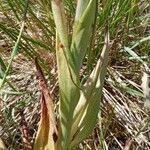
Himantoglossum hircinum
Lizard orchid · Orchis bouc · Buck Orchid · Goat Orchid
Description
Source: leafsnapHimantoglossum hircinum, commonly known as the Lizard Orchid, is a species of orchid native to Europe and parts of Asia. This perennial plant can reach a height of up to 80 cm and typically produces a single stem bearing several flowers. The flowers are greenish-yellow with brown markings and have a distinctive lizard-like appearance, giving rise to its common name. The Lizard Orchid thrives in dry grasslands, rocky slopes, and open woodlands. It usually blooms from May to July, although this can vary depending on the climate. Traditionally, this plant has been used for its antiseptic properties in medicinal practices. However, due to over-harvesting for such purposes, it is now protected by law. The Lizard Orchid has become increasingly rare, largely due to habitat loss driven by human activities such as urbanization and agriculture. Conservation efforts are underway across Europe to protect this unique species from extinction. In summary, Himantoglossum hircinum is a fascinating orchid known for its distinctive appearance, yet it faces an endangered status in many of its natural habitats across Europe, necessitating ongoing protection efforts.
Care Guide
💧 Water Every 7 days
The lizard orchid, native to temperate regions, flourishes in well-drained soil with moderate moisture levels. It also benefits from consistent humidity. To maintain its health, especially during active growth phases, it is important to water the plant weekly. This routine not only nurtures the orchid but also mimics its natural environment, making it an excellent choice for indoor cultivation.
How should I water my Lizard orchid plant?
The way you water the Lizard orchid depends on whether it is in an active growth phase. If it is, you should water the soil and occasionally water overhead if it is warm. In winter or cool and wet weather, only water the soil. To know if the Lizard orchid needs more water, check if its roots and leaves are dry or discolored. If it receives too much water, it will look mushy and limp. When growing the Lizard orchid, use a pot with good drainage. During the growing season, water it multiple times per week, ensuring the water drains quickly. The amount of water will vary based on the pot size, with larger pots needing water less frequently. Use rainwater or distilled water that matches the air temperature as closely as possible.
What should I do if I give my Lizard orchid too much or too little water?
To avoid killing your Lizard orchid, it is important to not keep the soil too moist for too long. Although these plants need frequent watering during active growth, they also require well-draining soil. Overwatering can lead to mushy roots and root rot. In such cases, you should remove any affected roots with sterilized pruning shears and then repot the orchid using a container with good drainage and fast-draining potting mix. However, excessive repotting may not be well tolerated by the orchid, so it is important to find the right balance of watering. If your Lizard orchid becomes underwatered, it will start to shrivel and feel dry to the touch. In this case, it is likely that the soil is drying out faster than anticipated, so you should increase the frequency of watering.
How frequently do I need to water my Lizard orchid?
During the active growth stage, which is in the spring and summer, you should water your Lizard orchid about once or twice per week. If it's very hot and dry, you may need to water it three times per week or more. In the winter, you still need to water it, but not as often. Two to three times per month should be enough during the coldest months. However, if you keep your Lizard orchid indoors during winter, the soil may dry out faster, so you might need to water it more often. In the fall, you can gradually decrease the frequency of watering from multiple times per week to match your reduced winter schedule.
What do I need to think about when watering my Lizard orchid during different seasons and growth phases?
When planning your watering schedule for your Lizard orchid, it's important to consider two crucial growth phases. The first phase is the active growth period, which takes place in spring and summer. During this time, it is necessary to water the plant multiple times per week. The second growth phase is the rest period, which occurs in winter for about two to three months. During this period, the Lizard orchid requires significantly less water and fertilization. Watering once or twice per month is sufficient. In the fall, gradually reduce the frequency of watering from multiple times per week to the appropriate rate of once or twice per month for the winter.
How should I change my watering routine for a Lizard orchid if I keep it inside?
The Lizard orchid thrives in a relatively humid environment, but indoor growing locations often lack the necessary air moisture. As a result, the plant and its soil dry out quicker indoors than they would outdoors. To address this issue, consider placing a humidifier in the room where you cultivate your Lizard orchid and watering it more frequently. However, it is important to balance humidity with adequate air circulation to avoid excessive moisture buildup and potential diseases. Therefore, including a fan in the room will help maintain proper airflow for the plant's health.
☀️ Light Partial sun
The lizard orchid does best with a substantial amount of sunlight. Coming from habitats where sun is plentiful, this supports its healthy development. Although it can tolerate a range of light conditions, it may struggle if it lacks daily sun exposure. Excessive sun, however, can impose physiological strain.
What are the sunlight requirements for a Lizard orchid?
The Lizard orchid requires full sun, characterized by more than 6 hours of sunlight daily, for thriving growth. Originating from environments with abundant sunlight, this orchid performs best under substantial sun exposure. While it can tolerate various sunlight conditions, insufficient daily sun exposure could impede its growth. Conversely, excessive sunlight may cause physiological strain on the plant. It's essential to observe how sunlight moves through your garden to select locations offering an ideal balance of light and shade, optimizing the plant's health.
How can artificial lighting be used for Lizard orchid care?
For Lizard orchids grown indoors where natural sunlight may be insufficient, especially during winter or in less sunlit areas, artificial lighting can be crucial for promoting optimal growth. Using the appropriate type of artificial light is essential; LED lights are recommended as they provide customizable wavelengths suited to plant needs. Full sun plants require 30-50W/sq ft, partial sun plants need 20-30W/sq ft, and shade plants should get 10-20W/sq ft of artificial light. The light source should be positioned 12-36 inches above the plant, simulating natural sunlight, with a duration of 8-12 hours daily to mimic natural daylight hours for most plant species.
What are the symptoms of insufficient or excessive sunlight in Lizard orchids?
Symptoms of inadequate sunlight in Lizard orchids include smaller new leaves, leggy or sparse growth, faster leaf drop, halted new growth, pale new leaves indicating lack of chlorophyll, and entire plants appearing weak or stretched. Conversely, symptoms of too much sunlight include chlorosis, where leaves turn yellow due to chlorophyll breakdown; sunscald, marked by pale or necrotic areas on plant tissue; leaf curling as a defense mechanism to reduce surface area exposure; wilting from increased water loss; and leaf scorching, seen as brown, dry edges on leaves due to excessive light.
What solutions can address the sunlight needs of Lizard orchids?
To address sunlight needs for Lizard orchids, gradually move indoor plants to sunnier locations until they receive at least 6 hours of direct sunlight daily, utilizing south-facing windows and keeping curtains opened for maximum exposure. Artificial lighting, such as desk, ceiling lamps, or professional grow lights, should be used for at least 8 hours daily for plants that are large or not easily movable. For outdoor plants, progressively relocate them to sunnier spots, avoiding sudden changes to prevent sunburn. Minimize obstructions by pruning trees or branches that block sunlight or transplanting smaller plants to sunnier locations with good drainage during their dormant period, usually in late winter or early spring.
🌡️ Temperature 10–35°C
Lizard orchid can tolerate a wide range of temperatures, but its distribution may still be constrained by different combinations of moisture and heat. It grows best in warm summer climates with sufficient rainfall or watering. Extended periods of cloudy, rainy weather or prolonged high temperatures can raise the chance of Lizard orchid dying. In winter, adequate protection from cold can increase the plant's survival rate.
What is the botanical name of the Lizard orchid?
The botanical name of the Lizard orchid is Himantoglossum hircinum. This distinct species is known for its unique characteristics and appearance, distinctive from other orchids.
💨 Humidity
🪴 Soil 6-7
🌱 Fertilizer
For the Lizard orchid, the primary time to fertilize is in early spring when the flowers are forming. The proper fertilizer promotes better blooms and helps the Lizard orchid produce attractive flowers. Fertilizing in early spring ensures excellent flowers throughout the season and supplies energy for dormant growth phases.
🪴 Pot & Repot
✂️ Pruning
The lizard orchid needs very little pruning. You only need to remove dead or damaged stems in early and late spring to encourage growth. It's crucial to regularly check for diseases and always use sterilized tools when pruning. For specific care advice, consider consulting local horticultural guides.
🌿 Propagating
🐛 Diseases & pets
☠️ Toxicity
Himantoglossum hircinum has no toxic effects reported.
Characteristics
- Plant Type
- Herb
- Life Cycle
- Perennial
- Genus
- Himantoglossum
- Family
- Orchidaceae
- Hardiness Zone
- 6-9
- Mature Height
- 1.07 m
- Mature Spread
- 15 cm to 30 cm
- Leaf Color
- Green, Dark Green
- Leaf Type
- Deciduous
- Flower Color
- White, Green, Purple
- Flower Size
- 1.02 cm to 2.03 cm
- Bloom Time
- Late spring, Early summer
- Planting Time
- Spring, Summer, Autumn
- Harvest Time
- Mid summer, Late summer
- Native Area
- Tunisia, Austria, Bulgaria, Greece, Morocco, Serbia, Germany, Italy, Spain, Switzerland, Netherlands, United Kingdom, Hungary, Algeria, Belgium, France