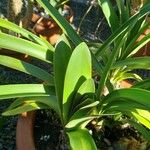
Hippeastrum papilio
Butterfly amaryllis · Green Amaryllis
Description
Source: leafsnapHippeastrum papilio, commonly known as the butterfly amaryllis, is a captivating flowering plant that belongs to the Amaryllidaceae family. Native to Brazil, it is widely cultivated as an ornamental plant in various parts of the world. The plant produces large, showy flowers that resemble butterflies in flight. The butterfly amaryllis typically grows up to 60 cm tall and features long, strap-like green leaves. Its flowers, borne on tall stalks, can reach up to 15 cm in width. They have six petals arranged in a star shape, accented with shades of white and red or pink stripes. Hippeastrum papilio thrives in well-drained soil rich in organic matter and requires regular watering during its growing season from spring through summer. It can be grown indoors or outdoors, depending on climate conditions, but it requires bright light for optimal growth. The butterfly amaryllis is a popular choice for gardeners due to its striking appearance and ease of cultivation. Additionally, it attracts pollinators such as bees, butterflies, and hummingbirds, making it an excellent addition to any garden or landscape design project.
Care Guide
💧 Water Every 7 days
The butterfly amaryllis flourishes in humid tropical rainforests and needs to be watered weekly to maintain the right level of moisture. Being an evergreen plant, it keeps its foliage throughout the year, so it requires consistent hydration even during non-growing seasons to stay healthy.
☀️ Light Full sun
The butterfly amaryllis is a sun-loving perennial herbaceous plant native to open habitats, frequently thriving in meadows and grasslands. It prefers full sun but can also tolerate partial sun.
🌡️ Temperature 15–37.8°C
The butterfly amaryllis comes from tropical areas, where the climate is usually warm and humid. Consequently, it is well suited to high heat and moisture. It dislikes sudden temperature shifts and favors a steady temperature, so indoor temperature swings should be avoided. It generally cannot tolerate cold and needs warmer conditions to grow; if the surrounding temperature falls too low, growth may stop or the plant may die.
💨 Humidity
🪴 Soil 6-7
🌱 Fertilizer
Proper fertilization is essential for the health and appearance of Butterfly amaryllis. Feed the Butterfly amaryllis in summer, applying fertilizer monthly throughout the season. Nutrients support growth and help maintain the plant’s parts. Fertilizing improves the Butterfly amaryllis’s flower display and promotes the best blooms.
🪴 Pot & Repot 2-3 years
When repotting Butterfly amaryllis, select a pot 1-2 inches (2.5–5.1 cm) larger with ample drainage. Use a well-draining potting mix. Repot in spring or fall, ensuring the root ball is slightly lower than the rim of the flower pot. Water thoroughly after repotting and place in a warm spot with indirect sunlight.
✂️ Pruning
The butterfly amaryllis is a popular choice for gardens due to its stunning flowers. To maintain its health and beauty, prune the plant in the spring after it has finished flowering. During this time, remove any spent blooms and yellowing foliage, but be careful not to cut any green leaves. Regular pruning encourages healthy growth, improves air circulation, and ensures vibrant blooms in the future. Additionally, removing dead leaves at any time is beneficial for the plant.
🌿 Propagating
🐛 Diseases & pets
☠️ Toxicity
Characteristics
- Plant Type
- Herb
- Life Cycle
- Perennial
- Genus
- Hippeastrum
- Family
- Amaryllidaceae
- Hardiness Zone
- 8-11
- Mature Height
- 49 cm
- Mature Spread
- 20 cm
- Leaf Color
- Green
- Leaf Type
- Evergreen, Semi-evergreen, Deciduous
- Flower Color
- White
- Flower Size
- 15.24 cm to 20.32 cm
- Bloom Time
- Winter, Early spring, Mid spring
- Planting Time
- Spring, Summer, Autumn
- Harvest Time
- Late winter, Spring, Early summer
- Native Area
- Brazil