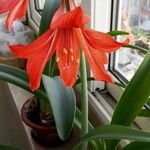
Hippeastrum vittatum
Barbados lily
Description
Source: wikipedia (CC BY-SA)Hippeastrum vittatum, the superb amaryllis, is a species of flowering plant in the family Amaryllidaceae. It is native to western Bolivia, southern Brazil, and Misiones Province, Argentina, and it has been introduced to a number of other locales around the world. A bulbous geophyte, it is typically found in the seasonally dry tropics. With Hippeastrum reginae it is a parent of Hippeastrum × johnsonii, an ornamental that gained the Royal Horticultural Society's Award of Garden Merit in 2012.
Care Guide
💧 Water
The Barbados lily is originally from tropical regions, where it thrives in high humidity and consistent moisture. For optimal growth, it should be watered weekly, although it can adapt to brief periods of drought. To simulate its natural environment, plant it in well-draining soil and provide moderate watering during its active growing season.
What should I do if I give too much or too little water to my Barbados lily?
The Barbados lily is easily overwatered, which can cause bulb rot. Symptoms of overwatering include a mushy bulb, flopping stems with spots, droopy flowers, and a yellowed stalk. Yellow leaves are normal at the end of the blooming period, but if they turn yellow before blooming, it indicates overwatering. Unfortunately, bulb rot cannot be reversed, so if caught early, the bulb should be dug up and the rotten portions removed. Disinfect any tools and the pot if used. For outdoor plants, plant them in a different location. Underwatering is not as big of an issue, but signs include no blooms, wilting stalks, and browning around the edges of the petals. If underwatered, give a good drink without saturating the soil. However, be cautious to avoid overwatering, as it can cause root rot and fungus growth on the bulb, resulting in spots on leaves and buds, and discoloration and death of leaf tips.
How frequently should I water my Barbados lily?
The Barbados lily is a fairly hardy plant that does not require a lot of attention. It thrives when grown directly in the ground in the hottest and brightest part of your garden, although it can also be grown in a pot. Since it is a bulb plant, it is important to avoid overwatering as this can cause the bulb to rot. After planting the Barbados lily, water it well once and then leave it. This initial watering will stimulate growth, and you can then leave the plant alone until you see shoots appear. To determine if the soil is moist enough, check the moisture level after new leaves have grown by inserting your finger about 2-3 inches below the surface. If the soil is still wet, there is no need to water the plant. For potted plants, check the water collection tray for any standing water, and avoid watering if there is any. For a more accurate moisture reading, use a moisture sensor inserted about 2-3 inches into the soil. The ideal moisture level should be in the middle of the 'moist' category. It is recommended to water the Barbados lily once per week for optimal results.
How should I change how much I water my Barbados lily based on different conditions?
The Barbados lily is a hardy plant that can survive in tough conditions. When planted outdoors, it doesn't need much water and can endure droughts. Just make sure the soil has proper drainage. For potted Barbados lilies, be cautious about watering since they are prone to bulb rot if overwatered. Water them less than outdoor plants and ensure the pots have drainage holes. Use well-drained soil and add sand or rocks for better drainage. During the growing phase, water the Barbados lily about one inch per week to encourage blooming. Start watering when the stalk appears. The amount of water depends on humidity and temperature. Hot and dry climates may require more frequent watering, while humid climates need less. Always check the soil's moisture level and avoid overwatering. These plants prefer well-drained, moist soil.
☀️ Light Full sun
The barbados lily thrives in places that receive plenty of sun during the day and can tolerate locations that only get brief periods of sunlight. Coming from areas with abundant sunlight, the plant relies on that light for healthy growth. However, too much sun can scorch it, while insufficient light can result in weak growth.
What are the sunlight requirements for Barbados lily?
The Barbados lily, botanically known as Hippeastrum vittatum, thrives best in full sun conditions, meaning it requires above 6 hours of direct sunlight daily. However, it can also manage in partial sun, with about 3-6 hours of sunlight. It's essential to observe how sunlight moves through your garden to ensure you choose spots that provide a perfect balance of light and shade, ensuring the plant's health and happiness. In its natural habitat, the Barbados lily is accustomed to abundant sunlight, which is crucial for its robust growth. Nonetheless, gardeners should be cautious as too much direct sun may scorch the plant, while insufficient light can weaken its growth.
How can artificial lighting help Barbados lily indoors?
Artificial lighting can be a vital solution for growing Barbados lily indoors, especially in conditions where natural sunlight is insufficient, like during winter or in less sunny indoor spaces. LED lights are recommended because they can be customized to provide specific wavelengths of light needed by the plants. For plants requiring full sun, 30-50W/sq ft of artificial light is needed, 20-30W/sq ft for partial sun plants, and 10-20W/sq ft for full shade plants. The light source should be placed 12-36 inches above the plant to mimic natural sunlight, and the duration should mimic natural daylight hours, which most plants need for 8-12 hours per day. This ensures the Barbados lily receives adequate light for optimal growth indoors.
What are the symptoms of incorrect lighting for Barbados lily?
When Barbados lily is grown in inadequate lighting conditions, several symptoms may emerge, indicating the plant's struggle. These include the development of smaller leaves than previous ones, leggy or sparse growth making the plant appear thin and stretched-out, faster leaf drop as the plant sheds older leaves to conserve resources, delayed or halted growth, and lighter-colored or yellow leaves indicating a lack of chlorophyll and essential nutrients. Sunscald, leaf curling, wilting, and leaf scorching are symptoms related to overexposure to sunlight. These symptoms showcase the plant's response to either too much or too little light. Proper management of sunlight exposure is crucial to mitigate these issues.
What solutions can support Barbados lily's growth in terms of lighting?
To support the optimal growth of Barbados lily in regards to lighting, different strategies can be employed based on the plant's setting. Indoors, gradually moving the plant to a sunnier location each week until it receives at least 6 hours of direct sunlight daily is recommended. A south-facing window is ideal, with open curtains for maximum sunlight. If the plant is large or not easily movable, using artificial light, such as a desk or ceiling lamp for at least 8 hours daily, or investing in professional grow lights, can provide adequate light. Outdoors, moving the plants gradually to sunnier spots allows them to adapt without risk of sunburn. Reducing obstructions like pruning trees or transplanting smaller plants during their dormant period to sunnier locations can enhance sunlight exposure. However, it's important to note that parts of the plant affected by insufficient sunlight may not recover, but new growth should be healthy with improved light conditions.
🌡️ Temperature 15–37.8°C
The Barbados lily is naturally adapted to a climate range of 59 to 100°F (15 to 38℃). It performs well in mild to hot conditions similar to its native habitat. Seasonal temperature adjustments may be vital to maintain a comfortable habitat.
What is the ideal climate range for Barbados lily?
The Barbados lily, or Hippeastrum vittatum, is well-suited to climates with temperatures ranging from 59 to 100°F (15 to 38°C). It flourishes in mild to hot conditions that simulate its native habitat. Depending on the season, adjustments in temperature may be needed to ensure the plant remains in a comfortable environment. While the Barbados lily does have some level of cold tolerance and typically doesn’t need special care for temperatures above -5°C, precautions should be taken if temperatures are expected to drop below this threshold. Protective measures such as covering the plant with plastic film, fabric, or other materials can provide cold protection, but it's important to remove these once temperatures rise again.
How does the Barbados lily respond to low temperatures?
Barbados lily exhibits moderate tolerance to low temperatures and prospers when the temperature remains above 15°C. However, during winter, it's crucial to keep the plant above -5°C. Exposure to temperatures below -10°C can lead to drooping leaves. While the plant may recover from mild exposure, severe cases can result in leaves wilting and eventually falling off. To manage frost damage, it's recommended to trim off the affected parts. Before the arrival of low temperatures again, wrapping the plant with non-woven fabric or cloth and setting up a wind barrier can help protect it from the cold.
How should Barbados lily be cared for in high temperatures?
In the summer, it's important to ensure that the Barbados lily's environment remains below 38°C to avoid heat stress. Temperatures exceeding 43°C can cause the leaves to lighten in color, dry out at the tips, curl, and increase the risk of sunburn. To mitigate damage from high temperatures, remove any sunburned or dried parts of the plant. Relocating the plant to a shaded area during the midday and afternoon sun, or using a shade cloth, can provide relief from excessive heat. Additionally, watering the plant in the morning and evening helps to keep the soil appropriately moist.
💨 Humidity
🪴 Soil 6-6
🌱 Fertilizer
The best time to fertilize a Barbados lily is in early spring, as it comes out of dormancy and starts active growth. Fertilization supplies essential nutrients for healthy development. Although a Barbados lily has fairly low fertilizer needs, giving it fertilizer once a year can improve its survival and encourage better, longer-lasting flowers.
Why should I put fertilizer on my Barbados lily?
There are several reasons why fertilization is important for the Barbados lily. Primarily, it provides essential nutrients that support the plant's growth above and below the ground. Although the Barbados lily's overall fertilization needs are relatively low, annual fertilization can greatly benefit the plant. It can help maintain its health and also improve the longevity and quality of its flowers. Therefore, those who want their Barbados lily to thrive should make sure to fertilize it on a yearly basis.
When should I fertilize my Barbados lily?
The best time to fertilize a Barbados lily is in late winter to early spring when it is coming out of its dormant phase and starting to grow. Fertilizing during this time promotes healthy growth and sets the plant up for a successful season. While it is generally recommended to fertilize in the early spring, it is also okay to fertilize in the fall. However, it is not advisable to feed the Barbados lily in summer or winter.
When is it not a good idea to put fertilizer on my Barbados lily?
To avoid overfertilization and potential complications, it is best to only fertilize your Barbados lily in late winter and early spring. This plant has low fertilization needs, so a single annual feeding is sufficient. If you missed fertilizing in the spring, you can also feed it in the fall. It is important to refrain from fertilizing throughout the rest of the year as this can easily lead to overfertilization. Additionally, there is no need to fertilize during the winter when the Barbados lily is in a dormant growth phase and does not put forth new growth.
What kind of plant food does my Barbados lily need?
When it comes to fertilizing a Barbados lily, you have a few options. Any general-purpose fertilizer with a balanced amount of the three main plant nutrients will do the trick. However, there are certain nutrient blends that can be even more beneficial. Many gardeners believe that higher levels of phosphorus lead to stronger roots and better flowers. Since Barbados lilies are flowering plants, using a phosphorus-rich fertilizer may be the best choice. You can opt for either granular or liquid fertilizers, as long as they provide sufficient nutrients. Additionally, you can improve the soil for your Barbados lily using organic methods. Compost, manure, and similar materials are great options for creating a healthy growing medium.
How do I make my Barbados lily grow better?
When fertilizing a Barbados lily, the most common approach is to use a granular or pellet fertilizer applied to the soil around the plant. Keep in mind that the best time to fertilize is when the plant is transitioning from its winter dormant growth phase to active growth. In early spring, wait until the plant starts sending shoots through the soil, then apply the fertilizer. Some people prefer using liquid fertilizer instead of granular. If you choose this method, dilute the fertilizer with water before applying it. Whether you use granular or liquid fertilizer, it's important to moisten the soil before, during, and after application.
🪴 Pot & Repot 2-3 years
To maintain a healthy Barbados lily, repot it every 2-3 years in the spring, using a pot that is one size larger than the current one. Use well-draining soil and place the plant where it will receive indirect sunlight to aid recovery. Water the plant sparingly until you see new growth, which helps support healthy development.
✂️ Pruning
The Barbados lily showcases impressive flower stalks and vibrant blossoms. To promote healthy growth, it's important to prune the spent stalks after they bloom and remove any yellowing leaves in early spring or late winter. This practice encourages rejuvenation, prevents disease, and supports the development of abundant blooms, resulting in a stunning garden display.
🌿 Propagating
🐛 Diseases & pets
☠️ Toxicity
Characteristics
- Plant Type
- Herb
- Life Cycle
- Perennial
- Genus
- Hippeastrum
- Family
- Amaryllidaceae
- Hardiness Zone
- 8-11
- Mature Height
- 30 cm to 46 cm
- Mature Spread
- 23 cm to 30 cm
- Leaf Color
- Green
- Leaf Type
- Evergreen, Semi-evergreen, Deciduous
- Flower Color
- White, Red
- Flower Size
- 12.70 cm to 15.24 cm
- Bloom Time
- Winter, Early spring, Mid spring
- Planting Time
- Spring, Summer, Autumn
- Harvest Time
- Late winter, Spring, Early summer
- Native Area
- Brazil, Bolivia