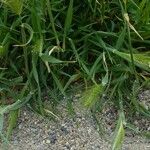
Hordeum marinum
جو شوره زار · Sea barley · Sea barley grass · Mediterranean barley · Seaside Barley
Description
Source: leafsnapHordeum marinum, commonly known as sea barley or seaside barley, is a species of grass.
Care Guide
💧 Water
Sea barley thrives in humid environments, where it benefits from consistent moisture, though it can also withstand moderate drought. To ensure optimal growth, it's best to water it weekly. Growing sea barley outdoors in containers is an effective way to better monitor and manage its water intake.
What should I do if I give my Sea barley too much or too little water?
This beautiful ornamental grass will not perform well without proper watering. In the ground, watering issues can be resolved, but in a container, too much or too little water will quickly kill Sea barley. When Sea barley does not receive the right amount of water, its growth may halt. Overwatering causes yellow leaves with brown tips, while underwatering leads to drooping leaves, weak seed head production, and browned leaves. If you suspect a watering problem with your Sea barley, first determine if it is receiving too much or too little water. If it is overwatered, stop watering immediately. It may take weeks for heavy soils to dry out, so patience is needed. Once you spot new growth, check the soil moisture and decide if more water is needed. The solution for Sea barley receiving too little water is simple: give the grass a deep drink and observe if it recovers. It's important to note that a long, deep watering is better than frequent shallow waterings. This helps grasses develop deep roots, making them more resistant to drought and watering problems.
How much do I have to water my Sea barley?
The watering needs of Sea barley depend on its planting location. In general, watering once a week is recommended. In hot climates, watering once or twice a week during summer might be necessary. In moderate climates, watering once every seven days or more may be sufficient. Grass in containers typically requires more frequent watering compared to grass planted in the ground. However, the watering frequency also depends on the species and its sunlight exposure. Shaded grasses need less frequent watering than those in the ground. Sea barley should only be watered when the soil is dry. To determine if the soil is dry, you can press your finger a couple of inches into the soil or weigh the potted grass to check if it feels light. Insufficient water can cause folded and thin blades. Despite its drought tolerance, regular deep waterings will enhance the grass color. In its natural habitat, Sea barley grows in open scrubland, exposed to extreme heat and intermittent rain. Although it is drought resistant, this grass still requires care and attention. Consistent watering is beneficial for its growth. After planting, Sea barley needs more frequent watering until it develops deep roots. For potted Sea barley, the soil tends to dry out quickly, especially if exposed to hot, direct sun. Check the soil every 3 to 4 days and water only when it feels dry. Sea barley planted in the ground generally needs less watering, but this depends on the soil type. Clay soil holds water for a longer time, feeling dry at the surface while retaining moisture below. On the other hand, sandy soils drain quickly and require more frequent watering.
What should I pay attention to when I water my Sea barley in different seasons, climates, or during different stages of growth?
To determine if you are watering enough, observe the rate of growth of your grasses. Sea barley, for example, tends to double in size during the hottest months. If the weather is hot but the grass is not growing vigorously, you should consider adjusting your watering schedule. In winter, you can water as infrequently as once a month, but be sure to check the soil for moisture. During periods of active growth in the warmest months, the grass will need more water than usual. However, during winter and cooler months, the water requirement will be significantly reduced. Remember that with Sea barley, it is essential to let the soil dry out completely before watering again.
☀️ Light Full sun
Sea barley comes from bright, open habitats and grows best in full sun. It will tolerate some partial shade but favors direct sunlight for optimal growth. This plant, which can be annual or biennial, is known for its sun-loving nature.
What are the sunlight requirements for Sea barley?
Sea barley thrives in full sun conditions, requiring above 6 hours of sunlight daily to grow optimally. It can tolerate partial sun, which means about 3-6 hours of sunlight, but full sun is preferable for its growth. This plant originates from bright, open environments and its well-being significantly depends on adequate sunlight exposure. When planning your garden or considering growing Sea barley indoors, ensure spots are chosen that provide a perfect balance of light and shade, adhering to the plant’s sunlight needs for its happiness and health.
How do I use artificial lighting for Sea barley indoors?
When natural sunlight is insufficient, especially during winter or in less sunny spaces, artificial lighting can be critical for the growth of Sea barley indoors. Opt for LED lights as they can be customized to provide specific wavelengths needed by the plant. The required intensity of artificial light varies: full sun plants need 30-50W/sq ft, partial sun plants 20-30W/sq ft, and full shade plants 10-20W/sq ft. Place the light source 12-36 inches above the plant to mimic natural sunlight and ensure the plant receives 8-12 hours of light per day. This approach promotes faster and healthier growth, compensating for the lack of natural sunlight.
What symptoms indicate Sea barley is getting inadequate light, and what can be done?
Sea barley exhibits several symptoms when it receives inadequate light, such as smaller new leaves, leggy or sparse growth, faster leaf drop, slower or halted new growth, lighter-colored new leaves, chlorosis, sunscald, leaf curling, wilting, and leaf scorching. Solutions for insufficient light exposure include gradually moving the plant to a sunnier spot until it receives at least 6 hours of direct sunlight daily, utilizing a south-facing window, or using artificial light for plants that are large or not easily movable. For gradual adaptation, avoid sudden intense light exposure to prevent sunburn. If obstructions block natural sunlight, consider pruning or transplanting smaller plants to sunnier locations with good drainage.
🌡️ Temperature 15–35°C
Sea barley can tolerate a wide range of temperatures, but its distribution may still be restricted by different combinations of moisture and heat. It grows best in warm summer climates with sufficient rainfall or watering. Extended periods of cloudy, rainy weather, as well as prolonged high temperatures, can raise the likelihood of Sea barley dying. In winter, proper protection from cold can increase the plant's survival rate.
What is Sea barley?
Sea barley, scientifically known as Hordeum marinum, is a species with no additional details provided on its essentials or symptoms associated with its context.
💨 Humidity
🪴 Soil 6-7
🌱 Fertilizer
For best growth, Sea barley needs three fertilizer applications: before planting, one month after the seedlings emerge, and a final application 1 to 1.5 months after the second. Some Sea barley varieties also benefit from extra fertilizer at planting to promote rapid growth.
🪴 Pot & Repot
✂️ Pruning
Sea barley, which adapts well to saline soils, benefits from spring pruning to promote growth. By removing damaged sections and overgrown stems, you can maintain a compact shape. Pruning at this time helps the plant recover and reduces the risk of fungal diseases by improving air circulation and preventing overcrowding.
🌿 Propagating
🐛 Diseases & pets
☠️ Toxicity
Characteristics
- Plant Type
- Grass
- Life Cycle
- Annual
- Genus
- Hordeum
- Family
- Poaceae
- Hardiness Zone
- 7-10
- Mature Height
- 10 cm to 40 cm
- Mature Spread
- 15 cm to 30 cm
- Leaf Color
- Green, Light Green
- Leaf Type
- Semi-evergreen
- Flower Color
- Yellow, Green, Brown
- Flower Size
- 1.52 cm to 3.05 cm
- Bloom Time
- Early summer, Mid summer
- Planting Time
- Spring, Summer, Autumn
- Harvest Time
- Mid summer, Late summer
- Native Area
- Libya, Egypt, Turkey, Slovakia, Montenegro, Croatia, Morocco, Slovenia, Russia, Iraq, Germany, Romania, Belgium, Portugal, France, Netherlands, Tunisia, Cyprus, Bulgaria, Armenia, Greece, Lebanon, Syria, Italy, Spain, Denmark, Iran, Albania, Azerbaijan, United Kingdom, Algeria, Kuwait