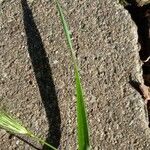
Hordeum murinum
جو موشی، جو موشک، جو وحشی، · Wall barley · Mouse Barley · False barley · Farmer's-foxtail
Description
Source: leafsnapHordeum murinum, commonly known as wall barley or mouse barley, is an annual grass species belonging to the Poaceae family. Native to Europe and Asia, it has been introduced and naturalized in many parts of the world. The plant can grow up to 60 cm tall and features a shallow root system. Its leaves are narrow, flat, and rough on both sides, ending in pointed tips. The inflorescence of Hordeum murinum consists of spikelets arranged in dense clusters along the stem. Each spikelet contains several flowers with long awns, giving them a bristly appearance. The flowers are wind-pollinated. Hordeum murinum prefers dry habitats such as roadsides, waste places, and fields or disturbed areas, but it can also grow in moist, well-drained soils. Historically, the plant has been used for various purposes, including animal feed and human consumption (as flour). It also possesses medicinal properties, traditionally used to treat ailments like fever and diarrhea. However, it can be considered an invasive species due to its ability to outcompete native plants by forming dense stands, which reduce biodiversity. This invasion can alter soil chemistry and nutrient cycling processes, ultimately leading to soil degradation if not properly controlled.
🌳 Mouse Barley’s grains are not simply ordinary seeds — in former times they were fermented to produce a simple kind of beer. However, its chief significance is as animal feed. Ironically, although frequently considered a troublesome weed, it becomes a valued source of nourishment for livestock, especially in the scarce winter months.
🎭 Affection, Restoration, Defense
Care Guide
💧 Water Every 7 days
Mouse Barley thrives in a consistently hydrated and stable environment with some humidity. It benefits from weekly watering. Although it is moderately drought-tolerant, it needs well-draining soil outdoors to prevent waterlogging during heavy rains.
What should I do if I give my Mouse Barley too much water or too little water?
To ensure optimal performance, it is important to water this beautiful ornamental grass properly. If it is planted in the ground, any watering issues can typically be resolved. However, if it is in a container, excess or insufficient water can quickly lead to the demise of Mouse Barley. Inadequate watering can cause it to cease growth, while overwatering may result in yellow leaves with brown tips. Underwatering, on the other hand, can cause drooping leaves, weak seed head production, and browning. If you suspect improper watering, the first step is to determine whether there is too much or too little water. Cease watering if it is receiving too much water and allow time for heavy soils to dry out. Once new growth appears, test the soil for moisture and decide if more water is necessary. Conversely, if the grass is receiving too little water, simply give it a deep drink and observe if it recovers. Remember, it is always better to water deeply and infrequently, as this promotes the growth of deep roots, enhancing drought resistance and minimizing watering-related issues.
How frequently should I water my Mouse Barley?
The watering needs of Mouse Barley will vary depending on the location where it is planted. Generally, watering this grass once a week is recommended. However, in hot climates, watering once or twice a week during summer may be necessary. In moderate climates, watering once every seven days or more may be sufficient. Grass grown in containers will usually require more frequent watering compared to grass planted in the ground. Additionally, the location of the grass also plays a role. Shaded grasses need to be watered less frequently than grasses in the ground. It is important to only water Mouse Barley when the soil is dry. There are a few signs to look out for to determine if watering is needed, such as pressing a finger into the soil to check for dryness or weighing a potted grass to see if it feels light. When Mouse Barley is grown in the wild, it can withstand extreme heat, bright sun, and intermittent rain. However, regular and deep waterings are still beneficial for its growth. Initially, Mouse Barley will require more frequent watering until it has deep roots. For potted Mouse Barley, the soil will dry out quickly, especially if exposed to hot, direct sun. It is recommended to test the soil every 3 to 4 days and water only when it feels dry. Mouse Barley planted in the ground generally needs less watering, but this can vary depending on the type of soil. Clay soil retains water for longer periods, so it may feel dry at the surface while still being moist below the ground. Sandy soil, on the other hand, drains quickly and will need to be watered more often.
What do I need to watch out for when I water my Mouse Barley at different times of the year, in different weather conditions, or during different stages of growth?
You can determine if you are watering enough by observing the rate of growth of your grasses. Mouse Barley, for example, is known to double in size within a year during the hottest months. If the weather is hot but the grass is not growing vigorously, you may need to adjust your watering schedule. In contrast, during winter, you might be able to water only once a month, but it's still important to check the soil for moisture. During the growth cycle in the warmest months, the grass will require more water than usual. However, water needs will be significantly reduced during winter and cooler months. The key thing to remember about Mouse Barley is that the soil should always be allowed to dry out completely before adding water.
☀️ Light Full sun
Mouse Barley thrives with plenty of light but can tolerate partial shade as well. Coming from environments with abundant sunshine, it adjusts to a range of light conditions. However, reduced light can lessen its vigorous growth, and excessive exposure may stress the plant.
What are the sunlight requirements for plants?
Plants have varying requirements for sunlight to thrive. Full sun plants need more than 6 hours of sunlight daily, while partial sun plants require about 3-6 hours of sunlight. It's important to observe how sunlight moves through your garden to ensure you place your plants in spots that offer a balance of light and shade, catering to their specific needs for optimal growth.
How does Mouse Barley adapt to light conditions?
Mouse Barley is adaptable to various light conditions, thanks to its origins in environments with abundant sunshine. It prefers abundant light to flourish but can also tolerate some shade. However, reduced light may impede its vigorous growth, and too much direct light could stress the plant. When natural light is insufficient, especially during winter or in darker spaces, artificial lighting can be a beneficial alternative to support its growth. LED lights are recommended for their ability to be tailored to provide the specific wavelengths needed by your plants. For indoor plants, the intensity of artificial light needed varies: full sun plants require 30-50W/sq ft, partial sun plants need 20-30W/sq ft, and full shade plants need 10-20W/sq ft.
What are the symptoms of light deficiency in Mouse Barley?
When Mouse Barley is cultivated indoors or in conditions with inadequate light, it may exhibit several symptoms indicative of light deficiency. These include smaller new leaves, leggy or sparse growth, faster leaf drop, slower or ceased new growth, and lighter-colored or chlorotic leaves. Excessive sunlight can also harm the plant, leading to symptoms such as sunscald, leaf curling, wilting, leaf scorching, and chlorosis due to the breakdown of chlorophyll, which affects its ability to photosynthesize.
What solutions can help Mouse Barley thrive in optimal light conditions?
To optimize Mouse Barley's light exposure indoors, gradually move the plant to a sunnier location to achieve at least 6 hours of direct sunlight daily, using south-facing windows for maximum light. Artificial lighting, such as desk lamps or professional grow lights, should be used for at least 8 hours a day for plants that are large or not easily movable. Outdoors, shift your plants to sunnier spots gradually, to prevent sunburn from sudden changes in light. Additionally, reducing obstructions like branches or relocating plants to sunnier areas with good drainage can improve sunlight access. Note that parts of the plant that were damaged by insufficient sunlight might not recover, but new growth should be healthy with improved light conditions.
🌡️ Temperature 0–37.8°C
Mouse Barley originates from temperate regions and requires warm temperatures of 68 to 100 °F (20 to 38 ℃) to grow optimally. However, seasonal adjustments may be necessary to ensure the plant's survival during climatic extremes.
What is the native climate for Mouse Barley?
Mouse Barley is native to temperate climates, thriving in a temperature range of 68 to 100°F (20 to 38°C) for optimal growth. Despite its strong cold resistance, seasonal adaptations may be needed to protect the plant during extreme weather conditions.
How can Mouse Barley be protected from extreme cold?
Mouse Barley usually doesn't need special frost protection measures due to its strong cold resistance. However, if temperatures are expected to plummet below -35°C, it's crucial to provide protection by covering the plant with insulation materials such as soil or straw. Additionally, watering the plant abundantly before the first freeze in autumn helps keep the soil moist and prevents drought and water scarcity during the colder months.
What are the symptoms and solutions for Mouse Barley in low temperatures?
In low temperatures, Mouse Barley is cold-tolerant and performs best above 20°C, and it should remain above 0°C during winter. When temperatures fall below -35°C, you might not observe immediate changes, but there could be a reduction or absence of sprouting in spring. The solution for any parts that fail to sprout by spring is to remove them to encourage new growth.
What are the symptoms and solutions for Mouse Barley in high temperatures?
When experiencing high temperatures, specifically above 38°C, Mouse Barley's leaves may turn lighter, curl, become prone to sunburn, and the plant can wilt in extreme cases. The best approach in these conditions is to trim the affected parts, relocate the plant to a shaded area or use a shade cloth to protect it during the most intense sunlight hours. Ensuring the soil remains moist by watering in the early morning and evening is also beneficial.
What is the botanical name of Mouse Barley?
The botanical name of Mouse Barley is Hordeum murinum.
💨 Humidity
🪴 Soil 5-7
🌱 Fertilizer
🪴 Pot & Repot
✂️ Pruning
🌿 Propagating
🐛 Diseases & pets
☠️ Toxicity
All parts of this plant are toxic, the leaves and seeds more so than the flowers.
Characteristics
- Plant Type
- Grass
- Life Cycle
- Annual
- Genus
- Hordeum
- Family
- Poaceae
- Hardiness Zone
- 3-11
- Mature Height
- 30 cm
- Mature Spread
- 61 cm
- Leaf Color
- Green
- Leaf Type
- Deciduous
- Flower Color
- Yellow, Green
- Flower Size
- 0.76 cm to 1.52 cm
- Bloom Time
- Late spring, Early summer
- Planting Time
- Spring
- Harvest Time
- Early summer, Mid summer