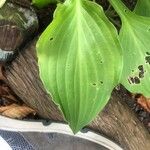
Hosta rectifolia
Description
Source: leafsnapHosta sieboldii, the small-leaved plantain lily, is a species of flowering plant in the family Asparagaceae, native to Sakhalin, the Kurils, and Japan. A number of cultivars are available.
🌳 Siebold's plantain lily acts as a biological indicator announcing the start of spring. The appearance of its green foliage is especially anticipated by horticulturists and nature enthusiasts as a welcome sign of warmer days. Also, the leaves of Siebold's plantain lily have been used in a small niche of eco-printing for textile patterning, utilizing the distinctive leaf shapes and vein patterns to produce natural artwork on fabrics.
🎭 Dedication and companionship
Care Guide
💧 Water
☀️ Light Partial sun
Siebold's plantain lily does well in a blend of sun and shade, though it tolerates locations where sunlight seldom penetrates. Its native habitat features similar light conditions. Too much sun can scorch the leaves, while too little light can cause sparse growth.
🌡️ Temperature 0–35°C
The native habitat of siebold's plantain lily is cool mountainous areas, indicating a preference for cooler temperatures. It prefers a temperature range of 32 to 95 ℉ (0 to 35 ℃). In hotter seasons, such as summer, providing shade and increasing both the frequency and amount of watering can help regulate the temperature. In colder seasons, covering the plant can help prevent frost damage.
💨 Humidity
🪴 Soil 5-7
🌱 Fertilizer
One fertilizer application in spring is generally sufficient for Siebold's plantain lily, although several feedings can boost growth to its fullest. Apply fertilizer roughly every month to six weeks. Fertilizing improves the leaves' appearance and function, helping maintain uniform color and healthy texture. It also encourages root development and nutrient uptake for the plant's long-term health.
🪴 Pot & Repot 2-3 years
When repotting Siebold's plantain lily, select a pot 1–2 inches (2.5–5.1 cm) larger that has good drainage. Use a well-draining potting mix. Repot in spring or fall, making sure the root ball sits slightly below the rim of the flower pot. Water thoroughly after repotting and place it in a warm spot with indirect sunlight.
✂️ Pruning
🌿 Propagating
🐛 Diseases & pets
☠️ Toxicity
Characteristics
- Plant Type
- Herb
- Life Cycle
- Perennial
- Genus
- Hosta
- Family
- Asparagaceae
- Hardiness Zone
- 3-10
- Mature Height
- 49 cm
- Mature Spread
- 76 cm
- Leaf Color
- Green, White, Variegated
- Leaf Type
- Deciduous
- Flower Color
- Lavender, White
- Flower Size
- 4.06 cm
- Bloom Time
- Early summer, Mid summer
- Planting Time
- Spring
- Harvest Time
- Mid summer
- Native Area
- Japan