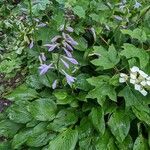
Hosta ventricosa
Blue plantain-lily · Plantain Lily
Description
Source: leafsnapHosta ventricosa, commonly known as the Blue Plantain Lily, is a herbaceous perennial plant belonging to the Asparagaceae family. Native to Japan and Korea, it is widely cultivated as an ornamental plant in gardens and landscapes. The Blue Plantain Lily features large, heart-shaped leaves that are blue-green with prominent veins. The leaves can grow up to 30 cm long and 20 cm wide. In mid-summer, the plant produces tall spikes of lavender or white flowers. Hosta ventricosa thrives in partial shade or filtered sunlight and prefers well-drained, organic-rich soil. It can tolerate a wide range of soil pH levels but prefers slightly acidic conditions. This plant requires regular watering during the growing season, but be cautious not to overwater, as this can cause root rot. Regular fertilization with a balanced fertilizer is also beneficial. While the Blue Plantain Lily has no major pest or disease problems, it may be vulnerable to slugs and snails, which can damage its foliage. Overall, Hosta ventricosa is an attractive ornamental plant that adds color and texture to any garden or landscape with minimal maintenance once established.
💡 The flowers celebrated in the works of Tang Dynasty poets, with their ten thousand petals and a thousand stamens, are extraordinarily beautiful. The blue plantain lily, with its dark green leaves and purple petals, grows in clusters and is a significant ornamental flower in the art of horticulture.
🌳 The blue plantain lily unexpectedly acts as a bioindicator, indicating soil toxicity levels—especially heavy metals such as cadmium. Although it is not commonly used for this, this notable trait could help ecologists and gardeners assess and manage soil health.
🎭 Longing for you, romance, and joy
Care Guide
💧 Water Every 7 days
The blue plantain lily thrives in moist woodlands and prefers consistently moist, well-drained soil. To keep it healthy, water it twice a week. This herbaceous perennial benefits from mulching during its growing season to help retain moisture. Additionally, it is moderately drought-tolerant, making it well-suited for outdoor cultivation.
How should I water my Blue plantain lily?
To properly water the Blue plantain lily, it is recommended to use filtered water at room temperature. Tap water should be avoided as it may have harmful particles. The water temperature should be warm or slightly higher to prevent any shock to the plant since it is accustomed to a warm environment. It is advised not to water the plant from overhead as this can lead to issues with the foliage. Instead, water the plant by applying the filtered room temperature water directly to the soil until it is completely soaked. This method of watering is beneficial as it moistens the roots and helps them to spread throughout the soil, ensuring they receive the necessary nutrients.
What should I do if I give my Blue plantain lily too much or too little water?
Taking care of your Blue plantain lily requires attention to watering. While both overwatering and underwatering can harm your plant, overwatering tends to be the more common issue. If your plant receives too much water, you may notice wilting and yellowing of stems and leaves. Over time, this can lead to diseases like root rot, mold, and mildew, which can be fatal. Underwatering is less common, as the Blue plantain lily handles drought fairly well. However, it can still happen, resulting in brittle and brown leaves. It's important to recognize signs of overwatering early on, as some diseases like root rot may be irreversible if left too long. If you notice these signs, reduce your watering schedule and check if the soil drains properly. Replace poorly draining soil with a loose, well-draining potting mix. On the other hand, if your plant shows signs of insufficient water, simply increase your watering frequency until the symptoms improve.
How frequently do I need to water my Blue plantain lily?
If your Blue plantain lily is in a pot, the most precise way to determine if it needs water is by sticking your finger into the soil. If the top two to three inches of soil feel dry, it is time to water it. If you have your Blue plantain lily planted outdoors in the ground, you can use a similar method to test the soil. Once again, if the top few inches of soil are dry, it is time to water. In the spring and early fall, following this method will typically result in watering the plant about once a week. However, during extremely hot weather, you may need to increase your watering to twice a week or more. It is worth noting that mature, well-established Blue plantain lilies are capable of withstanding drought.
How much water does my Blue plantain lily require?
When it's time to water your Blue plantain lily, don't hold back on the amount of water you give. Wait until the top two to three inches of soil are dry, then water the plant thoroughly. Make sure to soak the entire soil. You should add enough water that it drains out of the bottom of the pot. If you don't see any excess water draining, it means you haven't given enough water. However, be careful not to let water accumulate inside the soil, as it can be harmful to the plant. On the other hand, if water doesn't drain from the pot, it could mean the soil doesn't drain well, which is bad for the plant's health. If the plant is outside, one inch of rain per week will be enough.
How do I water my Blue plantain lily as it grows?
The water needs of the Blue plantain lily can vary depending on its growth stages. In the first few years or after transplanting, it requires more water due to the energy being focused on developing new roots. These roots need extra moisture for optimal growth. However, as the plant matures, it will need less water. Additionally, during the bloom period, when flowers are developing, the plant may require more water to support this process.
☀️ Light Partial sun
The blue plantain lily prefers a mix of sun and shade, finding a comfortable balance that supports its growth. Native to places with naturally diffused sunlight, it can tolerate completely shaded conditions well. However, too much light can scorch the leaves, while too little exposure can stunt its growth.
How much sunlight does Blue plantain lily need to grow?
To ensure that the Blue plantain lily thrives, it requires 3-6 hours of direct sunlight every day. However, it is important to provide some shade during the hottest parts of the day to prevent sun damage. Ideally, the Blue plantain lily should receive morning sunlight, but it can tolerate some afternoon sun as long as the temperature is not too hot. To achieve the perfect balance, consider planting the Blue plantain lily in an area that receives partial sun, such as under a tree or on the east side of a building.
What will happen if the Blue plantain lily doesn't get enough sunlight?
To prevent sun damage, it is important to provide some shade for the Blue plantain lily when it is exposed to too much direct sunlight. If the plant receives excessive sunlight, its leaves may turn yellow, dry out, or burn. Additionally, you may notice that the plant starts to wilt or becomes stunted. To offer shade, you can use a shade cloth or plant the Blue plantain lily near taller plants that can provide natural shade during the hottest parts of the day.
What happens if Blue plantain lily gets too much sunlight?
To prevent Blue plantain lily from growing poorly, take note of its sunlight needs. Insufficient sunlight can cause the plant to become tall and sparse, with leaves becoming yellow or pale green due to chlorophyll deficiency. To address this, consider moving the plant to a sunnier location or trimming nearby foliage to promote better light exposure.
🌡️ Temperature 0–35°C
The blue plantain lily is native to temperate regions and favors temperatures in the range of 32 to 95 ℉ (0 to 35 ℃). In summer it can withstand higher heat but needs regular watering to stay hydrated. In winter it may require protection from freezing temperatures to prevent harm to its foliage.
What is the best temperature for Blue plantain lily?
The temperature preferences of Blue plantain lily vary depending on the season. During the growing season, which is when the plant is sprouting, the ideal temperature range is between 65-80℉ (18-27℃). If the temperature drops below 15℉ (-10℃), the plant may suffer and its leaves could turn brown and wilt. However, with some assistance, the plant may survive a brief cold snap. Similarly, during the warmer months, it's important to protect Blue plantain lily from excessively high temperatures. The plant can withstand temperatures up to 95-105℉ (35-40℃), but anything above that may damage the foliage and blooms. Higher temperatures may cause wilting, drooping, and even sunburn on the leaves, which can be difficult for the plant to recover from. Fortunately, there are several easy and effective methods to address this issue.
First year or baby Blue plantain lilies need specific temperatures.
If it's the first year of having a Blue plantain lily outside, you need to take extra care during the coldest months. Frost can seriously harm the plant and prevent it from growing back in the spring. To protect it, keep the temperature above 40℉(5℃) by either bringing it indoors temporarily or using mulch or fabric barriers. Additionally, in the first year or two, it's best to plant the Blue plantain lily in a shadier spot to help smaller, weaker plants regulate their temperature in the heat. Limit direct sunlight to no more than five hours a day, especially if the temperature rises above 80℉(27℃). Managing heat in summer involves using shadecloth and regularly watering or misting the plant.
How can I keep Blue plantain lily safe from very hot or very cold weather?
Here are a few measures you can take to protect Blue plantain lily from frost or cold damage during the growing season. - If you're growing Blue plantain lily in a container, simply bring it inside in bright, indirect light until temperatures rise above 15℉ (-10℃) again. - If your Blue plantain lily is planted in the ground, you can use mulch or horticultural fabric to create an insulated barrier around the plant. This will protect it from frost and cold wind. For temperatures hotter than 80℉(27℃) in the shade during the day, follow these precautions: - Limit the amount of direct sunlight Blue plantain lily is exposed to by no more than six hours per day, preferably in the morning. - Use shade cloth or fine plastic mesh to reduce direct sunlight during the hottest parts of the day. - Install a misting system to release cooling mist around the base of the plant. This will help lower ground temperatures throughout the day.
Recommended temperatures for Blue plantain lily during the dormant season.
During the cold winter months, the Blue plantain lily needs to have a specific level of cold in order to remain dormant until it's time to sprout. It is very dangerous for the Blue plantain lily to sprout too early, particularly if it has already started growing and then encounters frost. Ideally, winter temperatures should stay below 32℉(0℃), but if they reach 40℉(5℃), everything will be okay. However, in more moderate climates like woodland rainforests, there can be unexpected warm spells during the cold months that cause the Blue plantain lily to sprout prematurely. In such cases, if there is still a danger of frost, you may want to cover the plant with clear plastic on stakes to minimize the chances of damage from the cold. This covering can be removed once the danger of frost has subsided. Sometimes, the Blue plantain lily will be able to sprout at the right time without any assistance, but using this method increases the likelihood of a successful second sprouting.
💨 Humidity
🪴 Soil 6-7
🌱 Fertilizer
One fertilizer application in spring is typically enough for Blue plantain lily, although multiple feedings can maximize growth. Apply fertilizer every one to one and a half months. Fertilizing improves leaf appearance and function, helping to maintain even color and a healthy texture. It also encourages root development and nutrient uptake, supporting the plant’s long-term health.
Why do I have to put fertilizer on my Blue plantain lily?
The main structure of the Blue plantain lily is made up of its leaves. Fertilization is important for ensuring that the leaves not only look great but also function properly. By properly fertilizing, you can help the plant maintain consistent leaf color and a healthy texture. Fertilization also plays a role below the surface, helping the plant generate new roots and maintain existing ones. This not only keeps the plant healthy in the present but also improves its ability to absorb nutrients from the soil in the future.
When should I fertilize my Blue plantain lily to get the best results?
If you choose to grow your Blue plantain lily outdoors, you will notice new growth in early spring. This is a signal that it is time to start fertilizing for the year. Typically, a single application of fertilizer in the spring is enough for the plant to thrive. However, if you want to maximize the growth of your Blue plantain lily, you can fertilize multiple times during the spring and early summer. In this case, you can feed your plant about once every month to a month and a half.
When is it not a good idea to fertilize my Blue plantain lily?
During the late fall and winter, your Blue plantain lily goes into a dormant phase and stops producing new growth. It's best not to fertilize it during this time. However, if you do choose to fertilize it during the spring and summer, gradually reduce the amount of fertilizer as summer approaches since the plant's growth rate slows down. It's important to note that it's not a good idea to fertilize your Blue plantain lily when the weather is exceptionally hot or the soil is extremely dry, as this can stress the plant and cause it to die prematurely.
What kind of fertilizer does my Blue plantain lily require?
Choosing the right fertilizer for a Blue plantain lily is fortunately a simple task. These plants thrive on a general-purpose garden fertilizer with equal amounts of nitrogen, phosphorus, and potassium, like a 10-10-10 ratio. Avoid fertilizers with high nitrogen levels when uncertain. The best fertilizer for a Blue plantain lily usually comes in granular form, specifically slow-release fertilizers that are easy to apply to the soil. Additionally, feeding your Blue plantain lily with organic soil amendment, such as compost, can be beneficial.
How can I give my Blue plantain lily plant the nutrients it needs to grow?
Wait until early spring when your Blue plantain lily starts to emerge from the soil. Once you see the leaves poking through, apply a slow-release fertilizer with a balanced formula to the soil around the base of the plant. You can do this again later in the season if desired. When reapplying the fertilizer, make sure to target the soil at the base of the plant rather than the plant itself. You may need to move some leaves aside to access the soil above the roots. It's also a good idea to water your Blue plantain lily before and after fertilizing.
🪴 Pot & Repot 2-3 years
When repotting Blue plantain lily, select a pot 1-2 inches (2.5–5.1 cm) larger with ample drainage. Use a well-draining potting mix. Repot in spring or fall, making sure the root ball is positioned slightly lower than the rim of the flower pot. Water thoroughly after repotting and place it in a warm spot with indirect sunlight.
✂️ Pruning
The blue plantain lily is a shade-loving perennial distinguished by its heart-shaped dark green leaves and lavender flowers. To keep it healthy, prune in early spring to remove dead foliage and increase air circulation, which helps prevent fungal diseases. After the plant blooms, trim the flower stalks to maintain its appearance. However, avoid heavy pruning, as this can stress the plant.
🌿 Propagating
🐛 Diseases & pets
☠️ Toxicity
Characteristics
- Plant Type
- Herb
- Life Cycle
- Perennial
- Genus
- Hosta
- Family
- Asparagaceae
- Hardiness Zone
- 3-10
- Mature Height
- 76 cm to 91 cm
- Mature Spread
- 49 cm
- Leaf Color
- Green
- Leaf Type
- Deciduous
- Flower Color
- Lavender, White
- Flower Size
- 4.06 cm to 5.08 cm
- Bloom Time
- Early summer, Mid summer
- Planting Time
- Spring
- Harvest Time
- Mid summer
- Native Area
- China