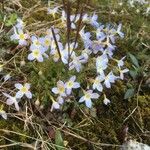
Houstonia serpyllifolia
Thyme-Leaf Bluet · Thymeleaf bluet
Description
Source: leafsnapHoustonia serpyllifolia, commonly called thymeleaf bluet, creeping bluet, mountain bluet, Appalachian bluet or Michaux's bluets is a species of plant in the coffee family (Rubiaceae). It is native to the eastern United States, where it is found in the central and southern Appalachian Mountains. It has been documented in the states of Pennsylvania, Maryland, West Virginia, western Virginia, North Carolina, South Carolina, Kentucky, Tennessee, Ohio, and northeastern Georgia.Houstonia serpyllifolia is a low creeping perennial. It produces solitary, terminal blue flowers in spring and early summer. It typically grows in moist areas, and is found habitats such as streambanks, mesic woods, grassy balds, seepy rock outcrops, and spray cliffs.The specific epithet "serpyllifolia" alludes to the resemblance between this plant and the culinary herb wild thyme, Thymus serpyllum.
🎭 Sacred and profound longings of a poet’s soul; the transitoriness of spring and of beauty
Care Guide
💧 Water
The thymeleaf bluet thrives in temperate regions where there is moderate moisture. It prefers soil that remains consistently moist but not waterlogged, needing to be watered weekly. This plant is primarily grown outdoors, where mulching can be helpful to retain soil moisture and reduce the frequency of watering during its active growing season.
How should I water my Thymeleaf bluet plant?
To properly water the Thymeleaf bluet, it's best to use filtered water at room temperature. Tap water may contain harmful particles, so filtering it is safer for the plant. Since the Thymeleaf bluet originally comes from a warm environment, using cold water can be a shock to its system. It's also important to avoid overhead watering, as it can cause issues with the foliage. Instead, just apply filtered room temperature water to the soil until it is completely soaked. This helps the roots stay moist and allows them to spread and absorb the necessary nutrients.
What should I do if I give my Thymeleaf bluet plant too much or too little water?
Overwatering is a common issue for Thymeleaf bluets and can cause wilting and yellowing of the stems and leaves. It can also lead to diseases like root rot, mold, and mildew, which can be fatal for the plant. Underwatering is less common but can cause brittleness and browning of the leaves. It's important to recognize the signs of overwatering early and reduce watering immediately. If the soil doesn't drain well, replace it with a loose, well-draining potting mix. If signs of underwatering are present, water more regularly until the plant recovers.
How frequently should I water my Thymeleaf bluet?
If your Thymeleaf bluet is in a pot, you can check if it needs water by feeling the soil with your finger. If the top two to three inches of soil are dry, it's time to water it. If you have your Thymeleaf bluet planted outdoors, you can use the same method to determine if it needs water. When the top few inches of soil are dry, it's time to give it some water. Usually, during spring and early fall, watering once a week should be enough. In extremely hot weather, you might need to water it about twice per week or even more. However, mature and well-established Thymeleaf bluet plants are quite resilient and can handle dry conditions.
How much water does my Thymeleaf plant need?
To properly water your Thymeleaf bluet, ensure that the first two to three inches of soil are dry. Give the plant a thorough watering, making sure to soak the soil entirely. The amount of water should be enough to cause excess water to flow out of the pot's drainage holes. If you don't see any excess water draining, you may not have given enough water. However, be careful not to let the water accumulate in the soil, as this can be harmful to the plant. If there is no water draining through the pot, it may indicate poorly draining soil, which is not good for the plant's health. If the plant is outside, 1 inch of rain per week should be sufficient.
How do I properly water my Thymeleaf bluet at different stages of growth?
The water needs of the Thymeleaf bluet can vary depending on different stages of growth. In the first few years and after transplanting, it requires extra watering because it is focusing on developing new roots for future growth. These roots perform best with slightly more moisture. However, as the plant matures, it will need less water. Additionally, during the blooming period, the Thymeleaf bluet may need additional water as flower development requires a significant amount of moisture.
☀️ Light Full sun
Azure bluet grows best with abundant sun exposure and can also tolerate dappled light. Its health and growth are aided by plenty of sunlight, though it can withstand some shade. Too much or too little light can harm the plant.
How much sunlight does Thymeleaf bluet need to grow?
Thymeleaf bluet needs 3-6 hours of direct sunlight every day to grow well. However, it also requires some shade during the hottest parts of the day to avoid sun damage. Morning sunlight is best for Thymeleaf bluet, but it can handle some afternoon sun as long as it's not too hot. To give Thymeleaf bluet the ideal amount of sunlight, consider planting it in a partially sunny area like under a tree or on the east side of a building.
What happens if Thymeleaf bluet doesn't get enough sunlight?
To prevent sun damage to Thymeleaf bluet, it's important to provide some shade during the hottest parts of the day. Too much direct sunlight can cause its leaves to turn yellow, dry out, or burn. Additionally, you may observe wilting or stunted growth in the plant. You can prevent these issues by using a shade cloth or planting Thymeleaf bluet near taller plants that offer natural shade.
What will happen if the Thymeleaf plant gets too much sunlight?
If Thymeleaf bluet doesn't receive sufficient sunlight, it may become tall and lanky, with few leaves. The leaves may also turn yellow or pale green, suggesting that the plant is not producing enough chlorophyll due to inadequate sunlight. To address this issue, consider relocating Thymeleaf bluet to a sunnier location or trimming nearby foliage to increase light exposure.
🌡️ Temperature 0–35°C
Azure bluet was originally grown in environments where temperatures typically range from 68 to 95 °F (20 to 35 ℃). The plant does best within this temperature range. Depending on the season, adjustments may be needed to replicate its natural conditions.
What temperature is best for Thymeleaf bluet?
The best temperature for Thymeleaf bluet depends on the time of year. There are two primary seasons to consider: the growing season and the dormancy season. During the growing season, when Thymeleaf bluet has started sprouting, the ideal temperature should be between 65-80℉ (18-27℃). If the temperature drops below 15℉ (-10℃), the plant will suffer and its leaves may turn brown and wilt. However, if it is just a short cold snap, the plant may survive with some assistance. Similarly, during the warmer parts of the year, Thymeleaf bluet should be protected from excessively high temperatures. The plant can tolerate temperatures up to 95-105℉ (35-40℃), but anything above that will damage its foliage and blooms. Hotter temperatures can cause the leaves to wilt, droop, and even get sunburned, which can be challenging for the plant to recover from. Fortunately, there are several quick and easy ways to address this issue.
The temperature needs for Thymeleaf bluet in its first year or as a seedling.
If this is the first year of your Thymeleaf bluet outside as a new plant, it may require additional care during the coldest months. Frost can cause significant damage and hinder its growth in the spring. To ensure its survival, the plant should be kept at a temperature of 40℉(5℃) or above until it becomes established. This can be achieved by bringing it indoors for a month or two or implementing protective measures such as mulch or fabric barriers to shield it from frost. During the first year or two, it is advisable to plant the Thymeleaf bluet in a shadier location. Smaller and weaker plants struggle to regulate their temperature in hot weather. Therefore, limiting their exposure to direct sunlight, especially when temperatures exceed 80℉(27℃), is crucial. To control the heat during the summer, using shadecloth and ensuring regular watering or misting are essential.
How can I keep Thymeleaf bluet safe from very hot or very cold temperatures?
If the temperature drops below 15℉(-10℃) during the growing season, there are ways to protect Thymeleaf bluet from frost or cold damage. If you're growing it in a container, bring it indoors in bright, indirect light until temperatures rise above the lower threshold. If it's planted in the ground, use mulch or horticultural fabric to create a barrier that insulates the plant from frost and cold wind. For temperatures hotter than 80℉(27℃) in the shade, limit Thymeleaf bluet's sun exposure to six hours or less per day, preferably in the morning. You can use shade cloth or fine plastic mesh to reduce direct sunlight during the hottest parts of the day. Additionally, installing a misting system can release cooling mist around the plant's base to lower ground temperatures.
The best temperature for Thymeleaf bluet during the time it is not growing.
During the cold winter months, Thymeleaf bluet needs a certain level of cold to remain dormant until it's time to sprout. Sprouting too early, before the last frost has passed, can be fatal for Thymeleaf bluet, especially if it has already begun to sprout when the frost occurs. Ideally, winter temperatures should stay below 32℉(0℃), but if they reach 40℉(5℃), it should still be safe. In more temperate climates like woodland rainforests, an unexpected warm period during winter can cause Thymeleaf bluet to sprout prematurely. In this case, if there is still a risk of frost, it may be helpful to cover it with clear plastic on stakes to protect the new sprout from the cold. This covering can be removed once the danger of frost has passed. While Thymeleaf bluet may sometimes resprout at the right time without assistance, using this method increases the likelihood of successful second sprouting.
💨 Humidity
🪴 Soil 4-5
🌱 Fertilizer
Typically one fertilizer application in spring is enough for Azure bluet, though several feedings can boost growth to its fullest. Feed every month to every six weeks. Fertilizing improves leaf appearance and performance, helping maintain uniform color and a healthy texture. It also encourages root development and better nutrient uptake for long-term plant health.
🪴 Pot & Repot 2-3 years
When repotting Azure bluet, select a container 1-2 inches (2.5–5.1 cm) larger with good drainage. Use a well-draining potting mix. Repot in spring or fall, placing the root ball just below the rim of the flower pot. Water thoroughly after repotting and keep the pot in a warm spot out of direct sunlight.
✂️ Pruning
The thymeleaf bluet is a low-growing perennial that features delicate blue flowers. To maintain its health and appearance, it's best to prune it from early to late spring. Focus on light, regular maintenance to prevent stress on the plant. Proper pruning improves air circulation, encourages flowering, prevents legginess, and helps the plant maintain a compact, healthy form.
🌿 Propagating
🐛 Diseases & pets
☠️ Toxicity
Characteristics
- Plant Type
- Herb
- Life Cycle
- Perennial, Annual
- Genus
- Houstonia
- Family
- Rubiaceae
- Hardiness Zone
- 3-9
- Mature Height
- 15 cm
- Mature Spread
- 10 cm
- Leaf Color
- Green
- Leaf Type
- Evergreen, Deciduous
- Flower Color
- Blue, White, Yellow, Purple
- Flower Size
- 1.02 cm
- Bloom Time
- Mid spring, Late spring, Early summer
- Planting Time
- Spring
- Harvest Time
- Early summer, Mid summer