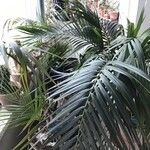
Howea forsteriana
Kentia palm · Sentrypalm · Thatch palm · Forster sentry palm · Paradise palm
Description
Source: leafsnapHowea forsteriana, commonly known as the Kentia Palm or Thatch Palm, is a popular indoor plant native to Lord Howe Island in the South Pacific. Belonging to the Arecaceae family, it can grow up to 10 meters tall in its natural habitat. However, when cultivated indoors as a houseplant, it typically reaches a height of 1 to 2 meters. The Kentia Palm has long, slender green leaves that grow upward from its trunk. These pinnate leaves can extend up to 3 meters in length. The trunk itself is slender, with a diameter of around 15 to 20 centimeters. This plant thrives in bright but indirect light and requires well-draining soil. It should be watered regularly during the growing season, but less frequently in the winter months when it goes dormant. The Kentia Palm also has air-purifying qualities, making it an excellent choice for indoor spaces such as offices or homes where air quality may be compromised by pollutants like formaldehyde or benzene. Overall, Howea forsteriana is an attractive houseplant that requires minimal care, making it ideal for those who want to add greenery indoors without too much effort.
🌳 The beauty of the kentia palm reaches beyond home décor and it also played an important part in film history. Because it tolerates low light and is easy to care for, the kentia palm became a preferred choice for early Hollywood set designers when they wanted to suggest exotic locales. Those qualities made it a common background element during the classic film era.
🎭 Win, success, liberty
Care Guide
💧 Water Every 7 days
The Kentia palm, which originates from Lord Howe Island, thrives in consistently moist soil. Once established, it can tolerate moderate drought. It's best to water the Kentia palm every 1-2 weeks, letting the topsoil dry out slightly between waterings. This palm also benefits from higher humidity, which can be achieved through misting or using a pebble tray. This is especially important during the winter months.
How should I water my Kentia palm tree?
To properly water your Kentia palm indoors, you should water the top layer of soil in the container with rainwater or distilled water at room temperature. To check if it needs water, stick your finger in the soil and if the first few inches are dry, add enough water to moisten those layers and let excess water drain out of the container. Remember, it's better to underwater than overwater the palm as overwatering can cause root rot. When growing the Kentia palm outdoors, rainfall may be enough but if you get less than one rainfall per week during the growing season, you will need to provide supplemental water. Rainwater or distilled water is best for both indoor and outdoor growth.
What should I do if I give the Kentia palm plant too much or too little water?
Here are some signs that indicate plants are not getting enough water: brown tips on the plant, wilted and drooping leaves that appear lifeless, and the potential for leaves to turn brown, crispy, and dry out severely. If you notice these signs, water the plant as soon as possible. Alternatively, overwatering can lead to root rot. If this occurs, remove any damaged roots from the soil, especially if they are mushy, fragile, and black. It is important to remove a larger part of the root to address the issue. Overwatering can also cause leaves to turn brown and fall off early. To help the plant recover, drain excess water and wait for the soil to dry before watering again. If you notice signs of root rot, discard the soil in the pot. Clean everything thoroughly and place pebbles in the pot to improve drainage. If you observe tan rings or reddish-brown spots on the leaves, discard any excess water at the base of the pot. Additionally, ensure the plant is in a well-ventilated location to promote faster soil drying and prevent future rotting.
What do I do if I give my Kentia palm too much water or too little water?
When watering the Kentia palm, the main issue to watch out for is overwatering, which can be identified by several key signs. If the palm receives too much water, its leaves will turn brown and droopy. The stems may also become mushy and emit a bad smell. Overwatering can lead to root rot, which can be fatal if not addressed. To resolve the problem, you can try reducing the amount of water you give the palm or adding sand to the container for better drainage. In more severe cases, you may need to take the palm out of its container, remove any rotten roots, and repot it in a new container. If you grow the palm outdoors and notice consistent overwatering, it may be due to poor soil drainage. In this case, consider moving the palm to a different location with looser soil. On the other hand, if the palm is not receiving enough water, its leaves will droop, but they are more likely to turn yellow than brown. Additionally, the palm will have slower growth. If you notice these signs, increase the frequency of watering.
How often do I need to water my Kentia palm?
To properly care for your Kentia palm, water it approximately once a week during its growing season in spring, summer, and early fall. However, note that the rate at which the soil dries out in your plant's container may depend on your specific growing environment. It is important to monitor the soil for moisture instead of strictly following the once-per-week rule. Sometimes, you may need to water multiple times per week or once every ten days. The same principles apply when growing the Kentia palm outdoors, with the additional consideration of rainfall. If you receive about an inch of rainfall during the week, do not add extra water to avoid overwatering. During winter, when the plant is not actively growing as much, reduce the frequency of watering. Allow the soil to dry out more between waterings, typically watering once every other week or once every three to four weeks.
What's the best way to water my Kentia palm if I keep it inside?
Gardeners who grow Kentia palm indoors need to adjust their indoor growing environment to suit the palm's needs. The main issue indoors is usually low humidity, which can be addressed by using a humidifier or placing the plant in a more humid area like the bathroom, as long as it receives enough light. It's also important to monitor the effects of air conditioning and heating, as they can dry out the soil more quickly, requiring more frequent watering. For outdoor growth, make sure your region provides the necessary warmth and humidity, and be mindful of natural rainfall, as weekly rain can sustain the palm.
☀️ Light Full sun
Kentia palm prefers substantial sunlight for optimal growth but can tolerate situations with somewhat reduced sun exposure. Native to areas with plentiful natural light, the kentia palm flourishes in bright conditions. Too little light can hinder its growth, while too much may scorch the leaves.
What are the sunlight requirements for Kentia palm?
Kentia palm prefers substantial exposure to the sun for optimal growth but manages well under less sunlight. It originates from environments with abundant natural light and performs best in bright light conditions. The plant requires more than 6 hours of sunlight for full sun and about 3-6 hours for partial sun. Insufficient sunlight could stunt the palm's growth, whereas excess sunlight may burn its leaves. It's crucial to find spots in your garden that offer the right balance of light and shade, observing how sunlight moves through the area over the day to ensure the plants' well-being.
How can artificial lighting assist in the growth of indoor Kentia palms?
Indoor Kentia palms need adequate lighting for optimal growth, especially in conditions where natural sunlight is limited, such as during winter or in less sunny spaces. Artificial lighting, such as LED lights, is beneficial as it can be customized to provide specific wavelengths needed by plants. For full sun plants, 30-50W/sq ft of light is recommended, 20-30W/sq ft for partial sun plants, and 10-20W/sq ft for full shade plants. The light source should be placed 12-36 inches above the plant, simulating natural sunlight, and kept on for 8-12 hours a day to mimic the length of natural daylight hours, aiding in faster and healthier growth.
What symptoms indicate insufficient light for a Kentia palm?
Symptoms of light deficiency in Kentia palm include smaller new leaves, leggy or sparse growth with longer spaces between leaves or stems, faster leaf drop, slower or halted growth, lighter-colored new leaves, and conditions such as chlorosis (leaves losing green color), sunscald (damage from intense exposure), leaf curling (reduction of surface area exposed to sunlight), wilting (loss of turgor pressure resulting in drooping), and leaf scorching (brown, dry, crispy edges on leaves due to excessive sunlight). These symptoms reveal the plant's struggle with adjusting to the available light, manifesting in various ways depending on the severity of the light deficiency or excess.
What solutions can help Kentia palm thrive in terms of lighting?
For optimal growth, gradually move Kentia palm plants to sunnier locations to ensure they receive at least 6 hours of sunlight daily, especially useful for indoor plants near south-facing windows. Artificial light sources, like desk lamps or professional grow lights, can help provide the necessary light for at least 8 hours a day. Outdoors, moving plants to spots with better sunlight exposure incrementally helps them adapt without risking sunburn. If physical obstructions block sunlight, consider pruning or transplanting the plant during its dormant period to a location with better sunlight and drainage. This approach supports healthy new growth, though parts of the plant affected by prior light conditions may not recover.
🌡️ Temperature 20–41.1°C
The kentia palm grows best in warm conditions, ideally in the range of 68 to 105 ℉ (20 to 41 ℃). In its native habitat it needs consistently warm temperatures. During cooler seasons a slight drop in temperature can be tolerated, but care must be taken not to expose it to temperatures below 50 ℉ (10 ℃).
What temperature is best for a Kentia palm?
To help your tropical plants thrive, it's best to maintain a temperature range of 75℉ to 90℉ (25-32℃). While different species can tolerate temperatures outside this range, sticking within a few degrees of these limits will ensure optimal growth. However, there are extreme temperature limits to be aware of. Anything below 50℉ (10℃) or above 95℉ (35℃) can hinder growth and cause issues with the leaves and stems. Low temperatures are particularly damaging, as even a light frost can lead to the death of your tropical plants. In fact, cellular death can occur rapidly, with some species dying within 12 to 24 hours.
Does the Kentia palm need different temperatures at different stages of growth?
The Kentia palm does not need temperature changes to go through different growth phases, but it is important to maintain consistent temperatures. Fluctuations in temperature can slow down its growth, so it is best to keep it in a controlled environment. The optimal temperature range for this plant is between 75℉ and 90℉ (25-32℃), and it is crucial to stay above the lower limit. Going above 90℉(32℃) is not ideal, but it won't harm the plant too much since it is a tropical species. On the other hand, temperatures below 50℉ (10℃), especially 40℉/5℃, will start to directly damage this plant, which loves heat.
Does the Kentia palm require varying temperatures throughout the year?
The Kentia palm does not require different temperatures for different growing seasons. The most important step in seasonal care is to maintain the environment at an optimal temperature range. It is recommended to keep this plant indoors to have better control over the temperature, regardless of the external climate. Light is also crucial for tropical species like the Kentia palm. These plants prefer a moderate amount of sunlight, specifically dappled or filtered light. When growing your plants indoors, it is best to provide bright but indirect light. Too much direct sunlight can harm the plant's leaves and limit its growth potential.
What temperatures should you keep your Kentia palm at to keep it healthy?
Here are three tips to help you take care of your plants: 1. Keep your plants away from windows during colder months: Cold air can leak into your home through cracks in the windows, and any plants placed near them will be affected. Move tropical plants to an area with bright but indirect light, while avoiding potential drafts. 2. Watch out for dry patches, which may indicate too much sunlight or heat: If you notice white or scorched leaves, your plant may be getting too much heat or sunlight. This can lead to dehydration and hinder growth. Dry spots can spread and eventually cause your plants to die if left unaddressed. 3. Be cautious of frost: Colder temperatures and frost can damage plants by disrupting their water circulation. This can lead to a lack of moisture in the stems and leaves. Look out for signs of hydrosis (a water-soaked appearance) and if the issue persists, the plant may shrivel and turn dark brown or black, eventually leading to death.
How can I keep my Kentia palm at the right temperature?
To maintain the right temperature range for a Kentia palm, it is important to consider both the climate and humidity. Ideally, you should keep the plant in a room where you can control the temperature to match its natural habitat. Additionally, humidity levels directly affect the temperature, so monitoring and adjusting them is crucial. Increasing humidity can be done by using a humidifier or lightly misting the leaves with water. If you plan to grow the plant outdoors, it may be challenging to maintain the correct temperature and humidity balance. In such cases, it would be best to find a suitable indoor space for the plant. By doing so, you can have more control over the climate to ensure the plant thrives.
💨 Humidity normal (40-60%)
This plant will thrive in moderate humidity, which is probably the level in your home. However, misting it a few times a week can be very beneficial. Make sure the room has good ventilation.
🪴 Soil 6-6
🌱 Fertilizer
Fertilize your Kentia palm in early spring to encourage healthy growth. Regular feeding improves overall vigor, producing strong growth, better tolerance of adverse conditions, and increased resistance to pests and diseases. Follow a consistent fertilization schedule for your Kentia palm to keep its foliage vibrant with deep color and a lush appearance.
Why should I fertilize my Kentia palm?
If you own a Kentia palm, regular fertilization is essential for its overall health. By providing the proper nutrients, you can encourage vigorous growth and enhance its ability to withstand challenging conditions, as well as resist diseases and pests. Since the attractive foliage of the Kentia palm is a highlight, it's important to maintain it by following a consistent fertilization schedule tailored to your plant. This will result in vibrant leaves with a rich color and a lush appearance.
When should I fertilize my Kentia palm tree?
To keep your Kentia palm healthy and promote growth, it is recommended to fertilize it in late winter or early spring. This provides the necessary nutrients for healthy growth as the weather warms up. In warm climate regions, it can be beneficial to add a second round of fertilizer in early fall. This not only provides extra nutrients for the following growing season but also helps the palm withstand winter cold without damaging its foliage. Fertilizing earlier allows new branches to grow and become more resilient to the cold winter.
When is it not a good idea to give fertilizer to my Kentia palm?
There are specific times of the year when you should avoid fertilizing your Kentia palm. The first time is during the early and mid-winter months when the palm is dormant and does not need any nutrients. It is also not recommended to fertilize the plant during the late spring and all of the summer. During this period, the weather is usually hotter and drier, which can negatively affect the palm if it is fertilized. To prevent any problems, it is best to stick to a fertilization schedule that only involves feeding the plant in early spring and early fall.
What kind of fertilizer is best for my Kentia palm?
For optimal growth, a Kentia palm requires a balanced amount of nitrogen, phosphorus, and potassium. While nitrogen is typically the most important nutrient, phosphorus and potassium should not be disregarded. A fertilizer with a 10-10-10 ratio can be effective for providing all three nutrients. However, a slightly higher level of nitrogen, such as a ratio of 10-6-4, often produces better results. You can choose between a granular or liquid-based fertilizer when applying it.
How can I make my Kentia palm grow better?
To fertilize your Kentia palm, you have two options: granular fertilizer or liquid fertilizer. With the granular fertilizer, simply sprinkle it on the soil at the correct time. The slow-release nature of this fertilizer will gradually release nutrients into the soil over time. Before applying the fertilizer, it's recommended to lightly water your palm. On the other hand, using liquid fertilizer is less common but still an option. To do this, mix the fertilizer with water and pour it around the base of your Kentia palm. It may also be helpful to perform a soil test beforehand to determine if any adjustments to the pH are needed.
🪴 Pot & Repot 1-2 years
When repotting a Kentia palm, choose a pot that is just a bit larger and provides excellent drainage. Use a potting mix that drains well. Repot during spring, taking care not to injure the roots while doing so. Place the palm at the same depth it was in the previous pot. Water thoroughly after repotting, and keep it in a warm spot with bright, indirect light. Avoid overwatering to prevent root rot.
✂️ Pruning
To maintain a healthy Kentia palm, it's important to prune it in early spring, focusing on removing any dead or damaged fronds. Be sure to use clean tools for this task. Avoid cutting any green fronds, as they are vital for the plant’s health. Regularly inspect the palm for pests, since pruning not only enhances the plant's appearance but also stimulates growth and helps prevent diseases. For more detailed techniques and timing, consult reputable gardening resources.
🌿 Propagating
🐛 Diseases & pets
☠️ Toxicity
Kentia palms are totally non-harmful, making them a safe houseplant to have around people and pets.
Characteristics
- Plant Type
- Palm
- Life Cycle
- Perennial
- Genus
- Howea
- Family
- Arecaceae
- Hardiness Zone
- 10-13
- Mature Height
- 10.06 m
- Mature Spread
- 6.1 m
- Leaf Color
- Green
- Leaf Type
- Evergreen
- Flower Color
- White
- Flower Size
- 2.54 cm
- Bloom Time
- All year round
- Planting Time
- Autumn, Winter
- Harvest Time
- All year round
- Native Area
- Australia