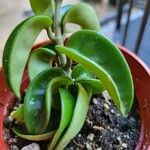
Hoya carnosa
هویا کارنوزا · گل پرتقالی · شمعی، · Honeyplant · Waxplant
Description
Source: leafsnapHoya carnosa, commonly known as the wax plant or porcelain flower, is a popular houseplant belonging to the Apocynaceae family. Native to Southeast Asia and Australia, this plant is celebrated for its attractive foliage and fragrant flowers. It features thick, waxy leaves that are dark green with a glossy texture. The oval-shaped leaves possess pointed tips and grow in pairs opposite each other on the stem. The wax plant produces clusters of small, star-shaped flowers that are pink or white and emit a sweet fragrance. These flowers typically bloom during the summer months and can last for several weeks. Hoya carnosa thrives in bright, indirect light but can also tolerate low light conditions, making it an ideal indoor plant. It requires well-draining soil, moderate watering, and occasional fertilization during its growing season. In addition to its aesthetic appeal, the wax plant has air-purifying properties, making it an excellent choice for improving indoor air quality by removing harmful toxins from the air. Overall, Hoya carnosa is an easy-to-care-for houseplant that enhances any space with its attractive foliage and fragrant blooms while also providing health benefits by purifying indoor air.
💡 Porcelainflower blooms gather tightly in clusters, forming a spherical shape that resembles a bouquet of flowers. Typically, these flowers are white with red centers, reminiscent of the blushing faces of young girls, both bright and bashful.
🌳 Although primarily cultivated for its attractive foliage and waxy flowers, wax plant has uses that go beyond mere decoration. The thick leaves have been investigated for bioactive compounds with possible industrial applications, including extracting materials for cosmetics and potentially for bioplastics. Additionally, their sturdy, striking appearance makes them suitable as teaching specimens in botany classes.
🎭 Youth, prosperity, security
Care Guide
💧 Water Every 7 days
The porcelainflower thrives in high humidity and is tolerant of drought, requiring careful moisture management to prevent root rot. Water the plant every three weeks, allowing the soil to dry out between waterings. Often grown indoors, the porcelainflower benefits from misting or the use of a pebble tray to increase humidity levels.
When should I water my Porcelainflower?
Watering your Porcelainflower correctly is crucial for its growth and health. You should check the top 2-3 inches of the soil for dryness before watering. If the soil feels dry, it's a good time to water the plant. Additionally, observe the leaves for any signs of dehydration, such as thinning, softening, or wrinkling, which indicate the plant needs water. Be cautious of overwatering and underwatering, as both can lead to issues such as root rot or stunted growth. Ensuring the soil is not waterlogged and that the plant is not left too dry for extended periods is key to a healthy Porcelainflower.
How should I water my Porcelainflower?
Watering your Porcelainflower correctly involves several techniques and considerations. The bottom-watering method is highly recommended to ensure water directly reaches the roots without oversaturating the soil. For maintaining humidity, misting can be beneficial, but it should not replace regular watering. Use a watering can with a long, narrow spout for precise water application to the root zone, avoiding the foliage to prevent disease. Monitoring the soil's moisture with a moisture meter can help prevent both overwatering and underwatering, thus ensuring the plant's health and vitality.
How much water does a Porcelainflower really need?
The watering needs of a Porcelainflower depend on several factors, including the size of the pot and the plant's stage of growth. A medium-sized plant in a 6-inch pot generally requires about 200-300 milliliters (6.7-10.1 ounces) of water per session, ensuring the water reaches the entire rootball. Signs of adequate hydration include plump, glossy leaves, and firm stems. Monitor for signs of overwatering, such as yellowing leaves, and adjust your watering schedule to prevent root rot and ensure the plant does not become waterlogged.
What kind of water is best for Porcelainflower?
Porcelainflower thrives best with distilled water, as it is free of contaminants. Alternatively, rainwater can be a good option if it's clean and free from pollutants. Tap water is acceptable in the absence of other sources but may contain chlorine and other chemicals that can harm the plant. If using tap water, it's recommended to let it sit for at least 24 hours to allow chlorine to evaporate. Porcelainflower is sensitive to chlorine and fluoride, so using filtered or distilled water can help avoid leaf burn and stress.
How do Porcelainflower's watering needs change with the seasons?
The watering needs of Porcelainflower vary with the seasons. In spring, as the plant begins to grow, gradually increase watering. Summer, being the active growth phase, requires more frequent watering due to higher temperatures. During autumn, reduce watering as the growth slows, and in winter, the plant needs the least amount of water. It's crucial to adjust your watering frequency according to these seasonal changes to prevent overwatering or underwatering, keeping the soil moist but not waterlogged.
☀️ Light Partial sun
The wax plant grows best in conditions that offer moderate sunlight along with a fair amount of shade, similar to its native habitat. Too little light can restrict growth, while too much can damage the foliage. Its different growth stages may not need varying levels of sun exposure.
What are the sunlight requirements for Porcelainflower?
Porcelainflower thrives in an environment that offers a blend of moderate sunshine and ample shade, which reflects its natural habitat. It requires about 3-6 hours of sunlight daily (partial sun) but can survive in full shade with less than 3 hours of sunlight. It's important to observe the movement of sunlight through your garden and place your plants in spots that achieve a good balance between light and shade to ensure their well-being. Too little sunlight can stunt the plant's growth, while too much can damage its foliage. The specific needs may vary at different growth stages.
How do artificial lights support Porcelainflower growth indoors?
When natural sunlight is not sufficient, especially during winter or in less sunny areas, artificial lighting becomes crucial for the growth of indoor Porcelainflower plants. LED lights are a popular choice because they can be tailored to provide specific light wavelengths necessary for plant growth. For plants requiring full sun, 30-50W per square foot is recommended; for partial sun plants, 20-30W per square foot; and for full shade plants, 10-20W per square foot. The artificial light source should be placed 12-36 inches above the plant, simulating natural sunlight conditions, and should be provided for 8-12 hours per day to mimic the length of natural daylight.
What are common symptoms of inappropriate sunlight exposure in Porcelainflower?
Porcelainflower may exhibit several symptoms if it's either not receiving enough sunlight or is exposed to too much sunlight. Inadequate light can lead to slower or halted growth, leggy or sparse growth, lighter-colored new leaves, and small leaves, indicating survival mode due to poor light conditions. Excessive sunlight can cause chlorosis (leaves losing their green color and turning yellow), sunscald, leaf curling as a defense mechanism, wilting from increased water loss, and leaf scorching with brown, dry edges on leaves. These symptoms highlight the plant's struggle with suboptimal light conditions.
What solutions can help mitigate sunlight-related issues for Porcelainflower?
To address sunlight-related issues in Porcelainflower, gradual adaptation to light conditions is key. For indoor plants, start by moving them to slightly sunnier spots each week until achieving 3-6 hours of sunlight daily or use artificial light, such as desk or ceiling lamps, for at least 8 hours a day. For outdoor plants, similarly move them gradually to sunnier locations to avoid sunburn. Reducing sunlight obstructions and transplanting smaller plants to sunnier spots with good drainage during their dormant period can also prove beneficial. Note that while parts of the plant damaged by insufficient light may not recover, new growth will be healthy with proper light adjustment.
🌡️ Temperature 20–41.1°C
Wax plantr grows best in its native habitat where temperatures are about 68 to 82 ℉ (20 to 28 ℃). It favors a wider range of 68 to 105 ℉ (20 to 41 ℃) and can withstand lows of 50 ℉ (10 ℃). In winter, keeping temperatures around 59 to 68 ℉ (15 to 20 ℃) is recommended to encourage blooming.
What is the ideal temperature range for Porcelainflower?
Porcelainflower, or Hoya carnosa, thrives best in its native growth environment with temperatures ranging from 68 to 82°F (20 to 28°C). It prefers temperatures between 68 to 105°F (20 to 41°C) but can also tolerate temperatures as low as 50°F (10°C). To promote blooming during winter, it is recommended to keep the temperature between 59 to 68°F (15 to 20°C).
How should Porcelainflower be cared for in winter?
During winter, Porcelainflower enters a dormant state and requires careful attention. It should be kept at temperatures between 59 to 68°F (15 to 20°C) to encourage blooming. If outdoor temperatures fall below its tolerable minimum, the plant should be moved indoors to a location near a south-facing window for maximum sunlight exposure. Supplemental lighting can compensate for insufficient natural light. Watering should be reduced or halted to avoid root rot, especially when temperatures are below the plant's suitable growth minimum. Outdoor plants may benefit from a temporary greenhouse or being wrapped with insulative materials.
What are the symptoms of Porcelainflower experiencing low temperature, and how can it be treated?
Porcelainflower grows best above its suitable minimum growth temperature and should remain above its tolerable minimum during winter. When temperatures drop below its growth limit, the plant may become weak, wilt, and be prone to root rot. Frost damage might not show immediate symptoms, but the plant could wither after a week. Treatment involves trimming frostbitten areas and removing rotted roots, if present. Propagation through cuttings is an option for severely affected plants. Moving the plant indoors to a warm environment, near a south-facing window, and using supplemental lighting if necessary, are crucial steps for recovery.
How should Porcelainflower be cared for in high temperatures?
During hot summers, Porcelainflower should be kept below its suitable maximum growth temperature to avoid halting its growth, experiencing water loss, wilting, or getting sunburned. If temperatures exceed its tolerable maximum, remove sunburned or rotted parts and protect the plant from direct afternoon sunlight until it recovers. For plants suffering from root rot during high temperatures, watering should be stopped until new roots form.
💨 Humidity normal (40-60%)
This plant will thrive in moderate humidity, which is probably the level in your home. However, misting it a few times a week can be very beneficial. Make sure the room has good ventilation.
🪴 Soil 6-7
🌱 Fertilizer
For the Wax plant, it is adequate to apply light amounts of fertilizer 1-2 instances annually during its growth phase. Refrain from fertilizing during winter and summer seasons when the plant is in a dormant state. After repotting, diminish the fertilizer amount for the plants and hold off on the fertilizing process for a few months. The act of fertilizing fosters robust growth and promotes flowering.
Why is it necessary to fertilize my Porcelainflower plant?
Applying plant food during the growing season to Porcelainflower helps add nutrients to the growing medium and support healthy growth. Fertilizing can also encourage mature specimens to produce blooms in the same season. Despite its ability to store water and nutrients, additional plant food benefits the Porcelainflower's overall well-being.
When should I fertilize my Porcelainflower for the best results?
Porcelainflower plants require a light dose of fertilizer during their growing season, which should occur 1-2 times a year. It is best to fertilize them in the spring and autumn when they are active, rather than in the dormant winter and summer periods. When repotting these plants, be cautious and reduce the amount of fertilizer used. It is also recommended to wait a few months after repotting before beginning to apply fertilizer.
When is not a good time to fertilize my Porcelainflower?
Porcelainflower, like most plants, has a dormancy period where it stops growing. During this time in summer and winter, it's best to avoid applying fertilizer. It's also recommended to stop fertilizing for a few months after repotting in the spring.
What kind of fertilizer should I use for my Porcelainflower?
To fertilize Porcelainflower, it is recommended to use a liquid plant food specifically made for succulents and cacti. Dilute the fertilizer with water to half the concentration so it doesn't accumulate in the soil. Apply the fertilizer at the base of the plant, making sure to water thoroughly and allow any excessive moisture to drain from the container or seep into the ground.
How can I give my Porcelainflower plant nutrients?
When fertilizing Porcelainflower, it's recommended to use liquid plant food as it is easier to handle. However, granules can also be used if you prefer. Ensure that you carefully follow the instructions on the packaging, especially when diluting liquid fertilizers to half-strength. Regardless of whether you choose granules or liquid plant food, always apply it directly to the soil. For granules, cover them with a thin layer of soil and water the plant. The same applies when using liquid plant food.
🪴 Pot & Repot Every 2 years
When it comes to repotting the Wax plant, you should opt for a pot that's a bit larger than the current one, which has effective drainage. Make sure to use a cactus or succulent mix that drains well and is gritty. Carefully extract the plant from its previous pot, brush off any surplus soil, and then replant it at an equivalent depth. Allow a few days before watering the plant to give any injured roots time to recover. It's best to repot during spring or autumn and place the plant in a region with lots of light.
✂️ Pruning
The porcelainflower doesn't need regular pruning because its new growth comes from its tendrils. If necessary, you can do some light trimming in early spring to control its size or remove any dead growth. However, be careful not to prune too heavily, as this can damage the plant. It's best to avoid pruning outside of this time period.
🌿 Propagating
🐛 Diseases & pets
☠️ Toxicity
Characteristics
- Plant Type
- Succulent, Vine, Herb
- Life Cycle
- Perennial
- Genus
- Hoya
- Family
- Apocynaceae
- Hardiness Zone
- 10-13
- Mature Height
- 6.1 m
- Mature Spread
- 46 cm
- Leaf Color
- Green, Gray, Silver
- Leaf Type
- Evergreen
- Flower Color
- Pink, White
- Flower Size
- 1.52 cm to 2.03 cm
- Bloom Time
- Late spring, Early summer, Mid summer
- Planting Time
- Spring, Summer, Autumn
- Harvest Time
- Mid summer, Late summer
- Native Area
- Malaysia, Vietnam, Japan, Laos, China