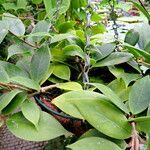
Hoya coriacea
Care Guide
💧 Water
☀️ Light Full sun
The growth of the Shooting stars wax plant thrives under abundant sun exposure. It is native to habitats with a lot of sunlight, although it can adapt to moderate sun conditions. Constant exposure to sufficient light is crucial at various stages of its development. However, it's worth noting that too much sun can cause harm, while a lack of adequate sunlight may hinder its growth potential.
🌡️ Temperature 20–37.8°C
The Shooting stars wax plant is native to the tropics, an area known for its hot and moist climate. Consequently, it thrives in situations of high heat and moisture. Sudden shifts in temperature are not well-received by this plant and it favors consistent temperature surroundings, hence fluctuations in temperature indoors should be sidestepped. It generally cannot withstand freezing conditions and needs elevated temperatures to grow. If the temperature of its surroundings plunge too far, the plant might stop growing or potentially perish.
💨 Humidity
🪴 Soil 6-7
🌱 Fertilizer
The best time to fertilize a Shooting stars wax plant is in early spring, when it comes out of dormancy. This supports overall growth and flower development. Fertilizing improves the foliage, stems, and branches, and encourages larger, more vibrant, and longer-lasting flowers. It also helps move nutrients from the roots to the flowers and boosts the plant's health and resistance to disease.
🪴 Pot & Repot 2-3 years
Transplant the Shooting stars wax plant at the start of spring, selecting a container a bit bigger than the existing one, with adequate drainage. Make use of a potting mix that drains well, making sure that the root ball is positioned at the same height as it was previously. Carefully untangle roots that are root-bound. Subsequent to the repotting, hydrate the plant abundantly and relocate it to a warm, shaded area. Routine trimming assists in controlling size and encouraging new shoots.
✂️ Pruning
🌿 Propagating
🐛 Diseases & pets
☠️ Toxicity
Characteristics
- Plant Type
- Vine
- Life Cycle
- Perennial
- Genus
- Hoya
- Family
- Apocynaceae
- Hardiness Zone
- 10-12
- Mature Height
- 2.44 m
- Mature Spread
- 49 cm
- Leaf Color
- Green
- Leaf Type
- Evergreen
- Flower Color
- White, Yellow
- Flower Size
- 1.52 cm to 2.03 cm
- Bloom Time
- Late spring, Summer, Early fall, Mid fall
- Planting Time
- Spring, Summer, Autumn
- Harvest Time
- Fall, Early winter, Mid winter
- Native Area
- India, Malaysia, Indonesia, Cambodia, Vietnam, Myanmar, Philippines, Laos, Thailand, China