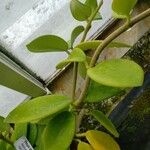
Hoya diptera
Description
Source: wikipedia (CC BY-SA)Hoya diptera is a species of Hoya native to Vanuatu and Fiji.
Care Guide
💧 Water
☀️ Light Partial sun
Hoya diptera originates from habitats like forest understories or rocky areas, where it exists in natural shade. It prefers partial sun but can adjust to full sun or full shade, illustrating its versatile and hardy nature.
🌡️ Temperature 20–37.8°C
Hoya diptera comes from tropical areas where the climate is generally warm and humid. As a result, it is adapted to high temperatures and humidity. It does not tolerate sudden temperature shifts and prefers a steady thermal environment, so avoiding temperature fluctuations indoors is important. It usually cannot endure cold and needs warmer conditions to grow; if the temperature falls too low the plant may stop growing or even die.
💨 Humidity
🪴 Soil 6-7
🌱 Fertilizer
Hoya diptera needs the most fertilizer during its active growth period, which occurs mainly in spring, summer, and early fall. Fertilization supplies essential nutrients the soil may lack, supporting healthy root and stem development and encouraging the attractive foliage that is a key feature of this particular plant.
🪴 Pot & Repot 2-3 years
When repotting Hoya diptera, select a pot 1-2 inches (2.5–5.1 cm) larger with good drainage. Use a well-draining potting mix. Repot in spring or fall, making sure the root ball sits slightly lower than the rim of the flower pot. Water thoroughly after repotting and place the plant in a warm spot with indirect sunlight.
✂️ Pruning
🌿 Propagating
🐛 Diseases & pets
☠️ Toxicity
Characteristics
- Plant Type
- Vine, Herb
- Life Cycle
- Perennial
- Genus
- Hoya
- Family
- Apocynaceae
- Hardiness Zone
- 10-12
- Mature Height
- 30 cm to 61 cm
- Mature Spread
- 30 cm to 49 cm
- Leaf Color
- Dark Green
- Leaf Type
- Evergreen
- Flower Size
- 1.02 cm to 2.03 cm
- Bloom Time
- Summer, Early fall, Mid fall
- Planting Time
- Spring, Summer, Autumn
- Harvest Time
- Fall
- Native Area
- Fiji