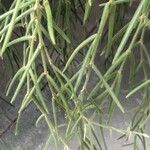
Hoya linearis
String Of Beans · Cupped Wax Plant · Hanging Wax-plant
Description
Source: leafsnapHoya linearis is a species of flowering plant in the Apocynaceae family, native to Southeast Asia. This climbing vine can reach up to 2 meters in length and features thin, elongated leaves that can grow up to 10 cm long. The plant produces clusters of small, star-shaped flowers that are white or pale pink, accompanied by a sweet fragrance. Often grown as an ornamental plant due to its attractive foliage and flowers, Hoya linearis thrives in bright, indirect light and well-draining soil. It requires regular watering during the growing season. Propagation is relatively easy through stem cuttings or by layering its vines onto moist soil or sphagnum moss until roots develop. Additionally, Hoya linearis is known for its air-purifying properties, as it helps remove toxins from indoor environments. This makes it an excellent houseplant choice for those seeking both beauty and functionality in their plants.
Care Guide
💧 Water Every 7 days
The porcelain flower flourishes in humid, tropical environments where high humidity and consistent moisture are essential. To prevent overwatering, it should be watered weekly. Often grown indoors for its waxy flowers and trailing growth, this plant benefits from well-draining containers to ensure its health.
☀️ Light Partial sun
Porcelain flower is native to places like forest understories and rocky terrain, where it grows in natural shade. It favors partial sun yet can adjust to full sun or full shade, illustrating its hardy and adaptable nature.
🌡️ Temperature 20–37.8°C
The porcelain flower comes from tropical areas, where the climate is generally warm and humid. Consequently, it is adapted to high temperatures and moisture. It is sensitive to sudden temperature shifts and prefers a consistent thermal environment, so avoiding indoor temperature fluctuations is important. It typically cannot tolerate cold and needs warmer conditions to grow. If the ambient temperature falls too low, the plant may stop growing or even die.
💨 Humidity high (>60%)
This plant needs special care because it loves high humidity levels of 60-80% or more. The best way to achieve this is by placing a humidifier near the plant. Daily misting is also essential! Make sure the room has good ventilation.
🪴 Soil 5-6
🌱 Fertilizer
The best time to fertilize a Porcelain flower is in early spring, as it breaks dormancy. This encourages overall growth and flower development. Fertilizing improves foliage, stems, and branches, while encouraging large, bright, and long-lasting blooms. It helps transport nutrients from the roots to the flowers and enhances the plant's health and resistance to disease.
🪴 Pot & Repot 2-3 years
Repot the Porcelain flower in early spring, choosing a pot only slightly larger than the current one with proper drainage. Use a well-draining potting mix and position the root ball at the same level as before. Gently loosen any root-bound roots. After repotting, water generously and place it in a warm, shady location. Regular pruning helps keep its size down and encourages new growth.
✂️ Pruning
The porcelain flower plant is known for its cascading foliage and fragrant, star-shaped blossoms. To maintain its health and shape, prune it in early spring. Trim dead stems lightly to encourage blooming, but avoid heavy pruning to prevent stunted growth. Always use clean tools to prevent disease and keep the plant looking tidy.
🌿 Propagating
🐛 Diseases & pets
☠️ Toxicity
Characteristics
- Plant Type
- Vine
- Life Cycle
- Perennial
- Genus
- Hoya
- Family
- Apocynaceae
- Hardiness Zone
- 10-11
- Mature Height
- 91 cm
- Mature Spread
- 49 cm
- Leaf Color
- Green
- Leaf Type
- Evergreen
- Flower Color
- White
- Flower Size
- 1.02 cm to 1.52 cm
- Bloom Time
- Summer, Early fall, Mid fall
- Planting Time
- Spring, Summer, Autumn
- Harvest Time
- Fall
- Native Area
- Nepal, India, Myanmar, Bhutan, China