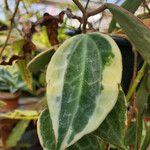
Hoya macrophylla
Description
Source: wikipedia (CC BY-SA)Hoya macrophylla is a species of flowering plant in the family Apocynaceae, native to Borneo, Java, the Lesser Sunda Islands, Malaya, Sumatra and Vietnam.
Care Guide
💧 Water Once a week
The wax plant, originally from humid tropical regions, thrives in conditions of high humidity and consistent moisture. To care for it, water the plant every three weeks, letting the soil dry out slightly between waterings. Regular misting is beneficial as it helps maintain the plant’s vibrant foliage by mimicking its natural environment. This evergreen plant is perfect for indoor cultivation.
☀️ Light Partial sun
Hoya latifolia comes from places that offer speckled sunlight, like the lower levels of forests or rocky regions that offer inherent shade. It has a preference for partial sunshine but is capable of enduring direct sunlight as well.
🌡️ Temperature 20–35°C
Hoya latifolia flourishes in hot settings and needs elevated temperatures during the growth period to boost its development and metabolic activities. It appreciates generous sunlight, suitable humidity, and proper air circulation. On the flip side, it's vulnerable to harm from overly cold temperatures and too much watering. So, it is critical to maintain equilibrium and prevent extremely high temperatures and too arid conditions.
💨 Humidity normal (40-60%)
This plant will thrive in moderate humidity, which is probably the level in your home. However, misting it a few times a week can be very beneficial. Make sure the room has good ventilation.
🪴 Soil 6-7
🌱 Fertilizer
Hoya latifolia requires minimal fertilization, just 1-2 instances annually throughout its growth period. Refrain from feeding it nutrients in winter and summer when it's in a dormant phase. When it comes to repotted specimens, decrease the amount of fertilizer and delay by a few months post-repotting before introducing nutrients again. This feeding routine supports its robust development and aids in flower production.
🪴 Pot & Repot Every 2 years
When you're ready to switch Hoya latifolia to another pot, take a pot just a little bigger than the current one which facilitates proper drainage. Use a succulent or cactus mix that drains well and has a gritty texture. Gently take the plant out of its current pot, brush away any extra dirt, and reposition it at the same level in the new pot. Allow several days before watering to let any injured roots recover. The best times for repotting are spring or autumn, and the plant should be placed in a location that's well-lit.
✂️ Pruning
The wax plant does not require pruning, as its new growth and flowers naturally sprout from its tendrils. However, you can do some light trimming to control its size or remove dead growth. It's best to perform this trimming in early spring. Be careful not to prune outside this time frame, as it could harm the plant.
🌿 Propagating
🐛 Diseases & pets
☠️ Toxicity
Characteristics
- Plant Type
- Vine, Succulent
- Life Cycle
- Perennial
- Genus
- Hoya
- Family
- Apocynaceae
- Hardiness Zone
- 10
- Mature Height
- 0 cm to 5 cm
- Mature Spread
- 49 cm to 91 cm
- Leaf Color
- Green
- Leaf Type
- Evergreen
- Flower Color
- White
- Flower Size
- 1.02 cm to 2.03 cm
- Bloom Time
- Summer, Early fall, Mid fall
- Planting Time
- Spring, Summer, Autumn
- Harvest Time
- Fall, Early winter, Mid winter
- Native Area
- Malaysia, Indonesia, Singapore, Laos, Thailand