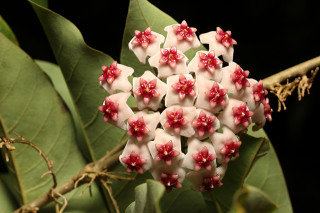
Hoya obovata
Description
Source: leafsnapHoya obovata (Hoya obovata), also known as the Wax Plant, is a distinct type distinguished by huge, deep green oval leaves with a "silver splash" pattern. It is more difficult to locate than the more widespread Hoya carnosa, although it is a faster-growing type. Its distinct look attracts both collectors and amateurs. For good reason, hoyas are incredibly popular houseplants. Thick, glossy leaves and lengthy tendrils distinguish these lovely trailing plants. They make excellent hanging plants, but they can also climb trellises and moss poles. Hoyas are semi-succulent epiphytic plants that naturally draw nutrients and moisture from the air, and their thick leaves, like succulents, store water. As a result, they are drought-tolerant and generally simple to care for.
Care Guide
💧 Water 1-2 times a week
The sweetheart hoya prefers a humid environment and consistent moisture, although it has a moderate tolerance for drought. To care for it, water the plant every 1-2 weeks, allowing the soil to partially dry between waterings. Typically grown indoors, the sweetheart hoya thrives in high humidity, particularly during the growing season, to ensure optimal foliage and growth.
☀️ Light Partial sun
Sweetheart hoya is native to habitats such as forest understories and rocky areas, where it grows in natural shade. It prefers partial sun but can adjust to full sun or full shade, showing its versatile and hardy nature.
🌡️ Temperature 20–37.8°C
Sweetheart hoya comes from tropical areas where the climate is generally warm and humid. As a result, it is suited to high temperatures and humidity. It does not like sudden temperature shifts and prefers a steady thermal environment, so avoiding temperature fluctuations indoors is important. It usually cannot tolerate cold and needs warmer conditions to grow. If the temperature falls too low, the plant may stop growing or even die.
💨 Humidity normal (40-60%)
This plant will thrive in moderate humidity, which is probably the level in your home. However, misting it a few times a week can be very beneficial. Make sure the room has good ventilation.
🪴 Soil 5-6
🌱 Fertilizer Every 120 days
The best time to fertilize a Sweetheart hoya is in early spring, when it comes out of dormancy. Fertilizing at this time supports overall growth and flower development. It improves the foliage, stems, and branches, and encourages flowers that are larger, more vivid, and longer-lasting. It also helps move nutrients from the roots to the flowers and enhances the plant’s health and resistance to disease.
🪴 Pot & Repot 2-3 years
Repot Sweetheart hoya in early spring, selecting a pot only slightly larger than the current one that provides good drainage. Use a well-draining potting mix and make sure the root ball sits at the same level as before. Gently loosen any roots that are root-bound. After repotting, water thoroughly and place the plant in a warm, shady spot. Prune regularly to keep its size in check and to encourage new growth.
✂️ Pruning
Pruning a sweetheart hoya is generally unnecessary, as new growth tends to form at the ends of its tendrils, leading to more flowers under ideal conditions. However, if you need to manage its size or remove dead growth, you can perform light trimming in early spring. Avoid pruning at other times, as making severe cuts outside this period can harm the plant.
🌿 Propagating
🐛 Diseases & pets
☠️ Toxicity
All species of hoya plants, including hoya obovatas, are non-toxic to humans and pets.
Characteristics
- Plant Type
- Vine
- Life Cycle
- Perennial
- Genus
- Hoya
- Family
- Apocynaceae
- Hardiness Zone
- 10-12
- Mature Height
- 1.22 m
- Mature Spread
- 49 cm
- Leaf Color
- Dark Green
- Leaf Type
- Evergreen
- Flower Color
- Pink, White
- Flower Size
- 1.02 cm to 2.03 cm
- Bloom Time
- Summer, Early fall, Mid fall
- Planting Time
- Spring, Autumn
- Harvest Time
- Fall
- Native Area
- Indonesia, Vietnam, Thailand