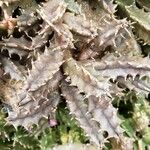
Huernia confusa
Lifesaver Cactus
Description
Source: leafsnapHuernia confusa is a succulent plant in the Apocynaceae family, native to South Africa. Commonly known as the "Carrion Plant," it is renowned for its distinctive flowers that emit a foul odor resembling rotting flesh. The plant features thick, fleshy stems that can grow up to 30 cm in length, with small green leaves. Its star-shaped flowers vary in color from yellowish-green to brownish-red and often have dark spots on the petals. These flowers typically bloom in late summer or early fall and attract flies for pollination. Huernia confusa thrives in well-draining soil, bright indirect light, and requires moderate watering during its growing season, which spans from spring through fall. It can be propagated through stem cuttings or by dividing mature plants. Besides its unique appearance and pungent blooms, Huernia confusa has been utilized for medicinal purposes by indigenous South Africans. It is believed to have anti-inflammatory properties and has been used to treat ailments such as stomach pains, fever, headaches, and even snake bites. Overall, Huernia confusa is an intriguing addition for succulent collectors or anyone who appreciates unusual flora with medicinal benefits.
Care Guide
💧 Water Every 7 days
☀️ Light Full sun
Ceropegia zebrina subsp. insigniflora, a plant native to dry areas, flourishes under direct sunlight, echoing its original habitat which is marked by intense sunlight and scarce shade. It can also withstand partial sunlight, showing some flexibility in its growth conditions.
🌡️ Temperature 20–37.8°C
Ceropegia zebrina subsp. insigniflora flourishes in hot climates and needs heightened temperatures during its growth phase for optimal development and metabolism. It benefits from a great deal of sunlight, the right amount of moisture, and adequate airflow. Nonetheless, extremely cold temperatures and too much water can cause harm to it. It's crucial to find a moderate balance to prevent exposure to overly hot temperatures and excessively dry environments.
💨 Humidity
🪴 Soil 6-7
🌱 Fertilizer
For the subspecies insigniflora of Ceropegia zebrina, a light application of fertilizer 1-2 times annually during its growth period is adequate. Refrain from fertilizing during winter and summer when the plant is in a dormant state. Decrease the quantity of fertilizer for plants that have been repotted and allow for a few months post repotting before applying fertilizer. Fertilization assists in robust growth and promotes flowering.
🪴 Pot & Repot Every 2 years
When transplanting Ceropegia zebrina subsp. insigniflora, opt for a pot that's marginally bigger than the current one, featuring proper drainage. Employ a gritty succulent or cactus mix that drains efficiently. Gently extract the plant from its former pot, clear away surplus soil, and relocate it at the equivalent depth. Delay watering for several days to let any root injury mend. The optimal times to do this repot are spring or autumn, and make sure to place in a location that receives plenty of light.
✂️ Pruning
🌿 Propagating
🐛 Diseases & pets
☠️ Toxicity
Characteristics
- Plant Type
- Vine, Succulent
- Life Cycle
- Perennial
- Genus
- Huernia
- Family
- Apocynaceae
- Hardiness Zone
- 10-12
- Mature Height
- 30 cm to 61 cm
- Mature Spread
- 30 cm to 49 cm
- Leaf Color
- Green, Dark Green
- Leaf Type
- Evergreen
- Flower Color
- Brown
- Flower Size
- 3.05 cm to 5.08 cm
- Bloom Time
- Summer, Early fall, Mid fall
- Planting Time
- Spring, Summer, Autumn
- Harvest Time
- Fall
- Native Area
- South Africa