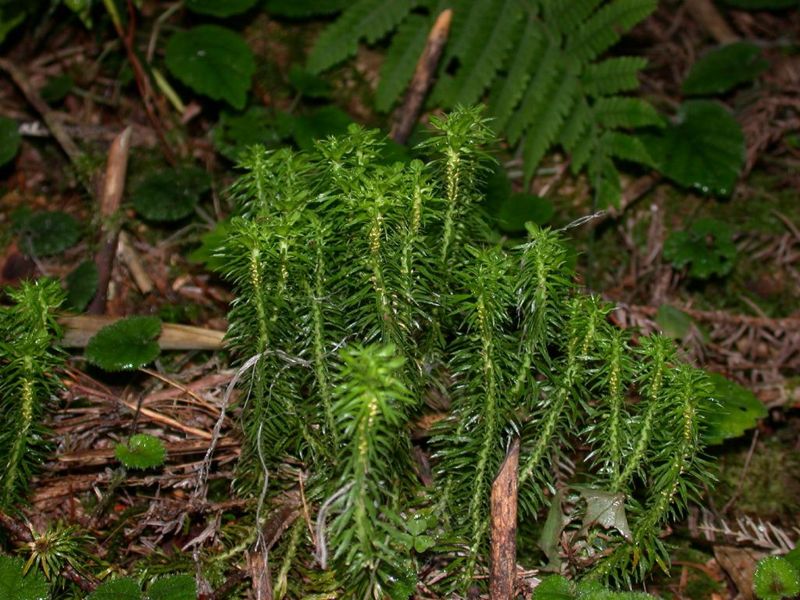
Huperzia serrata
Toothed club-moss · Toothed Fir-Moss · Toothed clubmoss
Description
Source: leafsnapHuperzia serrata, commonly known as Chinese club moss or toothed club moss, is an evergreen plant belonging to the Lycopodiaceae family. Native to China and Southeast Asia, this species thrives in forests, on rocks, and in crevices. The plant exhibits a distinctive appearance with its long stems, which can grow up to 1 meter in length, and its small leaves that spiral around the stem. Reproduction occurs via spores, as the plant does not produce flowers or seeds. For centuries, Huperzia serrata has been a staple in traditional Chinese medicine, revered as a natural remedy for ailments such as fever, inflammation, and memory loss. The plant contains huperzine A, a compound believed to have neuroprotective properties that may enhance cognitive function. In recent years, Huperzia serrata has become popular as a dietary supplement, particularly for its potential brain health benefits. Students and professionals alike use it to aid memory retention and improve concentration. Overall, Huperzia serrata is a fascinating plant with longstanding medicinal value recognized by traditional practitioners. Its potential cognitive benefits make it an appealing natural remedy or supplement for those seeking to enhance brain function.
Care Guide
💧 Water Every 7 days
The toothed clubmoss flourishes in humid environments and benefits from weekly watering. Although it can withstand short periods of dryness, it requires consistent humidity, making it ideal for terrariums. Extra care is needed during the cooler months when indoor heating can reduce humidity levels, potentially impacting its growth.
How do I water my Toothed clubmoss properly?
To ensure the Toothed clubmoss stays healthy while watering it, it's best to use filtered water at room temperature or slightly warmer. Tap water may contain harmful particles, so filtered water is preferred. It's important to mimic the plant's natural warm environment, so avoid using cold water as it can shock the plant. Additionally, overhead watering should be avoided to prevent issues with the foliage. Instead, gently pour filtered room temperature water onto the soil until it is completely saturated. This method helps moisten the roots and allows them to spread and absorb nutrients from the soil effectively.
What should I do if I give too much water or too little water to my Toothed clubmoss plant?
Overwatering can be damaging to your Toothed clubmoss, while underwatering is less common but still a possibility. When the plant is overwatered, its stems and leaves may wilt and turn yellow, and prolonged overwatering can lead to diseases like root rot, mold, and mildew, which can be fatal. On the other hand, underwatering is less likely, but if it happens, the leaves of the plant will become brittle and brown. It's important to recognize the signs of overwatering early and take action to reduce watering immediately. It's also a good idea to check the quality of the soil and replace it with a well-draining potting mix if necessary. If the plant is not receiving enough water, simply increase watering until the signs of underwatering disappear.
How much water does my Toothed clubmoss need?
If your Toothed clubmoss is in a pot, the best way to know if it needs water is to check the soil. Stick your finger into the soil and if the top two to three inches are dry, it's time to water it. If your Toothed clubmoss is planted outdoors in the ground, you can use a similar method to check the soil. When the top few inches are dry, it's time to water. During spring and early fall, you will likely need to water it about once a week. In extremely hot weather, you may need to water it twice a week or more. However, mature and well-established Toothed clubmoss plants are quite drought-tolerant.
How much water does my clubmoss plant need?
To water your Toothed clubmoss effectively, it's important not to hold back on the amount of water you give. Wait until the top two to three inches of soil are dry, then water your plant thoroughly. Make sure to saturate the soil completely, so that excess water can drain through the pot's drainage holes. If you don't notice any excess water draining out, it's likely that you haven't provided enough water. However, be cautious not to let water accumulate inside the soil, as this can be harmful to the plant. On the other hand, if water doesn't drain properly, it could indicate that the soil doesn't have good drainage, which can negatively impact the plant's health. If your plant is located outside, one inch of rain per week should be enough.
How should I water my Toothed clubmoss as it grows?
The water requirements of the Toothed clubmoss can vary depending on its growth stages. When the plant is young or has been recently relocated, it will need more water than usual. During these stages, the focus of the plant's energy is on developing new roots to support future growth. These roots perform best with extra moisture. As the plant matures, it will require less water. Additionally, during the bloom period, when the plant is producing flowers, it will also benefit from increased water to support the development of the blooms.
☀️ Light Partial sun
Toothed clubmoss is native to habitats with dappled light, such as the understory of tropical forests or rocky locations that provide natural shade. It favors partial sun but can also tolerate full shade conditions.
What kind of sunlight does Toothed clubmoss require?
To ensure the thriving of indoor toothed clubmoss, it requires full, indirect sunlight. This means the plant should be placed where it can receive bright sunlight without it directly hitting the plant from a window or grow light. To protect it from direct sunlight, you can use a sheer curtain or place it behind a window with a dark screen.
How can I protect new Toothed clubmoss from getting damaged by sunlight?
For beginners who are bringing home a Toothed clubmoss for the first time, it is recommended to gradually expose it to sunlight instead of placing it in bright, indirect light immediately. To prevent leaf damage from sudden intense light, it is advisable to slowly introduce the plant to sunlight over a period of two weeks or so. By following this method, the Toothed clubmoss is more likely to adjust well to its new home environment.
How do I know if Toothed clubmoss is getting too much light?
Toothed clubmoss is a type of plant that is susceptible to sunburn if exposed to excessive sunlight. In their natural habitat, these plants typically receive gentle, filtered light from the trees above. Although Toothed clubmoss requires more light indoors, it can still be problematic if it receives too much. Signs of excessive light exposure include faded or pale foliage, yellow or brown crispy leaf tips, and rapid, unsustainable growth.
What should I do if my Toothed clubmoss gets a little damaged from light?
Plants generally experience less severe sunburn compared to humans. If a plant's leaves are completely damaged or more than half of the leaf is affected, you can simply remove them. Alternatively, you can trim back the leaves if there is only a small amount of discoloration in an attempt to save them. To prevent further light damage, it's recommended to move your Toothed clubmoss away from its light source.
Does Toothed clubmoss require varying amounts of light as it grows?
Toothed clubmoss takes time to develop tolerance to bright light. When propagating cuttings, they should be exposed to moderate indirect light. Similarly, new leaves during the growing season should also be protected to avoid sunburn, as they are the most vulnerable part of the plant.
🌡️ Temperature 20–35°C
Toothed clubmoss naturally occurs in habitats with temperatures ranging from 68 to 95 °F (20 to 35 ℃). The plant prefers warmer conditions, and during colder seasons it is recommended to keep temperatures close to 68 °F (20 ℃) to ensure optimal growth.
What temperature is best for Toothed clubmoss?
Plants can be affected by colder temperatures because they mirror the temperature of the air surrounding them. When plants are exposed to sunlight, they can warm up again, but this doesn't happen in the winter. The Toothed clubmoss typically thrives in temperatures between 70~85℉(21~30℃). It can tolerate temperatures as low as 20~30℉(-6~0℃), and possibly even 15℉(-10℃), but only for a short time as prolonged exposure can result in frost damage. It is important to maintain maximum temperatures of 70~85℉(21~30℃) for these plants, and to spray them with water and provide shade occasionally to prevent wilting.
Should I change the temperature for Toothed clubmoss during different stages of growth?
To ensure proper growth of Toothed clubmoss, it is important to research and ensure the correct temperature. Some growers may choose to reduce the plants' thermostats during the growing season to save on HVAC costs. However, it is crucial to understand that temperature can impact flowering, pest management, and overall plant quality. During winter, certain species may enter a dormant state and cease growth. As seasons change and the weather gets warmer, the base temperature for Toothed clubmoss increases, resulting in faster growth. Species naturally found in warm climates have higher optimum temperatures compared to those that thrive in cooler environments. Cool temperatures can negatively affect the uniformity and timing of seed growth. It may be beneficial to lower the temperature during flowering but not during other phases. Additionally, cooler nighttime temperatures will require less water, so adjust irrigation accordingly.
How can I make sure that Toothed clubmoss stays warm during cold seasons?
To help the plant adapt to colder weather, it's best to stop fertilizing it so new growth doesn't occur and the existing ones become hardier. To provide warmth, you can create protective structures like cages or trellises around the Toothed clubmoss. Additionally, using heat mats is another option as they can maintain a consistent temperature range in the soil, which is ideal for the plant.
How can I protect Toothed clubmoss from being harmed by temperature?
To protect the Toothed clubmoss from frost during winter, cover it with cloths, tarps, burlaps, sheets, or plastic buckets. Secure them properly to act as insulators and prevent them from getting blown away by the wind. However, be cautious that the plastic sheets or burlap covers do not touch the fruit or foliage. Otherwise, the cold temperatures can cause burns. Once the daytime temperatures start to increase, remove the covers.
Do I need to change the temperature for Toothed clubmoss in different seasons?
When growing the Toothed clubmoss in spring, it's important to increase humidity because the air temperature is usually cooler. Dry temperatures can be stressful for various species, so increasing humidity can be beneficial. In the summer, the large greenhouse cover and warm temperatures naturally result in higher humidity levels. However, this can lead to problems such as condensation on the greenhouse walls, which in turn can affect pollination and cause leaf infections when the water droplets fall on the leaves. To manage this, make adjustments based on the temperature and consider spraying water on hotter days of the year.
💨 Humidity
🪴 Soil 6-6
🌱 Fertilizer
A single fertilizer application in spring is typically adequate for Toothed clubmoss, though additional feedings can optimize growth. Apply fertilizer about every one to one and a half months. Fertilization improves the leaves' appearance and function, helping maintain even color and a healthy texture. It also promotes root development and nutrient uptake for sustained plant health.
🪴 Pot & Repot
✂️ Pruning
To encourage healthy growth and maintain the shape of your toothed clubmoss, prune it in early to late spring using clean, sharp tools. This process involves removing dead foliage, tangled stems, and crowded areas, which will improve air circulation. Regular pruning helps prevent disease, stimulates new growth, and enhances the plant's appearance.
🌿 Propagating
🐛 Diseases & pets
☠️ Toxicity
Characteristics
- Plant Type
- Herb, Shrub
- Life Cycle
- Perennial
- Genus
- Huperzia
- Family
- Lycopodiaceae
- Hardiness Zone
- 9
- Mature Height
- 10 cm to 30 cm
- Mature Spread
- 15 cm to 25 cm
- Leaf Color
- Dark Green
- Leaf Type
- Evergreen
- Planting Time
- Spring, Summer, Autumn
- Native Area
- Russia, Japan, Koppen, South Korea, China