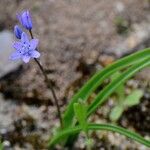
Hyacinthoides italica
Italian bluebell · Italian squill · Bluebell · Italska Česnička (HSB) · Bluebells
Description
Source: leafsnapHyacinthoides italica, the Italian bluebell or Italian squill, is a spring-flowering bulbous perennial plant belonging to the family Asparagaceae.It is one of around 11 species in the genus Hyacinthoides, others including the common bluebell (Hyacinthoides non-scripta) in northwestern Europe, and the Spanish bluebell (Hyacinthoides hispanica) further west in the Iberian Peninsula.
Care Guide
💧 Water
The Italian bluebell, native to Mediterranean regions, thrives when there's a balance between moisture and dry spells. Water the plant every 1-2 weeks, ensuring the soil dries out slightly between waterings. It does best in temperate climates with a watering schedule that mimics the irregular rainfall of its natural habitat, which promotes healthy bulbs and optimal flowering.
☀️ Light Partial sun
Italian bluebell is naturally found in habitats like forest understories and rocky areas, where it grows in natural shade. It favors partial sun but can tolerate full sun or full shade, showing its versatile and hardy character.
What are the sunlight requirements for Italian bluebell (Hyacinthoides italica)?
Italian bluebell (Hyacinthoides italica) requires partial sun, meaning it should receive about 3-6 hours of sunlight per day. It's important to observe how sunlight moves through your garden to find spots that offer a perfect balance of light and shade. This will ensure your Italian bluebells thrive by getting just the right amount of light they need.
🌡️ Temperature 5–35°C
Italian bluebell can tolerate a wide range of temperatures, but its distribution may still be constrained by different combinations of water and heat. It performs best in warm summer climates with adequate rainfall or watering. Long stretches of cloudy, rainy weather or prolonged high temperatures can raise the chance of Italian bluebell dying. In winter, proper protection from the cold can increase the plant's survival rate.
💨 Humidity
🪴 Soil 6-7
🌱 Fertilizer
For Italian bluebell, the best time to apply fertilizer is in early spring when the flowers are forming. The proper fertilizer promotes stronger blooms and helps the Italian bluebell produce attractive flowers. Fertilizing in early spring ensures excellent flowering during the season and supplies energy for dormant growth phases.
🪴 Pot & Repot Every 12 months
✂️ Pruning
Pruning Italian bluebells between early to late spring is crucial for their health. This process encourages new growth and enhances flowering. To do this, remove spent flowers and dead foliage, but avoid trimming the green leaves, as they are important for photosynthesis. Regular pruning improves air circulation, prevents overcrowding, and increases the plant's overall vigor and beauty.
🌿 Propagating
🐛 Diseases & pets
☠️ Toxicity
Characteristics
- Plant Type
- Herb
- Life Cycle
- Perennial
- Genus
- Hyacinthoides
- Family
- Asparagaceae
- Hardiness Zone
- 5-9
- Mature Height
- 20 cm to 30 cm
- Mature Spread
- 15 cm to 20 cm
- Leaf Color
- Green
- Leaf Type
- Deciduous
- Flower Color
- Blue
- Flower Size
- 1.02 cm to 1.52 cm
- Bloom Time
- Early spring, Mid spring
- Planting Time
- Spring, Summer
- Harvest Time
- Late spring, Early summer
- Native Area
- Italy, France