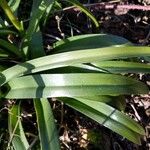
Hyacinthoides non-scripta
English bluebell · Common Bluebell · Wood-hyacinth · Bluebell · Harebell
Description
Source: leafsnapHyacinthoides non-scripta (formerly Endymion non-scriptus or Scilla non-scripta) is a bulbous perennial plant, found in Atlantic areas from north-western Spain to the British Isles, and also frequently used as a garden plant. It is known in English as the common bluebell or simply bluebell, a name which is used in Scotland to refer to the harebell, Campanula rotundifolia. In spring, H. non-scripta produces a nodding, one-sided inflorescence of 5–12 tubular, sweet-scented violet–blue flowers, with strongly recurved tepals, and 3–6 long, linear, basal leaves. H. non-scripta is particularly associated with ancient woodland where it may dominate the understorey to produce carpets of violet–blue flowers in "bluebell woods", but also occurs in more open habitats in western regions. It is protected under UK law, and in some other parts of its range. A related species, H. hispanica has also been introduced to the British Isles and hybridises with H. non-scripta to produce intermediates known as H. × massartiana.
🌳 Many people are unaware that bluebell bulbs were once used to produce starch for the stiff collars and elaborate clothing of the Elizabethans. The bulbs contain a sticky, glutinous substance that was ideal for keeping ruffs in shape. Today this use is largely forgotten, as modern materials and methods have replaced it.
🎭 Modesty, Steadfastness
Care Guide
💧 Water Every week
Bluebells originate from woodlands and thrive in moist, well-drained soils with dappled sunlight. To prevent waterlogging, they need to be watered weekly. Bluebells prefer outdoor conditions. Being deciduous plants, their water needs decrease during their winter dormancy.
What should I do if I give Bluebell too much or too little water?
If you over-water your Bluebell, it will develop yellow leaves. Normally, yellow leaves appear at the end of the blooming period. However, if the leaves turn yellow before the flowers bloom, it means you have over-watered the Bluebell. To remedy this, ensure there is good drainage and refrain from watering it for a couple of days. Adding sawdust to the soil can help absorb excess moisture. If the problem persists even after controlled watering, check if the seedpods have rotted by digging them up and examining their color and texture. If you find severe decay, clean out the seedpods promptly. On the other hand, under-watered Bluebell also has yellow leaves, but the stems will droop and the leaves will appear smaller and curl. You may also notice some brown patches. If you have given your Bluebell too little water, don't worry. Bluebells have some drought tolerance. Once you become aware of the issue, give it a good drink without saturating the soil. Just ensure that it is moist, but avoid over-watering. Extended periods of water can cause root rot and fungus growth on the bulb. This fungus can cause serious damage, noticeable as spots on the leaves and buds, as well as discoloration and decay at the tips of the leaves.
How frequently should I water my Bluebell plant?
The growth of your Bluebell depends on its location and current state. After planting, water them well initially to kick start their growth. You can then leave them until you see shoots appear. For potted Bluebells, water them when the top 1-2 inches of soil feels dry, as container plants can dry out faster. If planted outside, they won't need additional water if it has rained during the week. Bluebells have some drought resistance, but excess watering can cause the seed ball to rot and lead to plant death. So, be cautious about how often you water them.
Do I need to water my Bluebell plant more or less depending on the time of year or the weather?
To care for your Bluebell plant, water it about once a week while it's growing. As the temperature gets hotter, the soil will dry out quicker, so you'll need to water more often. It's better for the soil to be slightly dry than excessively wet for the Bluebell. In the summer, the Bluebell will go dormant and the above-ground parts will dry up and die. If you have planted your Bluebell outdoors, you won't need to water it during this time. However, if there's heavy rainfall in your area, it's a good idea to dig out the buds to prevent them from rotting. If your Bluebell is planted in pots, once the above-ground part dries out completely, you should stop watering it. You can store the buds in a cool location or keep them in the soil until the next growing season. Resume watering when it's time to sow again.
What should I search for while planting my Bluebell inside or outside?
To ensure proper care for your containers, it is important to monitor their moisture levels. If they become excessively wet or waterlogged, it is advised to move them to a sheltered area. Allow the containers to dry out and only return them to their original location when the weather improves. When planting outdoors, it is essential to consider rainwater and select well-drained soil to prevent waterlogging and decay. For both indoor and outdoor planting, after planting bulbs, it is best to limit watering until the buds begin to grow. The soil should be allowed to completely dry before providing small amounts of water to avoid bulb rot. Regular watering can be initiated once new shoots appear. When caring for your Bluebell indoors, be cautious of low light and poor ventilation, as they increase the risk of rot. Therefore, it is important to ensure the soil is sufficiently dry before watering. If the soil remains consistently moist for extended periods, it may indicate an unsuitable location for your Bluebell indoors. Conversely, when placed outdoors, good ventilation and ample light will provide a relatively safe environment.
☀️ Light Partial sun
For healthy growth, a bluebell needs plenty of sunlight that isn't too harsh. Coming from habitats with varying light levels, it can tolerate stronger sun when needed. Nevertheless, very intense sunlight can stress the plant and may negatively affect its growth and the quality of its blooms.
What are the sunlight requirements for Bluebell plants?
Bluebell plants thrive in varying levels of sunlight, depending on their growing conditions. They need exposure to sunlight that is not overly intense, yet generous, to foster healthy growth. While they originate from habitats with variable light levels and can withstand stronger sun exposure when necessary, extreme sun levels could stress the plant. Partial sun, which entails about 3-6 hours of sunlight, is suitable, as is full sun, defined as receiving more than 6 hours of sunlight daily. It's important to observe how sunlight moves through your garden to select spots offering an ideal balance of light and shade, ensuring the plants' well-being.
How can artificial lighting be used for Bluebell plants indoors?
When natural sunlight is insufficient, especially during winter or in locations with less sunlight, artificial lighting becomes essential for the optimal growth of indoor Bluebell plants. LEDs are a preferred choice due to their capacity to be customized to provide specific light wavelengths required by the plants. Full sun plants necessitate 30-50W/sq ft, partial sun plants need 20-30W/sq ft, and full shade plants require 10-20W/sq ft of artificial light. The light source should be placed 12-36 inches above the plant to imitate natural sunlight, and the duration should mimic the natural daylight hours for the specific plant species, typically between 8-12 hours of light per day.
What are the symptoms of insufficient light in Bluebell plants?
Insufficient light can cause a range of symptoms in Bluebell plants, including smaller new leaves, leggy or sparse growth, faster leaf drop, slower or halted new growth, lighter-colored new leaves, and conditions such as chlorosis, sunscald, leaf curling, wilting, and leaf scorching. These symptoms indicate that the plant is struggling to adapt to inadequate light conditions, which can affect its growth and overall health negatively.
How can you address light deficiency issues in Bluebell plants?
To combat light deficiency in Bluebell plants, gradual exposure to sunlight is key. For indoor plants, shifting them to sunnier spots each week until they get 3-6 hours of direct sunlight daily can help, as well as using a desk or ceiling lamp for at least 8 hours daily or investing in professional plant grow lights for ample light. For outdoor plants, moving them to progressively sunnier locations each week can prevent sunburn and facilitate adaptation. Observing the environment for obstructions to sunlight and considering pruning or transplanting during the plant's dormant period can also improve light exposure. However, it's important to note that parts of the plant already affected by insufficient sunlight might not recover, but new growth will be healthier following these adjustments.
🌡️ Temperature 0–32.2°C
Bluebell can tolerate a wide range of temperatures, but its distribution may still be restricted by certain combinations of moisture and heat. It grows best in warm summer conditions with sufficient rainfall or watering. Long stretches of cloudy, rainy weather or extended high temperatures can raise the chance of Bluebell dying. In winter, protecting it from cold can increase the plant’s survival rate.
💨 Humidity
🪴 Soil 6-7
🌱 Fertilizer
The best time to fertilize a bluebell is in early spring, when it is coming out of dormancy and starting active growth. Fertilizing supplies essential nutrients for healthy development. Although bluebells have relatively low fertilizer requirements, applying fertilizer annually can improve their survival and encourage better, longer-lasting flowers.
Why is it necessary to put fertilizer on my Bluebell plant?
Fertilizing a Bluebell is crucial for several reasons. Firstly, it promotes the growth of beautiful blooms. Applying fertilizer in early spring is especially beneficial as it enhances the quality of flowers during that season. Additionally, fertilizer supplies the Bluebell with ample energy that can be stored in the ground while it is dormant. By providing extra nutrients during fall planting or late spring, the Bluebell can store more energy to utilize when it resumes active growth.
When should I fertilize my Bluebell?
To ensure optimal blooming, it is recommended to fertilize Bluebells on a few occasions. The first and most important time is in early spring, when the flowers are starting to form. By using the right fertilizer at this time, you can encourage more beautiful blooms. Another opportunity to fertilize is in late spring, once the flowers have wilted. By providing nutrients during this period, you are giving the Bluebell ample energy for storage and future use. Additionally, if you are planting Bluebells for the first time in the fall, it is beneficial to apply some fertilizer during the planting process. This will increase the chances of a healthy flower growth during the plant's initial growing season.
When should I not put fertilizer on my Bluebell plant?
When caring for a Bluebell, it's important to fertilize at specific times: during fall planting, early spring blooming, and late spring after blooming. Fertilizing at any other time could harm your plant. It's crucial to know that Bluebells have a dormant phase, during which they require less fertilizer and water. This dormant phase occurs in winter and also in summer, after the flowers fade and the leaves die back. Once the leaves die back, your plant is dormant and does not need fertilizing.
What kind of fertilizer should I use for my Bluebell plant?
Bluebell can benefit from different types of fertilizer. To keep it simple, a balanced fertilizer with equal amounts of nitrogen, phosphorus, and potassium, such as a 10-10-10 or 5-5-5 ratio, is recommended. Using a granular fertilizer is usually preferable to a liquid one. However, if you want to be more specific, consider a fertilizer that is rich in all three main nutrients but higher in phosphorus. This can help promote better and longer-lasting flowers. Organic materials like bonemeal can add the necessary phosphorus for Bluebell's blooming abilities.
How can I make my Bluebell plant grow better?
To properly fertilize your Bluebell, begin during the fall planting process. Dig a small hole, then add granular slow-release fertilizer to the hole. Throughout planting, make sure to water consistently to keep the soil moist. After planting, fertilize again in early spring as the plant starts to grow and form flowers. Use a balanced mix of granular fertilizer and sprinkle it on the ground. Remember to water the soil gently while applying the fertilizer.
🪴 Pot & Repot
For bluebells to thrive in pots, they need excellent drainage. This prevents waterlogging and promotes healthy root development.
✂️ Pruning
Bluebells are known for their beautiful bell-shaped blue flowers and thrive in woodland environments. To promote healthy growth and prevent disease, prune them in early spring by removing spent flower spikes and cutting back dead foliage. Keep in mind that bluebells are protected in some areas, so minimize disturbance to ensure they remain healthy.
🌿 Propagating
🐛 Diseases & pets
☠️ Toxicity
Characteristics
- Plant Type
- Herb
- Life Cycle
- Perennial
- Genus
- Hyacinthoides
- Family
- Asparagaceae
- Hardiness Zone
- 3-8
- Mature Height
- 15 cm to 49 cm
- Mature Spread
- 6 cm to 15 cm
- Leaf Color
- Green
- Leaf Type
- Deciduous
- Flower Color
- Blue
- Flower Size
- 1.52 cm to 2.03 cm
- Bloom Time
- Mid spring, Late spring
- Planting Time
- Spring
- Harvest Time
- Early summer, Mid summer
- Native Area
- Germany, Portugal, Spain, France, Ireland, United Kingdom, Belgium, Netherlands