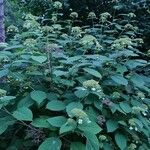
Hydrangea cinerea
Ashy hydrangea · Hydrangea
Description
Source: leafsnapHydrangea cinerea is a deciduous shrub belonging to the Hydrangeaceae family. Native to the southeastern United States, it can grow up to 6 feet tall and wide. This plant features a rounded shape with gray-green, ovate leaves that can reach up to 4 inches in length. The flowers of Hydrangea cinerea typically come in shades of blue or pink, although they can also appear white or purple based on the soil pH. Blooming in late spring or early summer, the plant produces large flower clusters that can be up to 6 inches wide. Hydrangea cinerea thrives in moist, well-drained soil and partial shade but can also tolerate full sun if adequately watered. Due to its attractive foliage and striking flowers, it is commonly used as an ornamental plant in gardens. Historically, Native Americans have used this plant for its medicinal properties, particularly for its diuretic effects and in treating kidney stones and urinary tract infections. However, it is essential to consult a healthcare professional before using it for medicinal purposes. In summary, Hydrangea cinerea is a visually appealing shrub with beautiful blooms that can enhance any garden landscape. It also has potential medicinal benefits when used correctly under medical supervision.
Care Guide
💧 Water Every 7 days
The ashy hydrangea thrives in soil that is consistently moist, well-hydrated, and well-draining. For optimal growth, it's best to water the plant twice a week. While it does well in humid conditions, it is also resistant to drought. Adding mulch around the plant is helpful, as it retains moisture and mimics the hydrangea's natural humid forest habitat.
☀️ Light Partial sun
Ashy hydrangea naturally occurs in habitats like forest understories or rocky sites, where it receives natural shade. It prefers partial sun but can adjust to either full sun or full shade, showing its adaptable, hardy character.
What are the sunlight requirements for an Ashy Hydrangea (Hydrangea cinerea)?
The Ashy Hydrangea (Hydrangea cinerea) has specific sunlight requirements to thrive. For partial sun, it requires about 3-6 hours of sunlight each day. If aiming for full sun, it should receive more than 6 hours of sunlight daily. It's important to observe how sunlight moves through your garden, selecting locations that offer an ideal mix of light and shade. This careful placement ensures the plant's happiness and health.
🌡️ Temperature 5–35°C
Ashy hydrangea is highly adaptable to a variety of climates, whether facing blistering summer heat or cold winter conditions. Nevertheless, it has an ideal temperature range for growth. When temperatures climb too high, the plant is susceptible to heat and humidity stress, which can lead to its death. In locations where temperatures near the lower limit of its cold tolerance, it is important to provide insulation to protect the plant.
What is the name of the plant being discussed?
The plant being discussed is named Ashy hydrangea.
What is the botanical name of the Ashy hydrangea?
The botanical name of the Ashy hydrangea is Hydrangea cinerea.
💨 Humidity
🪴 Soil 6-7
🌱 Fertilizer
Fertilize your Ashy hydrangea in early spring to encourage healthy growth. Regular feeding improves its overall health, producing vigorous growth, increased tolerance of harsh conditions, and enhanced resistance to diseases and pests. Adhering to a consistent fertilization schedule for your Ashy hydrangea will promote lush, deeply colored, and vibrant foliage.
🪴 Pot & Repot
✂️ Pruning
Pruning hydrangeas depends on the type you have. Bigleaf and oakleaf hydrangeas should be pruned in early summer. The 'Endless Summer' variety does not have a specific pruning time. Smooth and panicle hydrangeas bloom on new branches, so they can be pruned at any time of the year, except during spring budding. This allows for flexible maintenance.
🌿 Propagating
🐛 Diseases & pets
☠️ Toxicity
Characteristics
- Plant Type
- Shrub
- Life Cycle
- Perennial
- Genus
- Hydrangea
- Family
- Hydrangeaceae
- Hardiness Zone
- 5-9
- Mature Height
- 0.91 m to 3.05 m
- Mature Spread
- 0.91 m to 3.05 m
- Leaf Color
- Dark Green, Gray
- Leaf Type
- Deciduous
- Flower Color
- White, Pink
- Flower Size
- 15.24 cm to 25.40 cm
- Bloom Time
- Summer
- Planting Time
- Summer, Autumn
- Harvest Time
- Fall