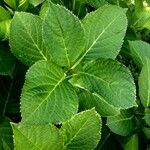
Hydrangea macrophylla
ادریسی · Hydrangea · Hortensia · Bigleaf Hydrangea · Lacecap hydrangea
Description
Source: leafsnapHydrangea macrophylla, commonly known as bigleaf hydrangea, is a deciduous shrub native to Japan and Korea. Belonging to the Hydrangeaceae family, it can grow up to 6 feet tall and wide. The plant features large, glossy dark green leaves that can reach up to 8 inches in length. One of the most distinctive characteristics of Hydrangea macrophylla is its large flower heads, which can measure up to 12 inches in diameter. These flowers typically come in shades of pink or blue, but may also appear white or purple depending on the soil's pH. Acidic soil produces blue flowers, while alkaline soil results in pink flowers. Hydrangea macrophylla prefers moist, well-drained soil and partial shade, but it can also tolerate full sun provided it receives adequate moisture. It blooms from late spring through summer and benefits from regular pruning for optimal growth. This plant serves various purposes, including use as an ornamental shrub in landscaping and as a cut flower in floral arrangements. Its leaves have also been utilized in traditional medicine for their anti-inflammatory properties. Overall, Hydrangea macrophylla is a beautiful and versatile plant. Its stunning blooms add color and texture to any garden or landscape design.
💡 The color of bigleaf hydrangea flowers changes based on the soil's pH level. In acidic soil, the flowers turn blue, while in alkaline soil, they become red. Even within the same garden, variations in soil pH can result in flowers of different colors in different areas.
🌳 The flowers of the bigleaf hydrangea can change color depending on soil pH, making them natural indicators of soil chemistry. In acidic soils the blooms are typically blue because aluminum ions are present, while in alkaline soils they turn pink. Aside from this botanical curiosity, bigleaf hydrangea is also widely used in the ornamental industry for its lush, vibrant flowers, which are commonly employed in wedding bouquets and as garden centerpieces.
🎭 Appreciation for understanding, intense emotions, apology, boastfulness
Care Guide
💧 Water Every 7 days
The bigleaf hydrangea, which originates from Japan, thrives in humid conditions with consistently moist soil. It needs watering every 1-2 weeks, although it can tolerate short droughts. This plant does particularly well outdoors, as rainwater during the growing season helps to enhance its flowering potential.
When Should I Water My Bigleaf Hydrangea?
Watering your bigleaf hydrangea at the right time involves looking for signs such as leaf tilt, color changes, soil dryness, absence of morning dew, and changes in plant height. Observing these physiological and environmental signs is crucial. The inclination and color of leaves, dryness of the soil, and the presence or absence of morning dew are key markers to guide you. Additionally, a decrease in the plant’s height can indicate a lack of water. It's important to avoid watering too early or late to prevent waterlogging and drought stress, which can harm the plant.
How Should I Water My Bigleaf Hydrangea?
For optimal hydration of your bigleaf hydrangea, use the bottom-watering method and choose a watering can with a narrow spout for targeted watering at the plant's base. This technique helps with moisture distribution and prevents diseases by keeping the foliage dry. Ensuring that the soil is consistently moist, but not waterlogged, is key to the health and growth of your hydrangea.
How Much Water Does Bigleaf Hydrangea Really Need?
Bigleaf hydrangea requires consistent moisture in the soil but cannot tolerate waterlogged conditions. The amount of water needed varies based on pot size, root depth, and plant size, due to its shallow root system. Generally, watering when the top inch of soil feels dry and providing about 1 inch of water per week is recommended. Signs of proper hydration include lush green leaves and vibrant flowers, whereas yellowing leaves or wilting may indicate over or underwatering. For best results, use well-draining soil, ensure good drainage, and consider mulching to help retain moisture.
What Kind of Water is Best for Bigleaf Hydrangea?
The ideal types of water for bigleaf hydrangea are rainwater and distilled water, especially since the plant is sensitive to chlorine and other chemicals often found in tap water. Letting tap water sit for 24 hours before use can allow chlorine to evaporate. Although less sensitive to fluorides, bigleaf hydrangea can still suffer from leaf tip burn if exposed to high levels. It also prefers slightly acidic to neutral water (pH 5.5 to 7) and can be affected by excessive minerals or sodium from softened water. Room temperature water is recommended to avoid shocking the plant's roots.
How Do Bigleaf Hydrangea's Watering Needs Change with the Seasons?
The watering needs of bigleaf hydrangea vary with the seasons. During its active growth in spring, maintain consistent soil moisture. In summer, increased heat demands careful watering to prevent root rot without letting the plant wilt. Watering frequency should reduce in autumn as the plant prepares for dormancy, and in winter, only minimal moisture is needed. Ensuring the soil is well-drained and adjusting watering based on seasonal changes will help maintain the health of your bigleaf hydrangea.
☀️ Light Partial sun
Bigleaf hydrangea grows best in locations with moderate sunlight, although it can tolerate full sun and heavily shaded sites. Its native habitat—dense woodlands—has produced this adaptability. Insufficient light can lead to fewer flowers, while too much sun may cause leaf scorch.
What are the sunlight requirements for Bigleaf Hydrangea?
Bigleaf hydrangea thrives in moderate sunlight but can adapt to full sun exposures or heavily shaded locations thanks to its dense woodland origin. It requires about 3-6 hours of sunlight for partial sun conditions, while more than 6 hours are considered full sun or full shade. A balance of light and shade is crucial for plant health, as insufficient light can lead to fewer blooms, and excessive sunlight may cause leaf scorch.
How do artificial lights support indoor Bigleaf Hydrangea growth?
For indoor Bigleaf hydrangeas, when natural sunlight is insufficient, especially during winter or in less sunny spaces, artificial lighting is crucial for optimal growth. LED lights are recommended as they can be adjusted to provide specific light wavelengths needed by the plants. Full sun plants require 30-50W/sq ft, partial sun plants need 20-30W/sq ft, and full shade plants require 10-20W/sq ft of artificial light. The lights should be placed 12-36 inches above the plants for 8-12 hours per day to mimic natural sunlight.
What are common symptoms of inappropriate lighting for Bigleaf Hydrangea?
Under inappropriate lighting, Bigleaf hydrangea may exhibit several symptoms. Insufficient light can lead to smaller leaves, leggy growth, faster leaf drop, slower or halted growth, and lighter-colored new leaves indicating a lack of chlorophyll. Excessive sunlight might cause chlorosis, sunscald, leaf curling, wilting, and leaf scorching, signaling damaged tissue and reduced plant health.
What solutions are available for light-related issues in Bigleaf Hydrangea?
To address light-related issues in Bigleaf hydrangea, indoor plants should be moved to sunnier spots gradually or provided with artificial light for at least 8 hours daily. Outdoor plants should also be moved to better spots for sunlight adaptation, avoiding abrupt changes to prevent sunburn. Ground plants benefit from reducing obstructions like pruning blocking trees or transplanting the plant to sunnier locations during dormant periods for better sun exposure and growth.
🌡️ Temperature 10–35°C
Bigleaf hydrangea prefers a temperature range of 50 to 95℉ (10 to 35℃). Its natural growing environment should be in areas with cool summers and mild winters. During the summer, it favors partial shade and needs sufficient water. In the winter, providing frost protection for the plant is recommended.
What are the ideal temperature conditions for Bigleaf hydrangea?
Bigleaf hydrangea thrives in a temperature range of 50 to 95°F (10 to 35°C). It is best suited for environments with cool summers and mild winters. During hot periods, particularly in the summer, it benefits from partial shade and requires adequate watering to stay healthy. While the plant demonstrates strong cold resistance and special frost protection is not usually necessary, precautions should be taken if temperatures are expected to plummet below -25°C. In such cases, wrapping the plant's trunk and branches with insulative material can provide necessary cold protection. Additionally, water the plant abundantly before the first freeze of autumn to ensure the soil is moist and freezes, helping to guard against drought and water scarcity during the colder seasons.
How should you care for Bigleaf hydrangea in low temperatures?
Bigleaf hydrangea can tolerate cold well and generally prefers temperatures to remain above 10°C. During the winter months, it is advised to keep temperatures above -15°C for the plant's well-being. If temperatures drop below -25°C, the plant might not show immediate distress, but come spring, you may notice the branches have become brittle and dry, with no new shoots emerging. The solution in spring is to prune away any dead branches that have failed to produce new leaves, allowing for healthy growth.
What should you do if Bigleaf hydrangea is exposed to high temperatures?
In conditions where temperatures exceed 35°C, Bigleaf hydrangea needs special care to prevent heat stress. Should the temperature surpass 38°C, the plant's leaves may lighten in color, and its tips could become dry and withered, indicating sunburn. To help the plant recover and protect it from further damage, trim away any sunburned or dried parts of the plant. It's also beneficial to move the plant to a shaded area, particularly from the midday and afternoon sun, or use a shade cloth. Ensure the plant is watered in the morning and evening to maintain soil moisture and support its overall health.
💨 Humidity high (>60%)
This plant needs special care because it loves high humidity levels of 60-80% or more. The best way to achieve this is by placing a humidifier near the plant. Daily misting is also essential! Make sure the room has good ventilation.
🪴 Soil 5-6
🌱 Fertilizer
To maintain optimal health for bigleaf hydrangeas, provide them with balanced nutrition by applying a 10-10-10 NPK fertilizer every two months during their growing season. The pH of the soil also influences the color of the blooms: apply aluminum sulfate to achieve blue flowers and limestone for pink ones. In winter, reduce the amount of fertilizer you use. After fertilizing, water the plants thoroughly to help them absorb the nutrients effectively.
Why is it important to put fertilizer on my Bigleaf hydrangea?
To promote a successful blooming season, it is essential to fertilize Bigleaf hydrangea annually. The plant requires the nutrients from the fertilizer to fuel new growth and bud formation during the growing season. Fertilization also helps the plant withstand pests and diseases by bolstering its strength.
When should I fertilize my Bigleaf hydrangea for the best results?
- Blue cultivars of Bigleaf hydrangea only need to be fertilized once a year before the growing season using an acidic soil fertilizer. - Other cultivars can be fertilized once a year during the growing season with a balanced all-purpose fertilizer. - Using fertilizers made for blooming plants or shrubs, such as roses and peonies, is also suitable for Bigleaf hydrangea as they contain the necessary nutrients.
When is the best time to not use fertilizer on my Bigleaf hydrangea?
It is not recommended to fertilize Bigleaf hydrangea at any time during its dormant season. This is primarily because it does not benefit the plant during this period. When Bigleaf hydrangea is dormant, its main focus is on conserving energy obtained from the sun and maintaining an active root system. Fertilizing during dormancy can lead to soil acidity problems and stimulate excessive growth during colder months, potentially causing lasting harm.
Which fertilizer should I use for my Bigleaf hydrangea?
To promote flowering, there are some adjustments you can make to your fertilization strategy in late spring. For blue Bigleaf hydrangea cultivars, it is recommended to use a fertilizer with a lower phosphorus content, such as a nutrient ratio of 8-4-8 or something similar. However, for other Bigleaf hydrangea cultivars, any all-purpose fertilizer with a balanced nutrient ratio, like 10-10-10, can be used. If you want to lower the pH of your soil and encourage blue coloration, you can add small amounts of aluminum sulphate fertilizer or wettable sulphur to the soil and mix them in well. On the other hand, if you want to raise the pH, you can apply limestone generously to the soil and ensure it is mixed in thoroughly. It's important to be cautious when adding these compounds as too much can harm your Bigleaf hydrangea. It's better to add a little less than too much.
How can I help my Bigleaf hydrangea grow better?
Fertilizing is an easy process that you may already know about. Here are the steps: 1. Sprinkle fertilizer around the base of the plant in a two-foot radius (or wider if the foliage is wide). 2. Use a trowel or small hand rake to mix the fertilizer into the top two to four inches of soil. 3. Water the fertilizer well, and gently settle the topsoil back into place. 4. To ensure proper distribution and prevent burning, water thoroughly for the next week.
🪴 Pot & Repot 2-3 years
When repotting Bigleaf hydrangea, select a pot 1-2 inches (2.5–5.1 cm) larger with ample drainage. Use a well-draining potting mix. Repot in spring or fall, making sure the root ball sits slightly below the rim of the flower pot. Water thoroughly after repotting and place it in a warm spot with indirect sunlight.
✂️ Pruning
The bigleaf hydrangea displays vibrant blooms and lush foliage, making it a beautiful addition to any garden. To keep the plant healthy, prune in early spring to remove weak stems and improve airflow. This will also help in pruning after the blooms have faded, which supports bud formation and leads to healthier growth and more abundant flowers. Regular annual pruning prevents overcrowding, enhancing both the plant's appearance and its overall health.
🌿 Propagating
🐛 Diseases & pets
☠️ Toxicity
Hydrangeas are not safe for consumption and are poisonous to cats, dogs, and horses. All parts of the plant contain cyanogenic glycoside. This means that every part of this plant is poisonous. Ingestion of this plant may cause diarrhea, vomiting, and/or depression.
Characteristics
- Plant Type
- Shrub
- Life Cycle
- Perennial
- Genus
- Hydrangea
- Family
- Hydrangeaceae
- Hardiness Zone
- 6-9
- Mature Height
- 1.52 m to 3.05 m
- Mature Spread
- 0.76 m to 2.44 m
- Leaf Color
- Green, Yellow
- Leaf Type
- Deciduous
- Flower Color
- Pink, Blue, White, Purple, Red, Cream
- Flower Size
- 5.08 cm to 15.24 cm
- Bloom Time
- Early summer, Mid summer
- Planting Time
- Spring, Autumn
- Harvest Time
- Fall, Early winter, Mid winter
- Native Area
- Japan