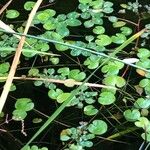
Hydrocharis morsus-ranae
European frog's-bit · Frog's-bit · Frogbit · Common Frogbit · European Frog-bit
Description
Source: leafsnapHydrocharis morsus-ranae, commonly known as frogbit or European frogbit, is a floating aquatic plant in the Hydrocharitaceae family. Native to Europe and parts of Asia, it has also been introduced to North America. The plant features small, round leaves that are green on top and reddish-purple underneath, and it produces small white flowers with three petals that bloom from June to September. Frogbit is a popular choice for water gardens and ponds due to its attractive appearance and its ability to provide shade for aquatic life. Additionally, it helps maintain water quality by absorbing excess nutrients. The plant reproduces through vegetative propagation by producing daughter plants, or through seed production under favorable conditions such as warm temperatures. However, frogbit can be invasive in some areas due to its rapid growth rate. Therefore, it should be monitored carefully if introduced into natural bodies of water outside its native range. Overall, Hydrocharis morsus-ranae is an intriguing aquatic plant that offers numerous benefits both for aesthetic purposes in gardens and for ecological purposes in maintaining healthy water bodies.
Care Guide
💧 Water Every 7 days
European frog's-bit thrives in moist environments and requires consistent moisture, though it can tolerate moderate drought. For optimal health, it should be watered weekly. As an aquatic plant, its growth is heavily influenced by water availability, achieving peak vitality when submerged or floating in calm waters.
How should I water my European frog's-bit plant?
To properly care for the European frog's-bit plant, it is recommended to water it with room temperature filtered water. Tap water may contain harmful particles, hence filtered water is preferable. It is important to use room temperature water or slightly warmer because the plant is accustomed to warm environments and cold water can be a shock to its system. Instead of watering from above, it is advised to directly apply filtered room temperature water to the soil until it is fully soaked. This helps moisten the roots and aids in their spread through the soil to collect necessary nutrients for the plant's health.
What should I do if I give too much water or too little water to my European frog's-bit?
Overwatering is a more common issue than underwatering for the health of your European frog's-bit. When this plant gets too much water, its stems and leaves may wilt and turn yellow. Overwatering for too long can also cause diseases like root rot, mold, and mildew, which can potentially kill the plant. On the other hand, underwatering is less common because the European frog's-bit can tolerate drought quite well. However, it is still possible, and when it happens, you will notice brittle and brown leaves. It's important to recognize the signs of overwatering early on when caring for your European frog's-bit. Some diseases caused by overwatering, like root rot, may become irreversible if not addressed promptly. If you spot early signs of overwatering, you should reduce your watering schedule immediately. You should also check the quality of the soil where your European frog's-bit is planted. If the soil drains poorly, replace it with a loose, well-draining potting mix. If you observe signs of underwatering, simply water the plant more regularly until the signs disappear.
How frequently do I need to water my European frog's-bit?
If your European frog's-bit plant is in a pot, the most precise way to determine if it needs water is by checking the soil. Plunge your finger into the soil, and if the first two to three inches are dry, it's time to water. If you are growing your European frog's-bit outdoors in the ground, you can use a similar method to test the soil. When the first few inches of soil have dried out, it's time to add water. Usually, during spring and early fall, watering once a week is sufficient. However, during extremely hot weather, you may need to water twice or more per week. It's important to note that mature, well-established European frog's-bit plants have an impressive ability to withstand drought.
How much water does my European frog's-bit plant need?
When watering your European frog's-bit, don't hesitate to give it an ample amount of water. Wait until the first two to three inches of soil are dry before watering, and when you do, make sure to completely soak the soil. The water should be enough to cause excess water to flow out of the pot's drainage holes. If you don't see excess water draining, it means you've likely underwatered your plant. However, be cautious not to let the water accumulate inside the soil, as it can be harmful to the plant. On the other hand, if water doesn't drain through the pot, it may indicate poorly draining soils, which is not good for the plant's health. If the plant is outside, receiving 1 inch of rain per week should be sufficient.
How do I water my European frog's-bit as it grows?
The water requirements of the European frog's-bit can vary at different growth stages. When the plant is in its early years or has just been transplanted, it needs more water than usual. This is because during these stages, the plant focuses on developing new roots that will support future growth. These roots require slightly more moisture to thrive. As the plant matures, it will require less water. However, during the bloom period, when the plant is developing flowers, it may need more water again. This is because flower development utilizes a significant amount of moisture.
☀️ Light Full sun
European frog's-bit does best in full sun but can tolerate reduced light. Its native habitat has prepared it to prosper with plentiful sunlight, although it does not require constant sun. As with any plant, too much light can cause sunscald, and too little light can impede growth.
What are the sunlight requirements for European frog's-bit?
European frog's-bit requires full sun to thrive optimally, which means it should receive above 6 hours of sunlight daily. However, it can also tolerate partial sun conditions, getting about 3-6 hours of sunlight. The plant is adaptable to various light conditions, thanks to its natural habitat which predisposes it to flourish in abundant sun. Nonetheless, too much sun exposure might cause sunscald, whereas insufficient sunlight could restrict growth.
How can I use artificial lighting for European frog's-bit indoors?
For indoor European frog's-bit plants, when natural sunlight is not enough, especially during winter or in less sunny areas, artificial lighting is a great alternative to support their growth. LED lights are recommended since they can be adjusted to provide specific light wavelengths needed by the plant. Full sun plants require 30-50W/sq ft of artificial light, partial sun plants need 20-30W/sq ft, and full shade plants need 10-20W/sq ft. The artificial light source should be placed 12-36 inches above the plant, and the lighting should last for 8-12 hours per day to simulate natural daylight hours.
What are the symptoms of inappropriate lighting conditions in European frog's-bit?
Inappropriate lighting conditions for European frog's-bit may lead to several symptoms. Insufficient light can cause small leaves, leggy or sparse growth, faster leaf drop, slower or no new growth, and lighter-colored new leaves. Excessive sunlight might result in chlorosis (leaves turning yellow due to lack of chlorophyll), sunscald, leaf curling, wilting, and leaf scorching. These symptoms indicate either a lack or excess of sunlight, affecting the plant's overall health.
What solutions are available for European frog's-bit experiencing poor lighting?
To combat poor lighting for European frog's-bit, gradually introduce the plant to more sunlight each week until achieving at least 6 hours of direct sunlight daily for indoor plants. Utilize a south-facing window and keep curtains open during the day. If moving the plant is not feasible or for additional support, consider using artificial light sources like desk lamps or professional grow lights for at least 8 hours daily. For outdoor plants, transition them to sunnier spots carefully to avoid shock. Also, if large trees block sunlight, pruning might be necessary. For smaller plants, consider transplanting during their dormant period to a location with better sunlight and drainage.
🌡️ Temperature 5–35°C
European frog's-bit is naturally adapted to fluctuating temperatures between 41 and 95 °F (5 to 35 °C). It thrives within that range, so consider adjusting your garden's climate accordingly.
What temperature conditions are ideal for European frog's-bit?
European frog's-bit is well-suited to a range of temperature conditions, thriving best between 41 to 95 °F (5 to 35 °C). This plant is originally accustomed to these fluctuating temperatures, which should be considered when adjusting your garden's climate. Additionally, it has strong cold resistance, indicating that special frost protection measures are not usually necessary. However, in extreme cold where temperatures are expected to drop below -25°C, taking steps to protect the plant against the cold by covering it with soil or straw is advisable. To further prepare it for winter, it's recommended to water the plant abundantly before the first freeze in autumn, ensuring the soil is moist as it enters a frozen state, which helps prevent drought and water scarcity during winter and early spring.
How does European frog's-bit react to low temperatures?
European frog's-bit is cold-tolerant, performing best when temperatures remain above 5°C. During the winter, precautions should be taken to keep it above -20°C to prevent damage. If temperatures fall below -25°C, the plant may not show immediate changes but could experience decreased sprouting or fail to sprout at all come spring. To aid recovery in spring, any parts of the plant that have failed to sprout should be removed.
What should I do if European frog's-bit is exposed to high temperatures?
During the summer, it's important to ensure that European frog's-bit does not experience temperatures above 35°C. Exposure to temperatures exceeding 38°C can lead to the plant's leaves becoming lighter, prone to curling, susceptible to sunburn, and in severe cases, the plant may wilt and dry out completely. To manage this, trim away sunburned and dried parts of the plant. Relocate the plant to a shaded area or use a shade cloth to protect it from the midday and afternoon sun. Additionally, water the plant in the morning and evening to maintain soil moisture and help the plant cope with the heat.
💨 Humidity
🪴 Soil
🌱 Fertilizer
To promote healthy growth in European frog's-bit, use balanced nutrition fertilizers during its active growing period, and switch to high-phosphorus fertilizers as it approaches flowering. Fertilize the plant monthly during the spring and summer, but reduce fertilization in the fall and winter. To protect its aquatic environment, apply fertilizers at half strength. Always follow the label instructions carefully to prevent over-fertilization.
Why should I put fertilizer on my European frog's-bit plant?
Fertilization plays an important role in the growth of European frog's-bit and other plants as it provides essential nutrients for both the above and below-ground parts of the plant. Despite this, European frog's-bit has relatively low fertilization needs and can sometimes survive without it. However, annual fertilization can greatly benefit the plant by helping it thrive and produce longer-lasting flowers. Therefore, for those wanting to enhance the appearance of their European frog's-bit, regular fertilization is recommended.
When should I fertilize my European frog's-bit plant?
The best time to fertilize a European frog's-bit is late winter to early spring when the plant is transitioning from dormancy to active growth. Fertilizing during this time promotes healthy growth and sets the plant up for a successful season. Although fertilizing in the early spring is generally preferred, it is also acceptable to fertilize in the fall. However, it is not recommended to feed the plant during summer and winter.
When is it not a good idea to fertilize my European frog's-bit?
To avoid overfertilization and its complications, it is best to fertilize your European frog's-bit only in late winter and early spring. This plant has low fertilization needs, so one feeding per year is sufficient. However, if you missed fertilizing in spring, you can feed it during fall. During the growing season, which includes spring, summer, and fall, do not fertilize. Similarly, in winter when the plant is dormant and not growing, it is not recommended to fertilize.
What kind of fertilizer does my European frog's-bit plant need?
To properly nourish a European frog's-bit, any general-purpose fertilizer with a balanced amount of the three main plant nutrients will suffice. However, there are specific nutrient blends that can provide even greater benefits. For example, many gardeners believe that increasing phosphorus content in the fertilizer leads to stronger roots and better flowers. Considering European frog's-bit is a flowering plant, using a phosphorus-rich fertilizer may be the ideal choice. Granular or liquid forms of fertilizer are both suitable as long as they contain ample nutrients. In addition to manufactured fertilizers, organic options like compost and manure can greatly enhance the soil quality for your European frog's-bit. These materials contribute to creating a healthy growing medium.
How should I give nutrients to my European frog's-bit plant?
To fertilize a European frog's-bit, the most common method is to use a granular or pellet fertilizer. It's important to fertilize when the plant is transitioning from its dormant phase to active growth, typically in early spring. Once you see shoots emerging from the soil, apply the fertilizer. Alternatively, you can use a liquid fertilizer, which should be diluted with water before application. Regardless of the type of fertilizer, it is recommended to moisten the soil before, during, and after fertilization.
🪴 Pot & Repot
✂️ Pruning
European frog's-bit is a floating aquatic plant that thrives with regular pruning, especially from early to late spring. Key techniques involve thinning out overcrowded growth and removing damaged leaves. This enhances water circulation and reduces the risk of disease, contributing to a healthy and visually appealing plant environment.
🌿 Propagating
🐛 Diseases & pets
☠️ Toxicity
Characteristics
- Plant Type
- Herb
- Life Cycle
- Perennial
- Genus
- Hydrocharis
- Family
- Hydrocharitaceae
- Hardiness Zone
- 5-9
- Mature Height
- 2 cm to 10 cm
- Mature Spread
- 1.52 m
- Leaf Color
- Green
- Leaf Type
- Deciduous
- Flower Color
- White
- Flower Size
- 2.03 cm to 3.05 cm
- Bloom Time
- Summer, Early fall
- Planting Time
- Spring, Summer, Autumn
- Harvest Time
- Late summer, Fall
- Native Area
- Turkey, Sweden, Austria, Slovakia, Montenegro, Slovenia, Morocco, Croatia, Belarus, Uzbekistan, Russia, Germany, Estonia, Romania, Latvia, Belgium, Portugal, Netherlands, France, Czech Republic, Bulgaria, Poland, Greece, Ukraine, Serbia, Lithuania, Norway, Syria, Italy, Kazakhstan, Spain, Switzerland, Denmark, Finland, Iran, Albania, Ireland, United Kingdom, Hungary, Algeria, Azerbaijan